Things To Know Before Travelling Nepal

There is endless list of things you might want to know before travelling any country or place. This becomes more necessary if you are travelling that country or place for the first time. Searching tons of information in internet is time consuming and nerve-wrecking. Safety, visa, transportation system, culture of that country, infrastructures, language spoken and so on. Well here, we provide list of things to know before travelling Nepal to overcome all those shortcomings.

Adaptation in any new environment does not happen overnight. It is sort of evolution, which took thousands of years for our ancestors. Exploration, adventure and travel used to be a legendary activity in past. Not anymore. Thanks to all new innovation and technology of modern days. Our travel itineraries, information is in our finger tips. Moreover, travel and vacation have become really essential and basic needs of human beings in modern society.

The purpose to provide list of things to know before travelling Nepal is to make your travel as enjoyable as possible. In other word, hassle-free and time-saving. Beyond curiosity, the list helps you to adjust in new environment much sooner. This might also make traveller easy to distinguish between the actual facts and myths circulating around.

The list becomes much necessary to travel and trek Nepal, a home to 8 highest mountains of the world. The evolving and aspiring tourism industry of Nepal every year loses huge chunk of travellers to India and China. In other word, Nepal is still not well-connected and well-known among westerners, as hot destination to travel. This is worrisome for Nepalese tourism sectors in digital era. All in all, Travel in Nepal has two distinctive features
Trekking in Himalayas,
Tour in major Touristic Cities.
Depending upon, a traveller might need different kind of information to travel and trek in Nepal. Trekking, climbing, city tour, jungle safari, cycling are some popular tourism activities to do in Nepal. So, which one is your activity among, is first to filtrate and decide before even starting anything. Here, more than stuffing everything, we try to be more specific on the list of things you need to know before travelling Nepal.

Do I need Visa to travel Nepal?

Yes. The visa policy of Nepal is travel-friendly and easy.

Except Indian nationalities, everybody needs visa to enter Nepal.

Citizens from SAARC countries (Afghanistan, Bangladesh, Bhutan, Maldives, Pakistan, Sri Lanka) plus residents of China, Hongkong and Macau should not pay tourist visa fee for 30 days.

Citizens of 12 countries Afghanistan, Cameroon, Eswatini, Ethiopia, Ghana, Iraq, Liberia, Nigeria, Palestine, Somalia, Syria and Zimbabwe need Visa prior to arrival in Nepal.

Citizens of any other country can obtain Visa of Nepal upon arrival, with valid passport and paying appropriate fees. If you don’t fall on above mentioned category, Department of Immigration provides further information, if you need any. But it would be time taking and complex to understand and to go through each sentence if it is not really necessary. Also Read https://snowpathtrek.com/travel-info/tourist-visa/

Accommodation/Hotel Reservation

Thanks to digital era, you can book your accommodation/ hotel online from your country in major touristic cities of Nepal. Kathmandu, Pokhara, Chitwan, Lumbini are some to mention. Numerous categories of hotel are available starting from as low USD 10 to USD 250+ per night. However, comparing service and price between various categories of hotels is not easy if you are not familiar with. Most of the hotels operate under Bed & Breakfast (BB) plan. Few on full board.

Most of the travellers and trekkers are satisfied within the price range of USD 40 to USD 60. Going through map of Kathmandu is also equally important. It will let you know, how far is your accommodation (hotel) from popular touristic hub; Thamel.

It is good idea to make and carry a small note of name, address and location of your accommodation/hotel. In case you miss your pick-up representative at airport, airport taxi can drop you to your exact location.

Note; It is not be possible to book hotel/ tea house/ lodge through online in trekking regions, except in few places with a telephone ( if you have a number). If you are really unsure and unfamiliar, we suggest you to book your trekking thorough agencies. Moreover, if you want to enjoy hassle-free trekking in Nepal.

Travel Seasons for Nepal

In short, Nepal has two popular travel windows Spring (March- April-May) and Autumn (September-October-November). Clear sky, no rain, mild temperature are the main reasons, travel and trekking agencies recommend these months to travel. However, travellers and trekkers can get reasonable discount on their trips if they can avoid peak season. For example, during Spring season trekkers and travellers can travel Nepal by the end of February or May to avoid crowd.

It is also not uncommon for some trekkers to choose Upper Mustang, Nar Phu during rainy season, since these high-altitude trekking regions receive negligible amount of rain even during monsoon. Also, Read to understand weather and climate of Nepal.

Transportation System in Nepal

Taxis are the most reliable transport to travel around city including airport transfers. Hiring vehicles through travel and trekking agencies is very popular. It highly boosts the reliability and comfort. Green-plated vehicles are especially designated for travellers. Traffic in Kathmandu is busy and sometime annoying as well.

Most of the touristic cities to and from capital city Kathmandu are well-connected with flights and roads. Flights are fast, time-saving, comfortable. Major Highways connecting popular cities are black-topped/ asphalt which runs through difficult hilly terrain of the country. It is fun to travel through road, yet some travellers find lengthy, time consuming and exhausting comparing to flights.

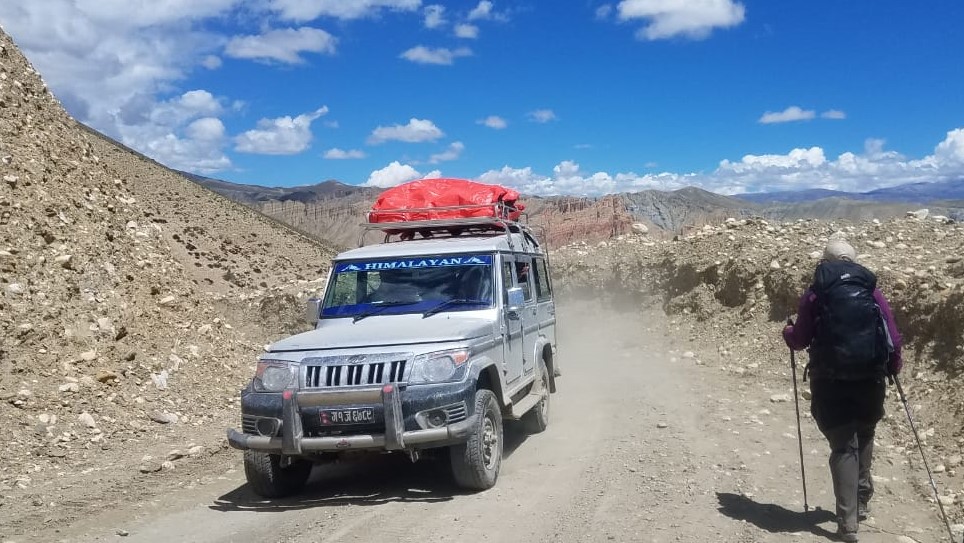
Car, Jeep, HiAce, Hilux, coaster, bus, are some popular type of vehicles available to travel through road as per requirement and necessity. Local vehicles are not comfortable to travel since they are slow and crowded. To amplify safety, we recommend to hire private vehicles and use tourist bus if available.

There are two ropeways in Nepal. One in Chandragiri around 8 KM away from Kathmandu city. Another in Gorkha (Manakamana), 100 Km away from Kathmandu. It is also an intersection to popular city of Chitwan and Pokhara. Both ropeways are in highly religious site and popular for Hindu pilgrimages. It is worthy to adjust these places in your travel itineraries.

Link for you to better understand the transportation system in popular trekking regions of Nepal. One needs to pay high attention to use any kind of vehicle in trekking regions of the country.

Tele-Communication

Telephone landlines are practically outdated. Telephone lines are only available in offices, organizations, few residences and where there are no mobile services. Like anywhere else in the world, Nepalese people highly sought-after modern gadgets and devices. Smart phones are very common where there are internet facilities. Wi-Fi has become major necessity in every house hold of cities and towns. Without doubt, restaurants, hotels, offices have Wi-Fi and will let you use without any price. That makes Email, chat, instant calls very easy and effective to contact at any part of the world.

If your phone is out of contract with your service provider in home country, you can purchase Nepalese SIM card and easily use in your phone. Submission of a photograph and copy of your passport should be enough to get new SIM card in nearby shop. You can use popular instant messengers if you need to remain in touch frequently with somebody in Nepal without even purchasing SIM card, if there is Wi-Fi service. In emergency situations, you can ask any passer-by to lend their mobile for a while, if you need to contact somebody immediately.

In trekking, the communication services will be highly limited depending upon the remoteness of region. Wi-Fi is available only in countable places. Highly uneven geography can sometime disrupt the desired mobile phone services. If you are backpacker and single traveller/trekker, it is always better to purchase SIM card.

Sanitation and Waste Management system in Nepal

Do not be too much optimistic about sanitation and waste management system in Nepal. Especially in capital city Kathmandu, where population and vehicles stretch the limit of the city and further worsening. Hate to say, as traveller you may witness open drainage system and sewage system that ends at river. Things are not particularly good in major cities including air pollution level. You may find public restrooms and dustbins only in particular and limited places like of park, airport, heritage sites. Do not expect them in streets of major cities. Their cleanliness is again questionable.

Almost fixed itinerary means, you may encounter fewer problems in trekking. Fewer human activities in trekking region means fewer pollution. Some communities in trekking region have put dustbins in certain distances to dispose your bottles, wrappers and garbage. Some even conduct cleanliness from time to time, but still it is not satisfactory and wastages are piling up.

Everything is not discouraging; people are getting conscious and changing habits and lifestyle.  Cleanliness and maintenance of infrastructures in public zone is improving, encouraging and generally gets high importance these days. Especially, in places of tourist attraction. Afterall, as foreigner and traveller you may never witness these types of things unless you dwell, roam and visit in free style

Health care (Hospitals/Pharmacy)

Generally, in Nepal there are two types of health facilities private hospitals/clinics and government funded hospitals. Both of its kinds are good and reliable. The services in government hospital are slow but cheap. In contrary, private hospitals and clinics provide fast service but is expensive.

Regrading for travellers and trekkers, your insurance company may provide the list of hospitals to visit in case of emergencies. You may not receive the insurance money, if you do not follow policy of insurance company. Travel and trek organizers sincerely assist you in case of emergencies, if you need to get admitted in hospitals/clinics.

It is very common to see numbers of pharmacies in streets of Nepal. The numbers of pharmacies gradually decrease from cities to town to countryside to trekking regions. So, one need to buy necessary medicines in cities of Nepal that of Kathmandu, Pokhara Chitwan. For minor sickness like headaches, common colds, diarrhoea one can buy medicines without prescription of doctors. To buy complex types of drugs and medicine one need prescriptions of doctors.

Rather than relying on educational degree, a simple training and procedure allows pharmacies to sell medicines and drugs in Nepal. For example, five years back there used to be heavy misuse of antibiotics due to misconceptions in public and some business-minded sellers. It is improving, thanks to various medias and experts in increasing awareness among people about use of antibiotics.

All in all, it is very easy to find pharmacies in Nepal. It is not like pharmacy of Nepal can’t provide insulin for diabetes or tablets for high blood pressure. However, if you take some medicine regularly, we urge you to bring enough stock from your own country. After all, suddenly changing brand and dosages of medicine without prescription of doctor is not good idea. First aid kit, you may bring from home country, if not seek help from travel and trek organizers.

Travel Insurance

Simple, purchase insurance policy that covers both helicopter evacuation and that covers your medical bills. This is not a choice but is mandatory to travel in Nepal. You can purchase the travel policy in your own country or in Nepal with help of your trek/tour organizers.

Insurance company are tightening their policy for Nepal each year due to malpractices of organizers and agencies in Helicopter rescue. So, you may need to find proper insurance company that covers Nepal travel. Do not attempt to ride helicopter thinking your insurance policy covers the cost. We repeat, unrequired and unnecessary helicopter ride, you may end paying from your pocket.

Cash Vs Cards

USD, Euro, AUD, GBP, CAD, Franc, are easily accepted in Nepal. Once you are in Nepal, you need to convert them into Nepalese currency with institutions authorized by Nepal Rastra Bank. A local shop for grocery doesn’t accept foreign currency. Exchange enough currency as per your spending habit. Take a receipt, so while leaving Nepal you can re-convert it. As per rule, any currency equal to or above USD 5000, you must declare in airport on arrival.

Major cards are accepted in popular touristic city of the country. Including supermarkets, restaurants, travel and trekking agencies. Cards may not work in small towns, trekking regions and for general purposes. Do not solely rely on it. Carry some hard cash as contingency. Further information available here.

Greetings and other Norms

Namaste (Joining two palms together around chest area) is very popular and general way of greetings anybody. Bowing and touching down the feet of elders is more conservative and traditional way that is done in between close family members. Younger respects elder and in reciprocal elders show love and kindness to youngers, is basic tradition and norms among Nepalese people. Thank you is Dhanyabaad in Nepali. Smile overcomes any language barriers and communication difficulty with Nepalese people.

There is no any definitive dress code in Nepal. Young generations are open and embraces denims, shorts, tees, short length dresses/skirts. Older generation may not have same attitude in short dresses. They are acceptable in most part of the city. However, may not be warmly accepted in countryside. Wearing too much revealing cloths is not good idea.

You need to open your shoes before entering somebody’s house. Generally, foreigners are not allowed in Hindu temples. If you are allowed, you may need to put-off any leather belongings outside before entering, including shoes.

Tipping, upon using some types of service is happily accepted by Nepalese people. However, it is not expected.

Sex is extra-ordinarily private matters between individuals. Talking in public places openly about sex subjects is offensive and awkward.

Always put your right hand forward while receiving and giving things.

Food and Drink in Nepal
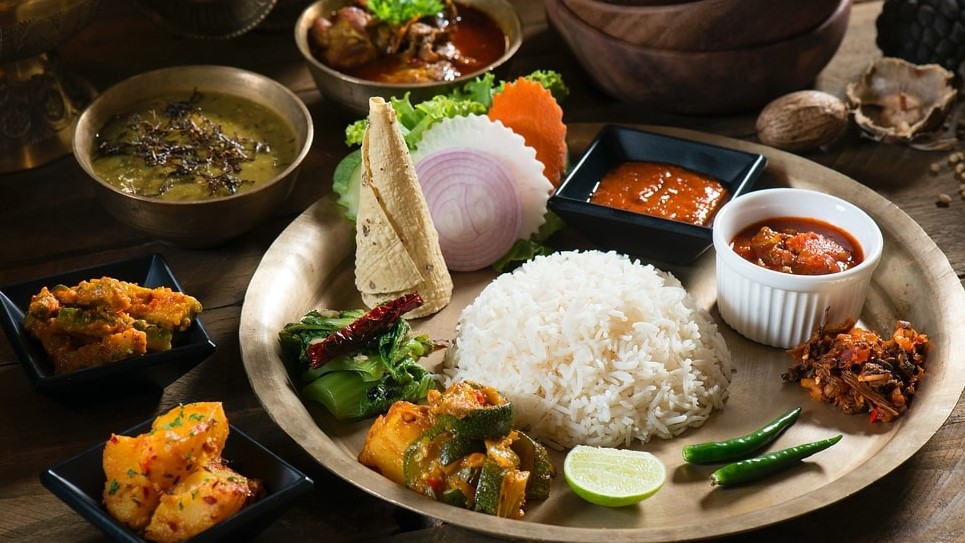
A set (thali) of Rice, lentil soup and seasonal vegetables is the main diet of Nepalese people which they consume twice a day as lunch and dinner. Occasionally, the set includes meat curry and some sorts of pickles. Snacks in between depends upon individual preferences of people. Momo and Chow Mein only comes behind dal bhat. Beverages carry high significance in some cultural groups during special ceremonies and festivals. Raksi, chhyang are popular home-brewed alcohol from rice, millet and maize. It is illegal to brew and sell for mass consumption, yet rarely punishable.

But still, travellers and trekkers should not necessarily miss food they generally eat in their home. Restaurants in major cities offer varieties of healthy and tasty cuisines as per your preferences. Imported beverages are available in all types of restaurants and super markets.

During trekking as well, you may find different types of cuisines depending upon how remote the region is. It might not look and taste as same as in city, but we have not heard any trekker complaining about quality of food in trekking. Doubtless, they are healthy and fresh. Beer are available in most of the tea houses.                    

Drinking beverages openly in the public area beside hotel, restaurant, pub may be considered as ill-mannered in Nepali culture. However, it is not illegal unless you cause social disturbances. Generally, Nepalese people consume beverages quietly in the evening after work.

It is very common to see Nepalese people eating their food with right-hand without using fork and spoon.

Some Nepalese families like to show respect by serving first to “Guests” before eating themselves. So, if they do not eat together with you in same dining table, it’s not weird at all.

In restaurants, you can ask anything and as much as you like in your dal bhat set without paying extra except for meat curry and beverages. However, asking for and throwing excessive food is bad manner.

Eating and distribution of Beef (cow) meat is illegal in Nepal. It is punishable. However, buffalo meat is acceptable. Poultry, fish, pork and lambs are popular protein cooked in house depending cultural background.

Festivals of Nepal

Nepal has very much diversified culture, tradition and religion. So, it is not uncommon to have various types of festivals. Also, Nepal celebrates international, national and regional festivals equally depending their significances. Click here to know the various types of festivals in Nepal. Like anywhere else in the world, gathering together, eating and boozing together brings harmony and creates bond between people during festival.

Two big festivals like Dashain and Deepawali falls on September/October, during peak season of tourism activities in Nepal. So, most of the past travellers know how important festivals are in Nepal. Some lucky travellers are also invited and get opportunity to participate in these festivals with their trek/tour organizers. Businesses are put aside, and it helps travellers and trekkers to create personal bond with Nepalese people.

Festivals of colours, Holi falls during travel season as well. There are more pictures circulating in internet of foreigners and travellers participating and celebrating Holi than that of Nepalese. Unlike, other festivals Holi is openly celebrated in the street as well, even if you don’t like to participate you can witness fun.

There are numerous big and small festivals in Nepal with and without public holidays. Of course, major festivals celebrated nationally receives public holidays. People celebrates some festivals in between close family members or small community for a continuity of family or communal traditions and culture. Most of them are unknown to outsiders.

Religions of Nepal

Though the major population of Nepalese follow Hinduism, all other religions are respected equally. 81.3% are Hindus, 9% are Buddhist, 4.4% are Muslims, 3% Kiratist, 1.4% are Christian, 0.1% Sikhs, 0.1% are Jains and 0.7% follows other or don’t follow at all. Minority of followers form a cluster and live in a small community but they are never undermined, provoked or disturbed. High tolerance for each other is the main driving force for cultural and religious harmony in Nepal between people.

Interestingly, the historical and religious co-relation between Hinduism and Buddhism only of its kind is found only in Nepal. Lord Buddha (prince Siddhartha Gautam before gaining enlightenment) was born in Lumbini of Nepal, west-south of the country. This has entangled deep religious bond and respect between Hinduism and Buddhism in Nepal. It is very common to see Buddhist archaeology, idols, sculptures in major Hindu temples and reciprocals in Buddhists monasteries and stupas. More, the medieval Buddhist archaeologies and temples are built under Hindu rulers.

There are some ideological conflicts in between Hindus and Buddhists as well. For example, animal sacrifice is integral part of Hinduism while Buddhism rejects it. Hinduism are highly driven by mythology while Buddhism followers believe in worldwide accepted philosophical teaching of love and peace.

Traditionally, for a long time Buddhist people live in northern part of the country and it still continues, while majority of Hindus live in southern part of the country. The mid-section or hilly region of the country is equally shared by all religious communities. So, a trekker gets a lot of opportunity to know and interact with Buddhists while a tour enthusiast (generally in hilly and south region of the country) gets to know more about Hinduism.

Languages Spoken in Nepal

Various indigenous and ethnic communities have their own language of communication. In fact, there are 129 languages spoken in Nepal. Nepali is official language of Nepal. Nepal government may increase number of official languages in future to increase more affiliations among people. Nepali and Hindi both has Devanagari Lipi (alphabets), so most Nepalese people can understand and speak Hindi language as well.

English is common language to communicate with travellers in Nepal. Most of the people working in tourism can English speak well. Trekking and tour guide can communicate with English speaker travellers and trekkers easily. New generations of Nepal are fluent in English, since English are taught in Nepal from primary level. Various educational courses in private schools are in English medium. In short, you won’t have difficulty communicating if you speak and understand English language a bit.

Note; If you don’t speak and understand English at all, paying extra money, you can hire tour and trekking guide that speaks your native language. German, Japanese, Chinese, Spanish, French tour and trekking guides are available upon request of travellers and trekkers. However, hiring these special guides for number of days can skyrocket your overall budget as a single trekker. But you can mutually share the cost, if you are trekking and travelling in group, voila!!!

UNESCO World Heritage Sites of Nepal
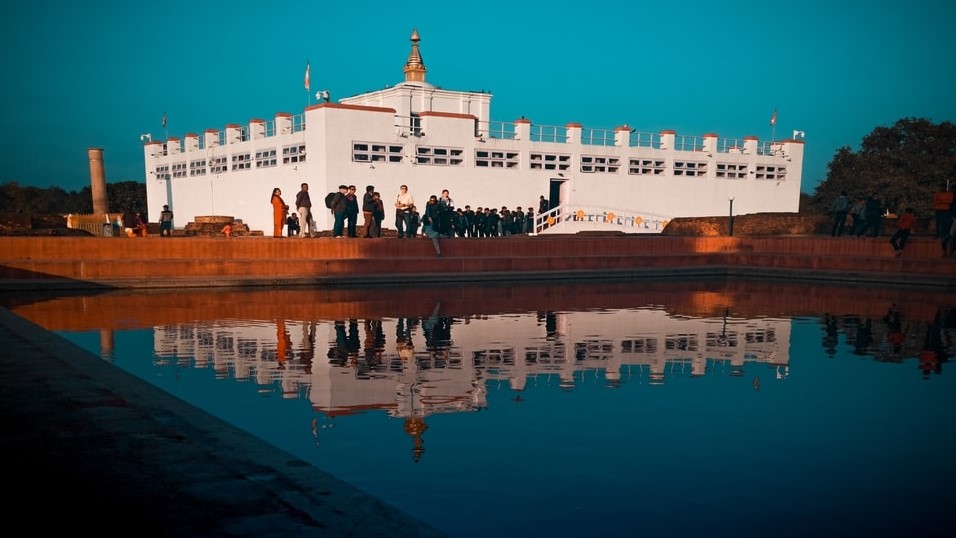
There are four UNESCO world heritage sites in Nepal. Namely, Sagarmatha National Park, Kathmandu valley, Chitwan National park and Lumbini. Each of them carries high significance and are pride of Nepalese people.

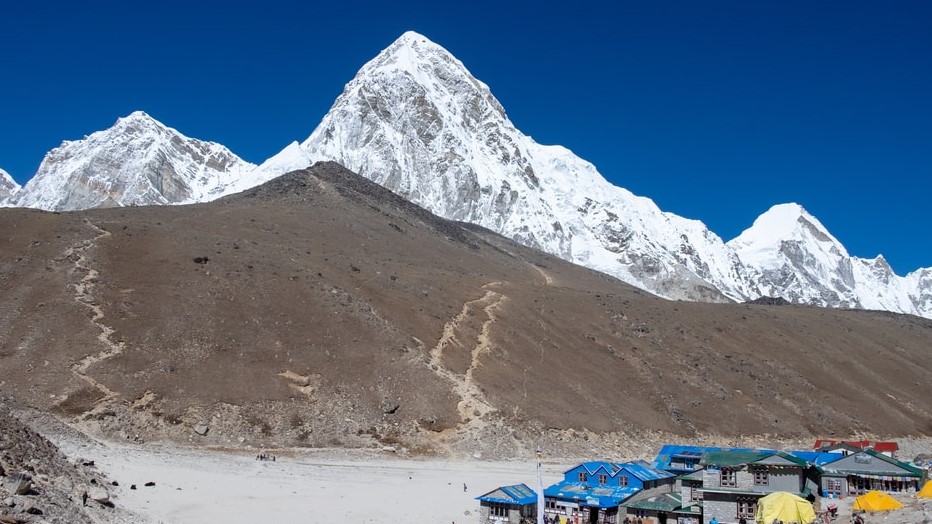
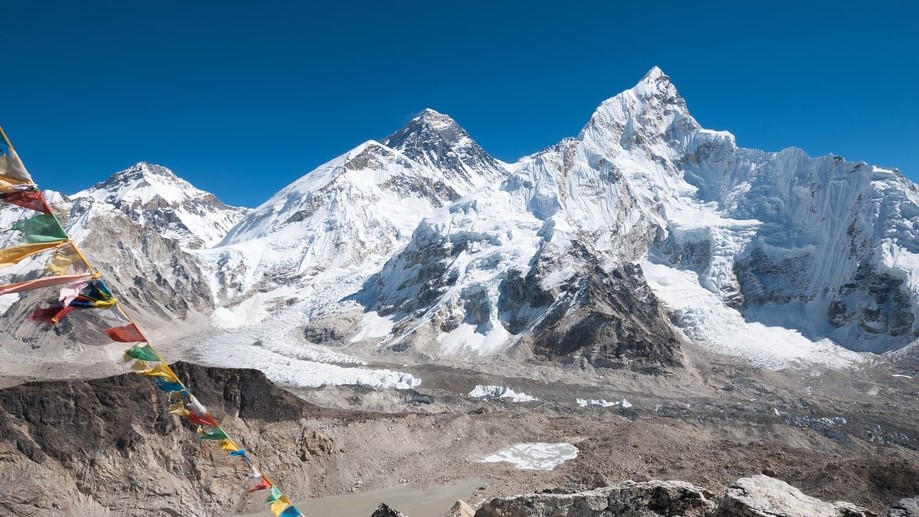
Highest mountain of world, Mount Everest (8848) is in Sagarmatha National park east-north of Nepal. The park is one of the busiest trekking and climbing region in the planet. Mount Lhotse (8516), third highest and Cho Oyu (8188m) sixth highest mountain are also in Sagarmatha National park. Numerous mountains and peaks of different height attracts mountain lovers from all over the world. It is frequently listed as one of the best trekking regions in the world.

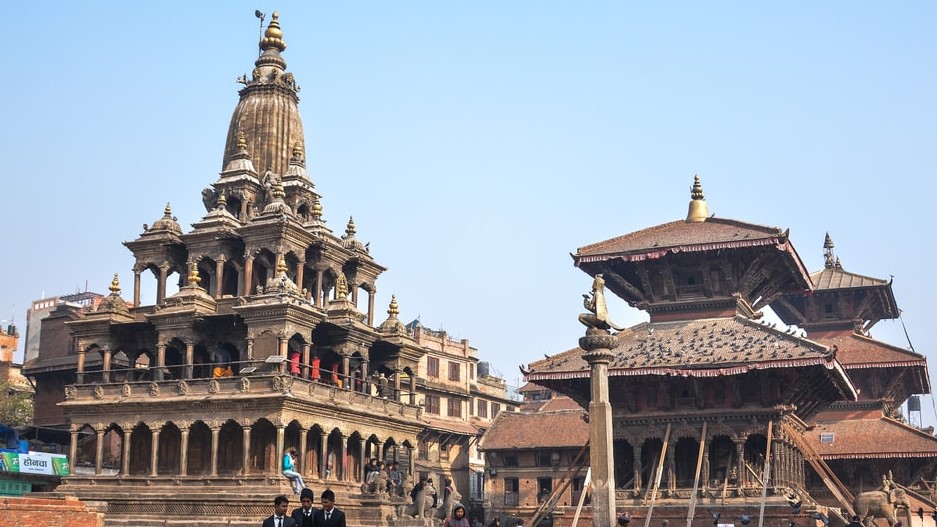
Interesting enough, not a specific monuments or sculptures, whole capital city Kathmandu is listed as UNESCO world heritage sites. City of temples, boasts for popular sculptures, idols, monuments. These carry religious, historical, cultural and traditional beliefs of Nepalese people. Out of many Swayambhunath, Kathmandu Durbar square, Pashupatinath, Boudhhanath, Patan Durbar square and Bhakatapur Durbar square are major sites.

Lumbini is birth place of Lord Buddha, situated in south-west of Nepal. Though, some people consider Lumbini as religious site, it is not. Mecca of Buddhism, message of peace and love attracts thousands of visitors in Lumbini, despite what religion people may follow. Yearly, a grand function is organized on the birth date of Lord Buddha from government level. If you are not a trekker in Nepal, you must include Lumbini in your tour itinerary.

Chitwan National Park is in mid-southern part of country. Popular for jungle safari and bird watching. Can consider Amazon of Nepal. Considering its size, it has very diversified ecosystem from tropical, wetland to savannah. Heaven for wildlife enthusiast. One-horned rhinoceros, Bengal tigers and Asian elephants all critically endangered mammals are the symbol of Chitwan National park.

Late, but Government has recorded 15 more sites in tentative list of UNESCO world Heritage sites in 2019. Namely, Panauti, Tilaurakot, caves of Mustang, Gorkha Durbar, Ramagrama, Khokhana, Lo-manthang, Sankhu, Rishikesh complex, Nuwakot Durbar, Ram Janaki temple, Tansen, Sinja valley and Bhurti temple of Dailekh. Hope these get listed soon and help boost tourism of Nepal in future.

Travelling/ Trekking Alone vs in Group

Yes, both have Pros and Cons. Safety, fun, price, privacy, your personal nature should determine what is better for you. There are no any definitive numbers how many persons should be in group to travel Nepal. We recommend you to travel and trek in small group of family and friends if possible, for better outcome. Also Read group size to trek in Nepal

Travelling Nepal with Children

Every year some parents travel Nepal with their children. It is possible to travel Nepal with children and toddler, but definitively needs a second thought. Lack of proper children-friendly infrastructures makes hard to keep them engaged. After all, we don’t have theme parks similar to that of Disney land or beaches or any other. Nepal is rich naturally, historically and culturally if it engages children, it’s simply about proper management and providing ultimate care for them.

Budget to Travel/Trek in Nepal

This is tricky to give a definitive answer. Lots of factors come in play to determine your travel/trek budget in Nepal. Trekking Vs tour, price of international flights to Nepal, your number of days in Nepal, your spending habit, level of luxury/comfort you need, place you visit, organized travel/trek through agency, travelling as backpacker, permit requirement, transportation are some factors that can fluctuate price. However, inquiring with some reliable agencies you will know approximate budget. Pay attention to unnaturally low-price agencies offer.

Inflation rate of Nepal is pretty stable. 4.2% in 2018, 4.6% in 2019, forecast of 6.2 % in 2020 and 5.5 % in year 2021. No, unnatural rise in price of foods and commodities is expected. Furthermore, foreign currencies like that of USD, GBP, Australian Dollar, Canadian Dollar, Swiss Franc, Euro are very strong comparing Nepalese currency. This increases the overall purchase power of travellers and trekkers in Nepal. Steady rate of inflation in Nepal, stronger your currency, as a traveller you are already in advantage to travel Nepal.

Marijuana and prostitution are illegal in Nepal

Smoking marijuana is illegal in Nepal. Like anywhere else, you can smoke with high privacy and secrecy, importantly out of sight of police and law enforcers. However, possessing marijuana, hashish in unreasonably high quantity, you will end up in prison for pretty long time. It will be considered as trade of illegal substances. Besides, possessing all other synthetic drugs and substances are illegal in Nepal.

Sex is very exclusive and private matter in Nepali culture. Rarely, people talk about it. Prostitution is illegal in Nepal. That implies there are no escort services in Nepal and somebody found operating will land in prison. NGOs and INGOs working on this matter claim, some are operating these illegal activities in backdrop of other business. Regular raid from law enforcers and police proves, these claims to be true.

Even if you were able to sneak, and caught by police, you will face huge social and moral embarrassment. However, making friends and sex with mutual consent between adults is not illegal. This implies for both male and female travellers. If authority proves your involvement and engagement in flesh trade, you will be awarded a lengthy sentence in Nepal prison.

Counterfeits in Nepal

Every travellers and trekkers need Nepalese currency immediately, once they land in Nepal. It is very unusual and rare to have fake notes with travellers and trekkers in Nepal. Still it is very important to pay attention and be careful. Exchanging currency from authorized banks, money exchanges, travel and trek agencies you will be safe. Ask receipts of exchange to strengthen your position, in case problems arise in future.

Every traveller should pay maximum attention while buying expensive souvenir in Nepal. This can be jewellery, Thangkas, sculptures and idols or any other. If you are buying expensive stones and metals in Nepal, be sure you buy them at right shop and they are genuine. Thangkas are on the top of the list as souvenir item among travellers. Pretty expensive. Spend wisely.

You can only purchase prototypes of sculptures and idols in Nepal. Even, if you able to buy genuine and real, you need to verify it from department of archaeology to take along. The chances are you cannot take them with you. Beside losing money, you may face legal troubles for acquiring old sculptures and idols of cultural and historical importance.

Nightlife Culture in Nepal (bars/pubs/casinos/discotheques)

Generally, nightlife is all about boozing dancing and music. Nepal is neither as open as Thailand nor as strict as Saudi Arabia regarding nightlife. There is certain and limited time frame to open bars/pubs or any business those operating in night, targeting nightcrawlers. Beyond, and you may spend night at police custody.

Live music, pubs, bars, discotheques, Nepali Dohori are some of its kind that entertain party lovers. Most of them remain pack by Nepalese youths. Depending upon, there might be a lot of differences in quality and price. We do not recommend travellers going outside touristic place like Thamel of Kathmandu and Lakeside of Pokhara. Since, these places operate business targeting foreigners and travellers, some of them have real quality to enjoy. Again, remaining safe should be your main priority.

Note ; If you are not regular wanderer and do not have any real experiences as backpacker or solo travellers, we recommend you booking your travel/trek/tour through agencies. Did we miss something? Go on adding in comment box.
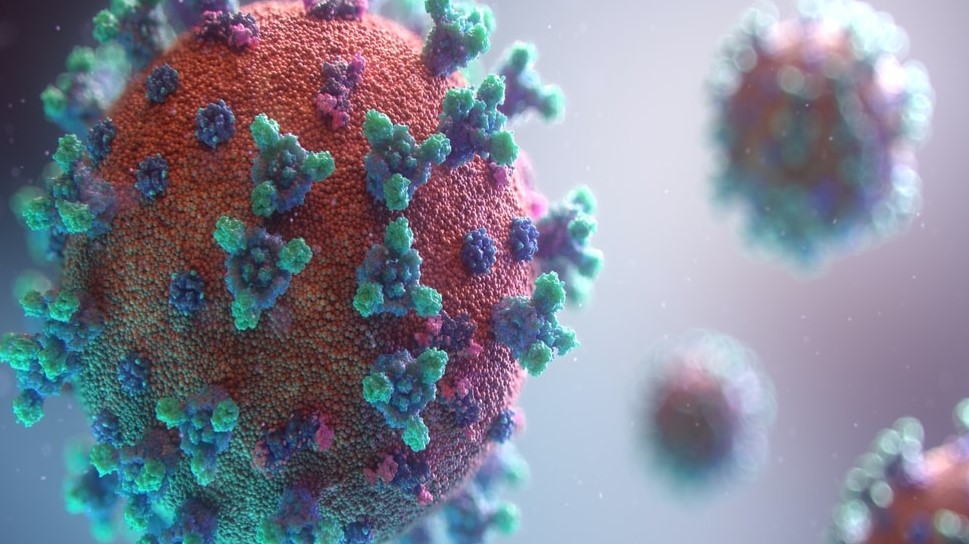
Travel and Tourism activities in Nepal after Coronavirus (COVID-19) crisis

Travel and tourism activities in Nepal after coronavirus (COVID-19) crisis, what traveller and trekker can expect? How tourism activities might resume? What could be the policies and guidelines of Nepal government to ensure the safety of travellers and its citizen? What are the roles and responsibilities of private sectors?  Are there any things travellers and trekkers need to be aware and remain alert? We break down all the concerns and safety measures traveller and trekkers should take while travelling Nepal after coronavirus ( COVID-19) crisis.

Overview of Coronavirus (COVID-19) around the world

Say, the Coronavirus (COVID-19) destabilized the typical routine of planet and further cemented the warnings of environmentalists to rethink our current efforts and behaviours to save the planet and humanity. What happened is a natural disaster, and will be remembered as black chapter in the history of planet. The pandemic has sent shockwave all around the world. Also it can be a great example and valuable lesson for various generations that, despite difference in ideology, race, religion, economic imbalance, technology, politics, somehow the natural calamities compel us to fight against it together. We should be always be prepared for that.

The world came to halt due to coronavirus disease (COVID-19) affecting daily of life of people. Every corner of planet suffered enormous loss of lives and finances due to coronavirus pandemic. Nepal is not exceptional. Considering, poor health system, weak infrastructures, and small economy the pandemic claimed considerably few lives in Nepal. Still early to say, but hope the death statistics remain relatively low until scientist finds vaccine. While it will be too early to calculate and summarize economic loss in numbers.

State-sponsored or independent scientists and experts are scrambling themselves to minimize further impacts of Coronavirus (COVID-19) all over the world. Research and study are going on to develop long term strategies to prevent and fight against such disasters in future. Besides, as a short-term measure, experts are researching a vaccine for this particular Coronavirus (COVID-19). Equally important, the global supply chain has been exposed causing economic loss, affecting day to day life of people in every corner of the world.

Every business and economic sector like that of energy, service, agriculture, production, real estate, technology to name few of many, suffered huge impacts from Coronavirus (COVID-19). Seriously impacted one is, tourism. As an emergency measure to contain virus, numerous countries imposed travel restrictions and lockdown, which brought tourism sector to its knee. Trillions of dollars is at stake throughout the world. Nepal, whose economy heavily relies on tourism sector is already vulnerable. The seriousness is so much high, numerous countries are providing subsidy to normalize tourism sector. Countries all over the world are struggling to lift travel restriction and lockdown, essentially to boost tourism as one of the main priorities.

Background of Coronavirus (COVID-19) in Nepal

Though country shares the border with China where Coronavirus first erupted, Nepal was not the country to suffer in its initial phases. A mountainous geography in the north and small scale of trade between the two countries???!! Though country reported first case of coronavirus in 23rd January, it was only by the end of March the country saw rises in the Coronavirus cases. Mostly imported by returnee of workers from India and also few contributed by returnee from Middle East countries. It was only in 24th March country-wide lockdown was imposed. Lockdown was lifted cautiously on 22nd July until further notice. The international and national commercial flights were postponed till 17th of August, by now has been extended further to 31 August due to rise in coronavirus cases.

As of 12th August, 23,948 cases were confirmed out of which 16,664 recovered and 83 deaths were reported. Here, know the current status of the coronavirus cases (COVID-19) in Nepal. This Wikipedia page may be useful to know the background, history and timeline of coronavirus (COVID-19) in Nepal.

Impact of Coronavirus (COVID-19) in Tourism sector of Nepal

Beside lives, every economic sectors of the country suffered huge loss. Particularly affected is tourism, the only reliable economic sector of the country that directly and substantially contributes the reserve of foreign currency. The most affected was, eagerly planned and awaited visit Nepal 2020 which had to be postponed indefinitely due to Coronavirus.

Luckily, January and February happen to be off-season for trekking and travel in Nepal. By then pandemic was fast growing in other parts of Europe, US and Asia, while there were only countable imported cases in Nepal. Ironically, there were still few numbers of travellers and trekkers stranded at Nepal until mid-March. Nepal had not imposed country-wide lockdown till 24th March. Many stranded travellers after lockdown were airlifted by respective countries Australia, Germany to name few before community transfer of virus started in Nepal.

Nepal is popular for two travel windows of spring and autumn. So, in reality, Nepal tourism sector suffered substantial loss only in the month of March, April and May. The upcoming travel window to Nepal are months of September, October and November. Highly busy months to travel and trek. Definitely will paint true picture at what degree Nepal tourism sector suffered, by the end of those peak season.

The heterogeneity spread of virus around the world is also a big hurdle for everybody to anticipate what comes next. Entirely new of its kind, the virus has also challenged scientists and experts to claim boldly success on vaccines, how second wave of the contagion may look like, genetic changes of virus in future, dormant and asymptomatic nature of virus and so on. Right now, claiming Nepal safe to travel and visit will certainly receive backlashes and criticisms. Furthermore, may lose credibility in the international community.

Government plan aftermath Coronavirus pandemic for tourism sector of Nepal

The Nepal government has apportioned fiscal budget of NRS 1.26 billion (approximately USD 10,563,380) to tourism sector for the year 2020/2021. The budget came during the coronavirus (COVID-19) crisis. So, government formulated the policy, especially targeting the Coronavirus pandemic (COVID-19) and its aftermath impacts on tourism sectors. Doubtful though ambitious project to bring 2.5 million tourists in Nepal was projected in budget, still is in book but will definitely can’t meet the target under current scenario.

Management improvement and regular flights of national flag carriers has always been at least one of the main goal of every government till date to boost tourism sector. Right now limited to few destinations, expansion of those carriers to numerous countries and cities is another huge task for government. Hope it proceeds fast and promptly. Identification of new tourist destinations, promotions of organic and remote destinations are some challenging agendas. Development of new infrastructures including airports were old policies of visit Nepal 2020, further renewed for this fiscal year.

Will it be safe to travel Nepal after Coronavirus pandemic (COVID-19)?

It is still early and hard to say how and when virus will be contained world-wide. Even though, there are news of successful test of vaccines, industrial production and world-wide distribution of coronavirus vaccine may take still couple of years. So, our assumption most of the countries in the world will anyway lift lock-down and travel restriction cautiously with numbers of rules and regulations to ease the economy. May sound impractical, but Nepal government should be able to allocate quotas on travel and tourist visas for certain period of time to certain countries. Postponing on arrival visas on Tribhuvan International Airport (TIA) also can be another safe measure.

As matter of fact, Nepal has already lifted country-wide lockdown and the international commercial flights will resume from 31 August (updated on 10th August), if COVID-19 cases don’t rise abruptly again till then. Certainly, Nepal will also follow the guidelines set by WHO and other experts and take effective measures to minimize spread of virus and will open tourism sector gradually. So, we assume Nepal will be safe to travel once tourism activities start throughout the world. To claim Nepal will be safe to travel,

1. Nepal has followed the guidelines of WHO and experts to contain the coronavirus. That also implies, Nepal is co-operating and will further co-operate to ease the economy including tourism sector upon studying various examples and steps other country takes.

2.Though Nepal shares boarder with China, the country never exported the coronavirus (COVID-19) to other countries. In fact, the country suffered pandemic only later stages while virus was hitting hard in countries like China, Italy, Iran, Europe and USA. The initial strategy Nepal opted to contain and spread of coronavirus is a story of success.

3. Like rest of the world, Nepal is highly cautious not to import any coronavirus cases in the country and suffer major setback after struggling so hard. So basically, saving lives of its citizens will be one of the main priorities of Nepal. So, it is unlikely Nepal will welcome every travellers and trekkers merely to boost tourism. The mechanism will surely safeguard health of its citizens and collaterally of travellers as well. So, we say Nepal will be safe to travel and trek soon.

4. Trekking region of Nepal is sparsely populated due to its remoteness, so the risk of contacting virus is very minimal for trekkers comparing other tourism activities. If a trekker remains alert and follow guidelines set by WHO the risk of contacting coronavirus is almost null during trekking. However, one should be always careful and take precautions while spending nights at tea houses. Also, if trekkers and travellers avoid crowd in cities like that of Kathmandu, Pokhara, Chitwan and Lumbini anybody can say Nepal is safe country to travel.

5. Nepal is complying with rest of the world and is releasing day to day cases of Coronavirus (COVID-19) to its citizen and world. In other words, Nepal is swiftly and promptly providing information and data to world regarding coronavirus. So, Nepal is open to share all the information and will specifically help travellers and trekkers in future to know and understand and decide on their own whether Nepal is safe to travel or not?

6. Nepal will definitely wait & watch how experts suggest and formulate plan to open tourism sector. Without doubt, will follow guidelines and regulations set by those experts. Plus, the country can modify the rules and regulation on its own to enhance safety of its citizen including that of travellers and trekkers.

7. In current situation it is unlikely; the country will see enormous flow of trekkers and travellers overwhelming the system. So, there will be manageable numbers of visitors that can help further strengthen the safety of travellers with ease.

What would be the role and responsibilities of private companies and agencies to safeguard safety of travellers and trekkers?

Broad policies and guidelines to manage and smoothen the tourism sector will be formulated and implemented by government of Nepal. But, private companies and agencies working on tourism sectors also have some roles and responsibilities to safeguard travellers and trekkers from the pandemic including themselves. 

1.Testing crews and workers frequently against coronavirus (COVID-19) those come in direct contact with travellers will be the most important task of private companies and agencies. Providing safety kits, educating them, providing updated information on coronavirus should happen more often.

2.Booking and operating tourism activities within small scale and with manageable numbers of travellers in a group can be a good start.

3.Encouraging travellers to travel in group with family and friends they already know can be effective from the safety point of view.

4.Encouraging and convincing travellers and trekkers to visit less-crowded region and area will also strengthen safety in certain degree. Promoting and substituting itinerary of Khopra Danda Khayer Lake itinerary to that of Annapurna Base camp can be good example. It promotes lesser-known region plus enhance safety of trekkers.

5. Providing short, yet equally attractive itinerary for travellers and trekkers rather than focusing in lengthy stay of travellers in Nepal.

6. Increase credibility among the travellers in optimal level. Providing honest information to travellers than approaching with push sales. It seems unreasonable, but will surely benefit everybody in long-term. Anyway, we are just trying to start tourism activities after horrendous pandemic. So why not with faith?

How to minimize risk of contracting coronavirus yet travel and visit Nepal?

The risk of contracting coronavirus is still there, in any part of the world not only in Nepal. A fast spreading and asymptomatic nature of the virus is highly challenging. A single case of coronavirus can lead to a pandemic as we have witnessed. But we genuinely don’t think people will stop economic activities waiting for vaccine. It is also certain that, until then all of us will be asking and practicing precautions to minimize the spread of virus. Sooner or later #stayhome will be replaced by #staysafekeepsafe and it is already happening in certain part of world.

1.Following guidelines of World Health Organization (WHO) is one of the best ways to remain safe. Surely, there will be certain changes in regulations in near future regarding inter-country travel and visit. Keep eyes on it.

2. Not only in case of Nepal, once lockdown and travel restriction uplifts, closely monitor the situation of the respective country you travelling. Ask and look for advice of the experts, if you are not sure.

3.Regularly visit the websites and information portal of embassies of Nepal in your country and of your country in Nepal. Gather every important information about Nepal.

4.Nepal won’t vigorously and randomly welcome every traveller in disrupted manner any soon, so follow the criterion set by tourism sectors of Nepal.

5. Staying safe is personal responsibility. So, stay safe and help community by keeping them safe as well.

6.Travel and trek in a small group along with known friends and family members as much possible.  May not be cost-efficient and hard to manage but nothing is better than being safe and keeping safe.

7. Asking appropriate and less-crowded itinerary with travel and trekking agencies, asking more information than usual inquiries can be innovative aspects travellers and trekkers can take.

8. Understanding health system of Nepal, insurance coverage for COVID-19, rescue coverage by insurance company is also equally important.

Concluding, here we provide some of the important lists of ministries of Nepal and bureaucrats under them. Is always helpful to update and know various new information about Nepal.

Department of Immigration              
-Can be useful to understand any changes in visa regulations. A bureaucrat Department that works for Ministry of Home Affairs.

Ministry of Home Affairs
-Deals with internal security, crisis management, public administration. Department of Immigration falls under the supervision of Ministry of Home Affairs.

Ministry of Health and Population  
-Usually deals with health-related matters of Nepalese citizens. For now, they provide day to day updates on coronavirus cases as well.

Ministry of Culture, Tourism and Civil Aviation
– Updates ,regulates, supervises and provides various sorts  information related to travel and tourism activities including policy formulation.

Department of Tourism
-A bureaucrat Department that works for Ministry of Culture, Tourism and Civil Aviation.

Ministry of Foreign Affairs
-Deals with external affairs with various countries including embassy related matters.

Ministry of Information and Communication
-Regulates information and supervises any communication related matters.

Note : Any statements made above are purely perceptions and insights of author. In no way it should be regarded as an expert advice and any individual should not act in such a way.

Top Things To Do In Nepal

So you suddenly interested in travelling to Nepal for next vacation? And confused about what activities are popular in Nepal. Stop browsing further, you are at the right spot, where we provide every possible list of top things to do in Nepal. Compiling in a single page.

A.Main Activities to do in Nepal

Without creating further confusion, these listed activities should be one of your prime things to do in Nepal. In other word, these activities should be your main objective to visit Nepal. Most of your stay in Nepal revolves around these activities. Though, a small fraction of other activities can be included in the broader and extended itinerary, we will apportion them below separately. For example, most of our online published itineraries have a sightseeing day in Kathmandu.

1.Trekking

The word “Trekking” and “Nepal” are symbiotic. Trekking is the main driving force and contributor of tourism activities in Nepal. Why? Well Nepal provides spot on trekking itinerary as per demand of trekkers, very neatly. Rather than pushing certain popular trekking itineraries to you assuming wannabe trekker, local agencies asks your expectations, needs and impulse.

Also Read 10 Best trekking itineraries in Nepal

There are so many possibilities, local travel agencies of Nepal at some point should sub-divide and categorise trekking itineraries depending on number of days, protected areas, permit requirements, transportation available, altitude, mountains and peaks, easy/hard, remote/near, crowded/less crowded, classic/ newly promoted, camping/teahouse, budget/luxurious and so on. Trekking, is at the top of the chart on list of things to do in Nepal without any doubt because of these numerous options available for enthusiastic trekkers.

As a trekker, you really need not constrict yourself whether it is budget, your age, physical stamina you can always customize your trekking itinerary as per your requirement. As earlier said, trekking in Nepal is so vague subject, gathering and accessing definitive information from single source can spin your head. Relying in online search may be helpful but it may not be enough unless you are sure and ready to spend number of hours if not weeks, for example, Everest Base camp is your determined destination. Exactly, nobody searches medical prescription online typing symptoms of your illness instead you visit a doctor. So, is the trekking in Nepal, any doubt, and you may ask the expert.

Also Know Popular Trekking Regions of Nepal (depending on protected areas/conservation area/national park)

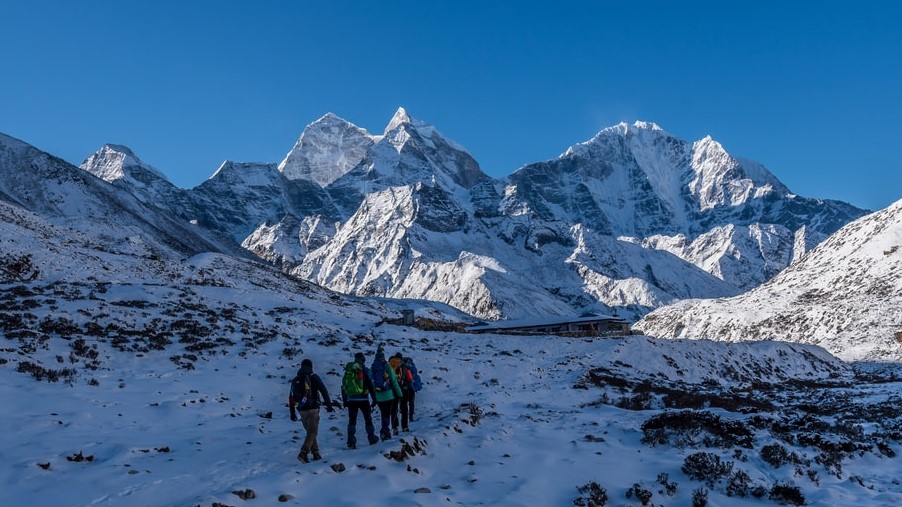
Most of the popular and trending trek itineraries comes under these five trekking regions and can be perfect for both amateur/beginner and experienced trekkers. This includes Base camp treks, circuit treks, high passes trek and can range from easy, moderate to hard. Furthermore, Everest, Annapurna and Langtang trekking regions have high possibilities to customize itinerary upon request of trekkers. Rather than overstuffing, we provide short and crispy information that we believe should be able to address curiosity and concerns of huge section of trekkers.

Everest Trekking Region

One of the most popular trekking regions of Nepal, and reasons:
-Mount Everest, the highest mountain in the world. Everest Base camp hotspot for trekkers.
-Mount Lhotse, Mount Cho-Oyu repectively 4th and 6th highest mountains in the world.
-UNESCO world heritage site.
-Interestingly, Everest trekking region is stuffed with mountains and peaks, some are left without proper mapping and naming. So many.
-Beautiful High altitude ecosystem and landscape ranging from forested temperate, sub-alpine, alpine and nival providing home to alpine mammals and birds.
-Unique culture and tradition of Sherpa people.
-Monasteries, Chortens, Manis wall highlighting Buddhist religion.
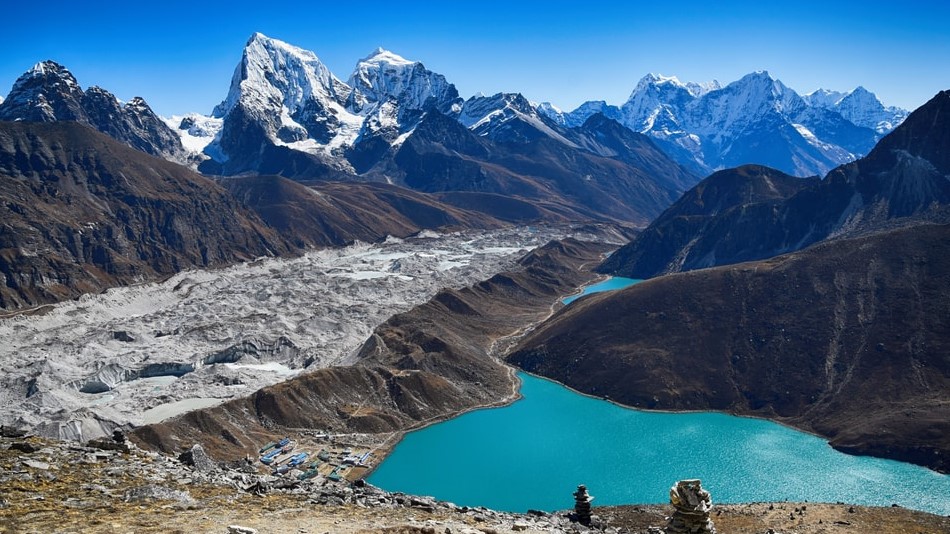
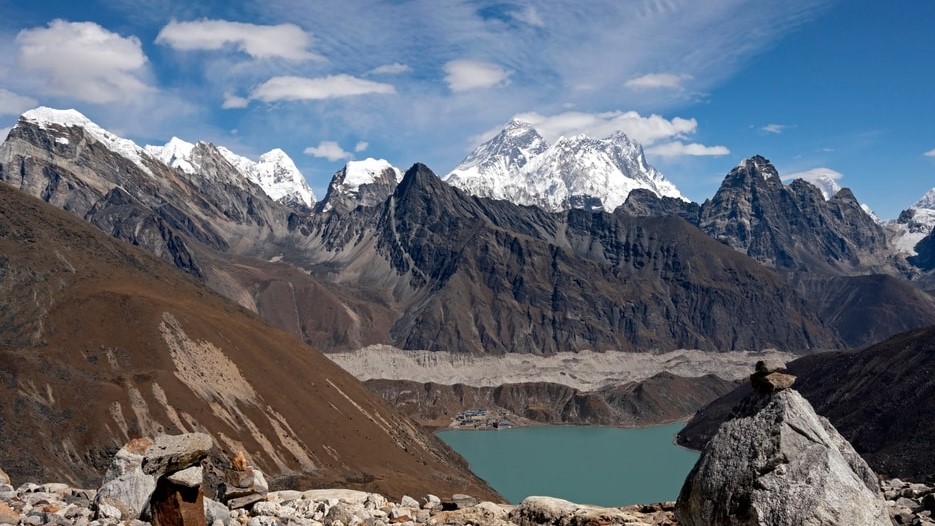
-Beautiful and fascinating high-altitude Lakes primarily Gokyo Lakes.
-High Altitude trekking passes.
-Popular Viewpoints to summarize landscape of Everest trekking region namely Gokyo ri and Kalapathhar.
-Peak Climbing an additional activity for high degree adventure seeker.
-Expensive, yet Helicopter tour is possible for those not interested in trekking and has tight schedule.

Know Best treks in Everest trekking region

Protected Area
Sagarmatha National Park

Trekking season
March-May and September-November. Trekkers are advised to avoid peak time to elude crowd of trekkers. For example, starting trek in the last week of February can be better option.

Place of Interests in Everest Trekking region
Lukla Airport, Namche Bazaar, Tengboche, Dingboche, Gorakshep, Everest Base camp, Island peak, Kalapathhar, Chhukung, Kongma-La pass, Cho-La pass, Gokyo valley, Gokyo lakes, Gokyo Ri, Renjo-La pass, Mirlung, Thame, Mera peak, Hinku valley

Transportation
Flight Kathmandu-Lukla-Kathmandu unless, one starts trek from Jiri.

Trekking Permits
Sagarmatha National park permit, TIMS card

Food and Accommodation
Fresh Meals prepared by moderately professional cooks. Menu can vary from local, Continental, Mexican, Italian depending on tea houses. Clean single, twin, triple bedroom in properly built tea houses.

Gadget charging Facility
Available to charge equipment batteries in most of the places upon paying extra charges. Power bank, extra batteries for cameras can be wonder.

Communication Facility
Telephone and mobile service available in most of the places. Wi-Fi available only at Namche Bazaar. If you are trekking as a backpacker, purchasing a Nepali SIM card is advisable can be useful in case of emergency scenario.

Drinking Water
As a responsible trekker avoid plastic bottles. Hot water is available in tea houses. You may not need, but water purifiers can enhance your safety.

Concerns for Trekking in Everest Region
-Altitude Sickness
-Highly crowded. Unlikely, yet may need to spend night at dormitory in upper trekking region.
-Weather, particularly may affect Kathmandu-Lukla-Kathmandu flights ranging from single day to weeks. Volatile weather in upper trekking region means, rarely, but it may disappoint blocking the natural scenery in crucial moments, like from Kalapathhar, Gokyo ri.
-Slightly expensive?!! Comparing to other popular trekking regions of Nepal.
-May need experience of trekking. Especially, for those who have spent most of their lives in tropical part of the planet.

Itinerary Flexibility
Not really. We strictly advise you to follow our standard trekking itinerary. Since, most of the transportation relies on flights, adjusting itinerary can be difficult and cannot be guaranteed. Furthermore, instead of getting refund you may need to pay extra depending on scenario.

Our price range for Everest Trekking Region
USD 1165.00-USD 4565.00 per person.

Click here to learn how to make trekking cheap in Nepal

Annapurna Trekking Region

Equal to Everest Trekking region, if not Annapurna trekking region is the second most popular trekking region of Nepal. Here are the reasons,
-Biggest protected areas of Nepal, with lots of trekking itineraries option.
-Mount Annapurna and Mount Dhaulagiri 10th and 7th highest mountain in the world.
-Numbers of easy, moderate and adventurous itineraries makes the trekking region equally appealing to amateur as well as experienced trekkers.
-Highly diversified eco system and landscape including tropical, temperate, alpine, nival and trans-himalaya.
-Highly diversified cultural community living in harmony thorough out the conservation area. Gurung,Ghale, Thakalis, Manangis, Tibetan,Sherpas, Lobas ( in upper Mustang) , are some distinguishable community in upper trekking region.
-Numerous Manis wall, Chortens, Monasteries signifies the cultural, historical and traditional aspects of people living in the region.
-High altitude passes, base camps, high altitude lakes, numerous mountains and peaks in the Annapurna region can make any trekker fully content.
-Peak climbing can be additional activity in regular trekking itinerary to amplify adventure.
-Numerous transportation options, relatively good infrastructures in the region can be bonus for amateur trekkers.

Also for you Best Treks in Annapurna trekking region

Protected Area
Annapurna Conservation Area

Trekking Season
Since Annapurna Conservation area covers a huge area, the trekking region has the longest trekking window. For example, Upper Mustang trek is generally known for off-season trekking in Nepal. However, March-May and September-November are favourable trekking season.

Place of Interests in Annapurna Trekking Region
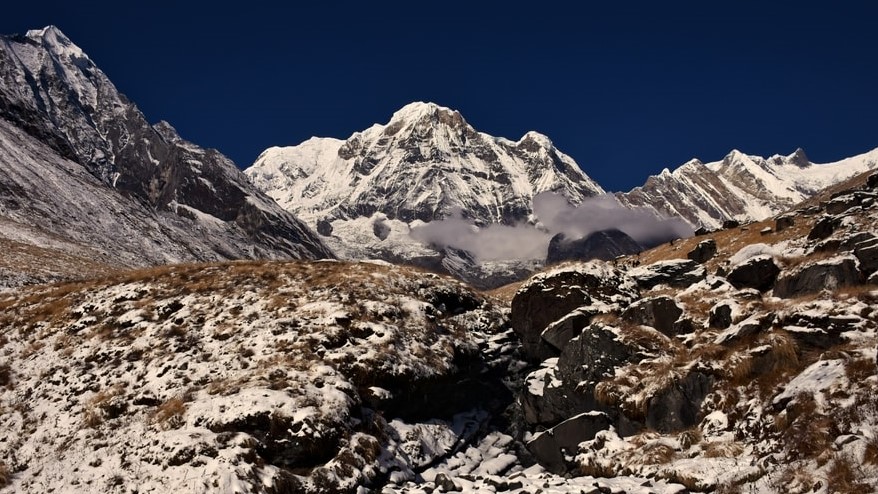
Besisahar, Pisang, Manang, Tilicho Lake, Nar Phu valley, Thorong-La pass, Upper Mustang( Lo-Manthang), Saribung peak, Muktinath, Jomsom, Tatopani, Ghorepani, Poon hill, Ghandruk, Chhomrong, Annapurna Base Camp, Dhampus, Pokhara, Mardi Himal Base Camp, Khayer Lake.

Transportation
Road Transportation available from Kathmandu to Besisahar and Pokhara to start trek. Regular daily Flights to Pokhara from Kathmandu can be another fast and easy option. Jomsom Airport plays vital role for some trekking itineraries like Round Annapurna trek, Upper Mustang trek, Kaligandaki valley trek and Tilicho Lake trek. Lots of off-road networks within the conservation area has mixed reviews from trekkers including praises and criticisms equally. Find here details about transportation for trekking in Nepal.

Trekking Permits
Annapurna Conservation Area Permit
TIMS card
Restricted trekking area permit (Upper Mustang trekking, Nar Phu valley trekking)

Food and Accommodation in Annapurna Trekking Region
Wide ranges of food Menu from local, continental, Italian to Mexican prepared by moderately professional cook. Nice clean beds in well-built tea houses.

Gadget Charging Facility
Available in most of the tea houses upon paying extra money. Extra batteries and power bank can be useful as back up.

Communication Facility
Wi-Fi may be available on limited place, especially in lower trekking region. Telephones and mobile works in most of the places. Purchasing a Nepali SIM card can be handy in case to make emergency calls.

Drinking Water
Self-conscious tea house owners in some places have banned plastic water bottles. However, trekker can instantly get boiled water in every tea house. Carrying water purification tablets is always a nice idea.

Concerns for trekkers in Annapurna Region
-Risk of Altitude Sickness in upper section of trekking region.
-Some trekking itineraries are exceptionally crowded in peak trekking season. Annapurna Base camp, Annapurna Round are some example where sometime services provided might not meet your expectations.
-Process of obtaining restricted trekking area permit might disappoint some trekkers. Since, you must have minimum two members in your trekking group, need to issue thorough trekking agency and need to hire local trekking guide to trek in those areas.
-Again, high wind in Jomsom can disrupt flights in between Jomsom, Pokhara. Fast changing weather in upper trekking region may make trekking unpleasant in high altitude beside spoiling scenic views.
-Some trekking sections in Annapurna region are highly remote (more than Everest??!!), so need to be extra-careful while finalising itinerary. Adding Kang-La pass, Mesokanto-La pass Saribung pass in itinerary, trekker needs to pay extra-attention and study few things on their own.

Itinerary Flexibility
Off-road networks in the Annapurna Conservation area makes trekker easy to change and revise trekking itinerary during the trek. Except some trekking itineraries like Annapurna Base Camp, Khayer Lake trekking, Mardi Himal trekking. As we usually say and request trekkers to follow standard itinerary except in case of emergencies.

Our Price range for Annapurna Trekking region
USD 928.00- USD 2248.00
This does not include Saribung trek and Helicopter tour, since the price highly fluctuates depending upon number of persons in group. For further info ask info@snowpathtrek.com.

Langtang Trekking region

Highly biased trekking region, branding, marketing, promoting trekking region with phrases “best trek for amateur trekkers”, “easy trek”, “cheap trek”, somewhat true but not entirely is the case. Learn here why trekkers need to consider Langtang trek. Moreover,
-No 8000m mountains and peaks still, Langtang trekking region is the third busiest trekking region of Nepal. This signifies, there must be something special awaiting for trekkers. Moreover, Langtang Li Rung (7234m), Langtang Ri (7205m), Dorje Lakpa (6966m) along with numerous peaks will surely quench your thirst of mountain madness.
-True, the favourable and easy landscape attracts numerous amateur and beginner trekkers but can be equally satisfying to experienced trekkers as well. Afterall, climbing Tserko ri, trekking to Gosaikunda, crossing Lauribinayak (Gosaikunda) pass is not as easy as it sounds.
-Nearby Tibet, trekker can have glimpse of unique geography, plus can experience reciprocal exchanges of culture, language and tradition between Nepal and Tibet.
-Regular and daily departure of local buses within few intervals from Kathmandu to Dhunche/ Syabrubeshi/ Melamchi/ Sundarijal or any other entry and exit point of Langtang trek minimizes uncertainty  to start and end trek that flight sometime creates in Annapurna and Everest region where you need to rely on flights. Hiring private jeep is another luxurious option for trekkers travelling in group.
-Indigenous Tamang community and their culture is one of the major highlights of Langtang trekking region. So much, an itinerary is named “Langtang Tamang Heritage trekking”.
-Hyalmo community around Helambu is another interesting aspect of Langtang trekking region. Even though, inspired form Sherpa community they have unique culture, tradition and own identity.
-Manis wall, abundance number of chortens, few yet ancient and important monasteries signifies rich culture and tradition of people following Buddhism in Langtang region.
-Like any trekking region, Langtang has diversified ecosystem with tropical, temperate, sub-alpine, and alpine climatic zone. The dense forest provides home to stunning birds and mammals particularly Red Panda. Continuously changing landscape in few interval of trekking hour is amazing.
-High altitude alpine lakes, numerous peaks, viewpoints to summarize landscape of Langtang valley, dense and compact habitats of people, day to day activities of indigenous people are some other highlights of Langtang trekking region.
-Comparing to Annapurna and Everest, there is slight chance trekker may find Langtang region relatively cheap but not as much as hyped.
-Relatively less-crowded comparing to Everest and Annapurna trekking region.
-As a trekker, you might not need exceptionally high trekking experiences to trek in Langtang region if you pay slight attention in itinerary.
-Not satisfied with degree of adventure, adding peak climbing in any trekking itinerary of Langtang region surely completes what you are seeking for.

These are the List of easy and short treks for amateur/beginner trekkers.

Protected Area
Langtang National Park

Trekking season
March-May and September-November is best time to trek in Langtang trekking region.

Place of Interests in Langtang Trekking region
Dhunche, Syabrubeshi, Gatlang, Tatopani, Nagthali, Thuman, Briddim, Sherpagaon, Lama Hotel, Langtang-Kyanjing Gompa, Tserko ri, Thulo Syabrubeshi, Singompa, Gosaikunda Lake, Gosaikunda Pass, Ghopte, Melamchi gaun, Sermanthang

Transportation
Road transportation to start and end the trek in Private jeep, Local jeep and Local bus.

Trekking Permits
Langtang National park permit, TIMS card

Food and Accommodation
Fresh Meals prepared by moderately professional cooks. Clean bedrooms in properly built tea houses.

Gadget charging Facility
Available to charge equipment batteries in most of the places upon paying extra charges. Power bank, extra batteries for cameras can be wonder.

Communication Facility
Telephone and mobile service available for communication. Wi-Fi available only at Syabrubeshi. For Free Individual trekkers and backpackers buying Nepali SIM card makes easy to communicate in case of emergency situation.

Drinking Water
Avoid plastic water bottles to keep environment clean. Hot drinking water is available in most of the tea houses. Carrying water purification tablet to amplify the safety of health.

Concerns for trekkers in Langtang Region
-The trekking region is not likely to be the first choice of trekkers who are determined to see the highest mountains of the world. That is more than 8000m.
-Not likely to catch Altitude sickness but must be careful while ascending Tserko Ri, Gosaikunda lake and Gosaikunda pass.
-General food menu may contain Italian, Continental, local and Mexican dishes. Animal sacrifice in Langtang is very inauspicious so meat items in the region is very limited.
-Using local bus transportation in off-road to reach Dhunche and Syabrubeshi is quite difficult. Hiring a private jeep for solo and individual trekker can be expensive.

Itinerary Flexibility.
The numerous exits and entry points to start and end trek in Langtang region makes it one of the most versatile trekking region of Nepal. Also, we discourage to change and amend day to day trekking itinerary.

Our price range for Langtang Trekking region
USD 1205.00-USD 1505.00 per person.

Manaslu Trekking Region


Manaslu Trekking region can be great substitute for Annapurna trekking region. Especially for trekkers who already have visited Annapurna and want to increase some degree of adventure. Growing number of trekkers in the region is overwhelming.
-The trekking region is named after mount Manaslu, eighth highest peak in the world.
-Round Manaslu and Tsum valley trek are two popular trekking itineraries in the region. Equally appreciated by trekkers. Both the trekking itineraries can be combined for maximum yield.
-Needless to say, due to circuit itinerary trekker can experience tropical, temperate, sub-alpine, alpine and snowline climatic landscape in the region. In other hands, Tsum valley is popular to explore ancient practices of Buddhism beside landscape itself.
-During Round Manaslu, trekker can explore and see the culture of Nubri community while in Tsum valley trek, trekker can explore highly isolated Tsum community that has few interactions with outside world.
-Both trekking are rich culturally with numerous Monasteries, manis wall, chortens. Despite, some trekkers believe Tsum valley is right spot to understand ancient practices of Buddhism in Nepal.
-Numerous mountains and peaks are indisputable highlights of of Manaslu region. Base camp, alpine lakes, Larkey pass, nearby landscape of Tibet are some other fascinating factors that attracts trekker in the region.
-Trekker also can see some popular mountain ranges of Annapurna trekking region while descending from Larkey la pass.
-Peak climbing can be added in the trekking itinerary. Larkey peak is the most popular and trending.

Protected Area
Manaslu Conservation Area plus a section of Annapurna Conservation Area

Trekking season
March-May and September-November is best time to trek in Manaslu trekking region.

Place of Interests in Manaslu Trekking region
Arughat, Jagat, Bhi, Lho, Samagaon, Pungyen Gompa, Samdo, Dharmashala, Larkey pass, Bhimthang, Tal, Syange, Besisahar for Round Manaslu trek. For Tsum valley, the trek diverges from Gampul to east-north. Lokpa, Chhokangparo, Nile, Mu Gompa, Rachen Gompa, Lungdang Gompa, Ripchet, Sotikhola.

Transportation
Road transportation to start and end the trek in Private jeep, Local jeep and Local bus.

Trekking Permits
Manaslu Conservation Area Permit
Annapurna Conservation Area permit
TIMS card
Restricted area trekking permit (for both Round Manaslu and Tsum valley trek.)

Food and Accommodation
Fresh Meals prepared by moderately professional cooks. Clean bedrooms in properly built tea houses. Once, considered remote trekking, local people are investing for better infrastructures with great pace.

Gadget charging Facility
Available to charge equipment batteries in most of the places upon paying extra charges. Power bank, extra batteries for cameras can be wonder.

Communication Facility
Telephone and mobile service available for communication. For Free Individual trekkers and backpackers buying Nepali SIM card makes easy to communicate in case of emergency situation.

Drinking Water
Avoid plastic water bottles to keep environment clean. Hot drinking water is available in most of the tea houses. Carrying water purification tablet to amplify the safety of health.

Concerns for trekkers in Manaslu Region
-Risk of Altitude Sickness in upper section of trekking region.
-Slightly expensive, since trekker needs to purchase four different types of trekking permits.
-Manaslu trekking relies on porter and mules for transportation, can be slightly expensive comparing to Annapurna and Langtang.
-May need experience of trekking. Especially, for those who have spent most of their lives in tropical part of the planet.
-Process of obtaining restricted trekking area permit might disappoint some trekkers. Since, you must have minimum two members in your trekking group, need to issue thorough trekking agency and need to hire local trekking guide to trek in Manaslu region.
-Unpredictable snowfall in Larkey pass sometime may need extra equipment like rope, crampons to cross. In worst scenario, trekker might need to abandon the pass and retrace down same path without completing trek.
-Tsum valley trek is still remote trek comparing Round Manaslu. So, sometime trekker might not get sophisticated food menu in tea house and might need to compromise with local food depending.

Itinerary Flexibility
Not really. We strictly advise you to follow our standard trekking itinerary. Both the trekking is sort of one-way traffic that starts from Arughat/Sotikhola. Trekker retraces same path back to Arughat upon completion of Tsum valley trek. In other hand, Round Manaslu can be completed in Dharapani/ Tal/ Syange/ Besisahar depending upon number of days trekker has.

Our price for Manaslu Region
Tsum valley trek USD 1771.00. For Round Manaslu trek USD 1725.00

Find here Short and crispy Information in Round Manaslu

Kanchenjunga Trekking region

When Sele-La pass joins North Kanchenjunga Base camp and South Kanchenjunga Base camp it is known as Kanchenjunga Circuit trekking. Otherwise, people prefer to call Kanchenjunga Base camp. Here are the highlights of Kanchenjunga.
-Mount Kanchenjunga with height 8586m is the third highest mountain in the world.
-Other flanks of Mount Kanchenjunga includes Kanchenjunga West( 8505m), Kanchenjunga Central( 8482m), Kanchenjunga South (8494m), Khambachen (7903m). Mount Jannu, Mount Kabru, Rathong peak, Kokthang peak surely pleases mountain lovers.
-The Conservation area located in Far-east of Nepal means trekker can truly distinguish highly diversified landscape of Nepal with different flavours than rest of trekking regions of Nepal.
-Cultural diversity can be another attractive aspect for trekkers. Rai, Limbu, Kirati, Sherpa are some ethnic community to name.
-Trekking to both North and South Base camp of Kanchenjunga through three different small and big passes, trekker can experience both “ base camp trekking” and “ circuit trek” in single itinerary.
-Less crowded trekking region means, trekker can enjoy the Kanchenjunga trekking thoroughly.
-Trekker might find Kanchenjunga trekking moderately adventurous or adventurous depending upon their experience of trekking in Nepal.
-Peak climbing in the region is not highly popular but still there is possibility to add few extra days for interested climbers.

Protected Area
Kanchenjunga Conservation Area

Trekking season
March-May and September-November is best time to trek in Kanchenjunga trekking region. Highly limited due to long trekking itinerary and lengthy transfer to start and end trek.

Place of Interests in Kanchenjunga Trekking region
Taplejung-Mamankhe-Yamphudin-Chitre-Ramche-Yalung Base camp-Sele-La pass-Ghunsa-Khambachen-Lhonak-Kanchenjunga Base camp-Pangpema-Amjilosa-Chirwa-Bhadrapur

Transportation
Flight to Suketar from Kathmandu, if there is any available. If not fly to Bhadrapur and drive to Taplejung. Driving from Kathmandu to Taplejung is not great idea unless there is special scenario. Vice-versa to end the trek.

Trekking Permits
Kanchenjunga Conservation Area Permit
TIMS card
Restricted area trekking permit

Food and Accommodation
The food menu may not contain exceptional food items and may need to rely on local food. No doubt whatever you get is fresh and good for health. Also, not big tea houses as trekkers see in Annapurna and Everest, but again trekker will find clean bedroom to spend overnight.

Gadget charging Facility
Equipment Charging facility is available in the lower section of trekking region upon paying few extra charges. May not available in upper trekking region, so carrying extra batteries for camera is good idea.

Communication Facility
Telephone and mobile service available for communication. For Free Individual trekkers and backpackers buying Nepali SIM card makes easy to communicate in case of emergency situation.

Drinking Water
Avoid plastic water bottles to keep environment clean. Hot drinking water is available in most of the tea houses. Carrying water purification tablet to amplify the safety of health.

Concerns for Trekkers in Kanchenjunga Trekking
-Risk of Altitude Sickness in upper section of trekking region.
-The lengthy transfer (transportation) to start and end trek from Kathmandu to Taplejung to Kathmandu. This makes Kanchenjunga trekking expensive for general trekkers. Besides, Kanchenjunga trekking itself has a long trekking itinerary which can increase trekking price dramatically, in total.
-Basic food and accommodation in Kanchenjunga trekking means trekker needs to spend few extra money to improvise the luxury during trekking, importantly if they want. This may include buying few extra food and carrying sleeping tents.
-Local people migrate from upper trekking region to lower trekking region during winter, so does the tea house owner. So, relying on trekking season/best time to trek to Kanchenjunga to accomplish this particular trek can be huge mistake. Especially for backpackers and individual trekkers.
-Process of obtaining restricted trekking area permit might disappoint some trekkers. Since, you must have minimum two members in your trekking group, need to issue thorough trekking agency and need to hire local trekking guide to trek in Kanchenjunga region.
-Even though day to day itinerary is prepared making suitable for huge section of trekker, it need not necessarily become first choice for amateur and inexperienced trekkers.

Itinerary Flexibility
The trekking itinerary is not really flexible. Few flight is one of the other  many reason that is challenging to change itinerary frequently. Besides, Kanchenjunga trekking itself is a hard (moderately hard if you are experienced trekker). Before changing itinerary, every involved parties ( trekkers, trekking agencies, trekking guide) should carefully assess the gain and loss in doing so.

Our price for Kanchenjunga Trekking Region
Ask info@snowpathtrek.com for detail price.

Also know Best circuit treks in Nepal

Note: Our total price may vary on customization of trekking days, number of trekkers in group, types of service including modes of transportation. How to obtain restricted area trekking permit in Nepal?

2.Peak Climbing

Peak climbing activity in Nepal is tricky, since trekking and peak climbing co-exits together. Generally, peak climbing is a climax for trekking. Adding 2-3 days in trekking itinerary, trekker can summit the desired peak. Depending upon peak, trekker might need moderate to extensive skills and experiences to summit the peak.

The peak climbing activity is regulated by Nepal Mountaineering association and Department of Tourism. In other word, trekker need to obtain peak climbing permit from either of these organizations.

Including trekking peak in popular trekking itineraries is one of the best way and common way to quench your thirst of peak climbing. For example, Island peak, Chulu Far-east lies in highly popular trekking region of Everest and Annapurna respectively. While few percentages of trekkers may choose off-route and less popular trekking itinerary and attempt a summit. Saribung peak can be such an example. Even though, Mera peak lies in popular Everest trekking region, the trekking route to Hinku valley is not as popular and crowded as Everest Base camp or three passes base camp.

Whatever may be the objective of trekkers/climbers for peak climbing, the numerous easy to highly difficult peaks always attract numerous visitors in Nepal. Plus, trekkers will never be disappointed with the achievement, success, adventure and ultimate scenic view from the top of any peak of Nepal.

Whichever peak a climber/ trekker chooses the trekking itinerary plays pivotal role in peak climbing. Proper acclimatization during trekking is highly necessary for successful summit of any peak. Camping tents in base camp and high camp (campII) may be necessary depending on the altitude of peak. Some popular trekking peaks in Nepal are,

1.Island peak (Imjatse) in Everest
2.Mera peak in Everest
3.Lobuche peak in Everest
4.Chulu West in Annapurna
5.Chulu-Far East in Annapurna
6.Pisang peak in Annapurna
7.Naya Kanga in Langtang
8.Larkey peak in Manaslu

3.Nepal Tour

If trekking is not in your bucket, still one can enjoy the beauty of Nepal. importantly, including short yet memorable glimpse of world highest mountains even without trekking. Beyond that, Nepal tour generally includes historical, cultural, religious tour of Nepal. Jungle safari can be always optional, but we highly recommend not to miss, specially to experience highly diversified eco-system and understand cultural diversification in Nepal.

While, trekking generally focuses with walking activities in northern part of the country, Nepal tour generally means spending and visiting hilly region (middle) and Terai region (southern part) of the country. Most of the Nepal tour itinerary includes major city like Kathmandu, Pokhara, Lumbini and Chitwan. Each city with specific characteristics. Kathmandu, the capital city is popular for historical and cultural architectures, Pokhara for its natural beauty. Likewise, Lumbini, birth place of Lord Buddha can be religious a trip. A short drive from Lumbini and one can enjoy jungle safari in Chitwan. Interestingly, it is like a circuit tour.

The other highly appreciable character of Nepal tour is one can control the expenditure and budget. Numerous categories of hotels, transportations are available in popular cities targeting travellers and visitors ranging cheap to expensive. For example, different types of transportation mean travellers can chose depending on budget. Local bus, tourist bus, private car, flight can highly fluctuate the total price. So, can category of hotels.

We have standard itinerary for Nepal tour which can always be modified upon request of client. Other adventurous activities can be included in Nepal tour like bungee jump, paragliding, a day rafting, kayaking. 

4.Jungle Safari and Bird watching

Generally, jungle safari and birdwatching itinerary is prepared including other travel activities like sightseeing of Kathmandu and Pokhara. Or, with religious Lumbini tour. However, there is no doubt, there is section of traveller who are highly interested only in Jungle safari and bird watching. Protected areas in southern part of country is the hotspot for jungle safari.

Depending upon number of days travellers have, jungle safari package can be anywhere in between 2Night/3Days to 10Night/11 days if one combines both Chitwan National park and Bardiya national park. There is always room to extend the stay in Nepal adding other single day activities. Trekker also can-do jungle safari upon completion of trekking. So, Jungle safari is one of highly popular activity in Nepal.

Chitwan National Park and Bardiya National park are the most popular national parks for jungle safari. Spotting Royal Bengal tiger is the main priority of travellers and trip planner. It is very rear and occasional until travellers and visitors skip their regular itinerary and concentrate only for this elusive animal. Endangered one-horned rhinoceros is another attraction in jungle safari. Needless to say, numerous other mammal species and birds in the protected areas will always amaze the travellers and visitors.

Koshi Tappu has been one of the best places for birdwatching, specially migrating bird. The habitat of different species of birds thorough out the country is random. Travellers and researchers may need to skip popular itinerary and places to see some really endangered and unique species depending what appeals them.

General Activities Included in jungle safari,
1.Jeep riding / elephant riding inside the park
2.Cultural programme
3.Visit of Elephant breeding centre
4.Canoeing
5.Swimming
6.Panoromic sunset view
7.Camp fire
8.Birdwatching
9.Elephant Bathing ( in summer)
10.Jungle walk

5.Cycling

Cycling is one of the most underestimated sport to do in Nepal. Cycling can range in between a single day around Kathmandu valley to 18 days in Upper Mustang region. Highly flexible activity.

Cycling can be awful inside Kathmandu city because of crowd of traffic. But, take a help from local agency, transport cycle to nearby surrounding like Nagarkot, Dhulikhel, Changunarayan, Namobudhha, Chitlang, Chobhar it can be really awesome. Adventure of cycling and eye-catching natural beauty of Kathmandu together.

Want more thrill? Cycling around Upper Mustang and Kaligandaki valley can be really good option. While, trekker enjoys trekking in these regions, rider can enjoy cycling. Trekkers and riders follow same itinerary. The only difference is either ride cycle or walk. Depending on trekking region you choose to do cycling, you may need necessary parks and permits.

Cycling can be,

1.Single day around Kathmandu valley.
2.Multiple days around periphery of Kathmandu valley.
3.A week in trekking region
4.Multiple weeks in trekking region

Depending upon the expectation of cycler, itinerary can be changed accordingly. However, as much as trekker, biker needs to be aware of altitude sickness in trekking region. Also, biker may need to follow the same rules and protocols that trekker follows.

B. Activities that need one Full day or more

These activities may require one full day, more or less depending on scenario.

1.Sightseeing

Most of the trekking agencies include guided sightseeing in Kathmandu valley in general itinerary. If there is not, you can always ask for the arrangement. We advise you not to miss at least Kathmandu Durbar Square, Swayambhunath, Boudhha and Pashupatinath. Religiously, historically and culturally significant places. At least it is sure, visitors will like these ancient archaeological structures. Bhaktapur and Patan Durbar square are other places of importance. There is always possibility to switch among these places depending upon the taste and need of travellers.

Kathmandu Durbar Square
Believed to be built in 10th century, Kathmandu Durbar Square has seen a lot of transformation depending upon subsequent rulers and regimes. The palace played significant roles for Lichhavi dynasty, Malla dynasty and Shah dynasty. Interestingly, no rulers dismantled the palace, instead more sculptures, statues, carvings and temples were extensively built in different era.

Narayan temple, Hanuman (monkey god) statue, Kalbhairav statue, ashok Vinayak temple, Telegu temple, courtyard of Kumari Bahal, Indrapur and Vishnu temple are some other major sculptures and architects built in different era that makes Kathmandu Durbar Square a highly prestigious landmark of Nepal.

Swayambhunath
Swayambhunath is one of the oldest religious sites in Nepal, built around 5th century. The architect itself is unique with dome base and cubical structure atop of dome. The conical structure with different rows is ended with gajurs at top signifying numerous theories and mythologies. Again, besides being a religious site for Buddhists, ancient rulers and kings had paid high tribute to Swayambhunath. Co-exitence of numerous Buddhist sculptures and Hindus sculptures side by side shows a great harmony in between people of Nepal.

A beautiful scenic view of Kathmandu from top, Shikhar style temple, Haratidevi temple, Ajima temple, Saraswati temple, beautiful stoned courtyard, numerous small stupas are some highlights of Swayambhunath.

Boudhha
Boudhha is one of the largest Buddhist stupas in the world. However, there is still debate in between historians about who built and when. The different mythological versions of Nepalese (Newars) Buddhists and Tibetan Buddhists has worked as fuel on fire to establish exact era of foundation and which ruler of Nepal authorized to build the stupa. The date ranges in between late 4th century and early 6th century.

Widely regarded and worshipped by Tibetan Buddhists, it is surely one of the iconic monuments in Nepal. The stupa highly reflects strong economic, political, cultural tie in between Tibet and Nepal in ancient era. Again, Hindus equally pay tribute and respect to stupa along with Buddhist followers, which itself is a solid proof of religious harmony in Nepal.

Pashupatinath
Pashupatinath is one of the highly sacred temple of Lord Shiva for people following Hinduism throughout the world. The main temple was built and renovated by Lichhavi king around 5th century. After then, different rulers and kings of Nepal has founded numerous temples and sculptures around the courtyard, that surrounds main Pashupatinath temple. The bank of Bagmati river, that flows by the Pashupatinath is one of the sacred places to perform cremation ritual of Hindus.

Beside main temple itself, Vasukinath temple, Suryanarayan temple, shrine of Budhanilkantha, Hanuman temple, Ram mandir, Virat Swaroop temple are some other sculptures around the temple. Not only during major festivals, Hindu people visit the temple quite regularly citing they get inner peace while spending time around the temple.

Patan Durbar Square
The Durbar square is named after ancient city of Patan. It is unclear when and who built Patna Durbar square, but is highly credited to Malla rulers of Nepal for its current form. It was one of the most luxurious and prosperous courtyards, then. Like any other ancient archaeologies, Patan Durbar Square went numerous transformations under different rulers. The Durbar square highly displays the fine work of Newar people of Nepal. One can see different idols, sculptures equally representing Hinduism and Buddhism.

Krishna mandir, Bhimsen temple, Vishwanath temple, Taleju Bhawani temple are some other ancient buildings and temples around the periphery of main royal palace. 136 small and big courtyards and 55 major temples is a solid proof how rich is Patan Durbar square to see ancient architects along with knowing extensive cultural and religious mythologies.

Bhaktapur Durbar Square
Bhaktapur Durbar Square is another ancient royal courtyard located in town of Bhaktapur. This is also the biggest Durbar square among three others. So big, visitors can easily spend half a day exploring around Bhaktapur alone. The whole Bhaktapur Durbar Square is divided into four section, Durbar square,Taumadhi square, Dattatreya square and pottery square. This is another fine royal palace and complex credited to Malla regimes of Nepal. Succeeding rulers added many other buildings and sculptures over time.

55 windows temple, Vatsala temple, statute of king Bhupatindra Malla, Nyatapola temple, Bhairavnath temple, golden gate, lion’s gate, mini Pashupatinath temple are some important structures of Bhaktapur Durbar Square. Elephant temple, Ugrachandi temple, Rameshwar temple, Badrinath temple, Gopinath temple, Kedarnath temple, statue of Hanuman, Vatsala Devi temple are some important icons in the Durbar square.

2.Rafting and Kayaking

Fast to moderate river current makes Nepal one of the most appealing place to experience highly adventurous sport of rafting and kayaking. Rarely, few travellers and adventure seekers ask for 2-3 weeks of rafting and kayaking in Nepal. 1 Night 2 days package is the most popular package for rafting in Nepal. Further, Trishuli river and Bhotekoshi river are two ideal places to enjoy rafting and kayaking. Nearby Kathmandu, good road transportation, luxurious infrastructures also plays vital role to make rafting and kayaking highly popular in these rivers.

Trishuli river is highly accessible for rafting and kayaking. Since, the river flows by the bank of Prithivi Highway. This implies if you are travelling to Pokhara, Chitwan or any other westside of Kathmandu, you can easily add a day rafting and kayaking in pre-planned itinerary. However, to enjoy the rafting in Bhotekoshi, one needs to travel to east-north of Kathmandu thorough Kodari Highway that connects Chinese boarder. Marshyandi river, Karnali river, Seti river, Kali Gandaki are some other wild and remote places to enjoy the rafting and kayaking in Nepal.

3.Day Hiking

One of the easiest things to do and arrange in Nepal. If you still have spare day, after completing the regular itinerary, you can do day hiking in most of the part of Nepal. Particularly, Kathmandu and Pokhara are popular place to do day hiking. The easy transportation in these cities to start and end day hike is the main speciality.

Nagrakot, Dhulikhel, Changunarayan, Chitlang, Chandargiri, Panauti, Namobudhha, Chisapani, Khokhana are some beautiful and high-altitude places nearby Kathmandu to enjoy day hiking. Sarangkot, world peace pagoda, Lumle, Matepani monastery are some ideal places to day hike around Pokhara valley.

4.Fishing

Going for rafting?? you may make a special request to do fishing in the river. Also, without doing rafting, you may enjoy the fishing in the rivers like Trishuli, Bhotekoshi or any other river nearby where rafting is popular. Take an early drive from Kathmandu, enjoy fishing and return back Kathmandu same day.

5.Bungee Jump

There are two places for Bungee jump in Nepal. One in Pokhara, with 75 meters free fall. This can be absolutely thrill to people visiting Pokhara. The other is in nearby China boarder, The Last resort with height of 160m. Bungee jump to the last resort can be combined with rafting in Bhotekoshi river, two adventurous sport in single travel.

6.Helicopter Tour

Expensive, yet helicopter tour can be one of the best thing to do in Nepal. It can be aerial view of cities like Kathmandu and Pokhara. If not interested in trekking, you can reach any popular place through helicopter riding. Everest Base camp, Kalapathhar, Gokyo ri, Annapurna Base camp, Langtang Gosaikunda , Lo-manthang of Upper Mustang or any other renowned places can be your options.

One can book a helicopter, eat breakfast/lunch enjoy the stunning view of the region and return Kathmandu. For example, go to Gorakshep in helicopter, climb Kalapathhar enjoy the scenic view of Mount Everest and return Kathmandu upon eating lunch at Gorakshep. The other way is to trek to the final destination and fly back in helicopter or vice versa. Trekking to Annapurna Base camp and flying back in helicopter can be stunning.

7.Visit agricultural farms

Nepal is agricultural country with more than 80% people still involved in this occupation. Some enthusiastic youths are really modernising the traditional way of farming. Entrepreneurs focusing on organic farm is really good thing to see. Beside, people are focusing on mass production of agricultural products with intention of exporting to other foreign countries. Animal husbandry, fish farming, poultry, horticulture, growing seasonal vegetable in greenhouse are some example. Interested travellers can travel to these farms and know one of high GDP contributing factor of Nepal.

8.Volunteering

Though volunteering can be from single day to several months, at least a single day volunteering in a country like Nepal, you will leave a long-lasting impression among the people. There are numerous sectors where as a traveller you can provide guidance and knowledge for long sustainability of the organization. Education, Economy, health, child welfare, woman welfare, animal shelter are some sectors where you can lend your expertise.

Beside, volunteering can be also great way to know and understand unseen aspects, cultures and traditions of Nepalese people. Mixing with them, you make permanent friend in Nepal, understandably you might not need any help of travel and trekking agency to visit next time in Nepal. If you are planning lengthy volunteering activity in Nepal rather than staying in hotel, we recommend to stay as paying guest to make it economic, beside you will always have fun with Nepalese family.

If you decided to increase number of days to stay in Nepal, you may need to extend your visa from Department of Immigration.

C.Things to do in couple of Hours or in Half Day
There are also few things to do in Nepal which can be done merely in couple of hours and you will enjoy thoroughly.

1.Mountain Flight

Mountain flight allows travellers to enjoy most of the popular mountain ranges of Nepal, in 45-minute flight. Mount Makalu, Mount Everest, Mount Lhotse, Shishapangma are some of the highest mountains including numerous others. The flights are usually scheduled early in the morning to avoid bad weather. Besides, being adventurous this is the best way to see and capture the beautiful Himalayan landscape of Nepal without trekking and travelling.

2.Paragliding in Pokhara

If you are travelling to Pokhara, we recommend you to book a paragliding, one of the most adventurous things to do in Nepal. Enjoy this beautiful sport along with exceptional view of Annapurna, Fishtail and Dhaulagiri mountain. The aerial view of Pokhara looks beautiful during paragliding.

3.Shopping

Tea, herbal medicine, spices, clothes, khukhuris, idols and sculptures, Thangkas, jewellery are some list of things to buy in Nepal as souvenir out of many other things. One should be able to bargain and ask for discounts during shopping. Importantly, general Nepalese people buy things out of touristic place to avoid high cost. For example, markets like Ason, Indrachowk a few meters away from Thamel, is a crazy traditional market for Nepalese people to buy their daily products.

4.Dinner with cultural show

Bored of eating quietly in regular type of restaurant? Going out dinner in local Nepalese restaurant where they provide delicate Nepalese cuisines along with cultural programme can be fun for sure. Most of the time, in organized trek and tour, agency provide you a dinner with Nepalese cultural show as a farewell dinner, if you are travelling alone, still you can have this fun. Lentil, rice, curry, pickles is the main course of Nepalese dish in home, but you may have different sorts of starters if you are dining at restaurant.

5.See and Enjoy nightlife such as club, casinos, pubs

Still an elder generation of Nepalese society is conservative, but this does not imply to young generation of the country. Lakeside of Pokhara and Thamel of Kathmandu are the places where not only travellers enjoy nightlife, the weekend is highly crowded with Nepalese fun-lovers. Numerous lounges, discos, pubs, bars provide high grade services to the customers. The numbers of new lounges and clubs are rising in these popular places with highly extraordinary innovation to entertain people. Nepalese people are not allowed to go casinos, but as a foreigner you may try. However, we urge travellers to remain highly cautious while enjoying nighltlife, for safety reason. Especially if you are alone. 

6.Food Tour

A diversified culture and tradition in Nepal mean, there are multiple cuisines and dishes depending upon cultural and traditional background of people. Beyond that, Kathmandu is home for multi-cultured people. Numerous restaurants run by local people gives authentic taste of various types of food. Newari food makes every Nepalese people go crazy. Sherpa restaurants are equally popular among Nepalese food lovers. Trying different types of local alcohol can be entirely new experience for any traveller. This also can be great opportunity to pull yourself out of congested Thamel and enjoy some spicy and mouth-watering dishes in a peaceful environment along with understanding cultural and traditional background of people.

7.Participate in festivals of Nepal

This is for sure, whatever timeline you visit Nepal, there would be certainly some kind of festival in the country, big or small. Particularly, in Kathmandu. Holi has been one of outstanding festival for travellers to enjoy in Nepal. Also, if you are travelling thorough local agency, the owner will surely invite you to participate in festival. Special cuisines, drinks, ceremonial activities dominate the cultural and religious festivals in Nepal. Hanging out with cheerful Nepalese people during festival will surely change your attitudes toward them.

8.Going Cinema hall

Anywhere else like in the world, some big budget Hollywood movies are generally scheduled to release in Friday at cinema halls of Kathmandu. And they run for couple of weeks. The quality of cinema halls has been improvised dramatically in Kathmandu with lots of innovative luxury. Rather than staying in hotel and watching Netflix, you can kill couple of hours by visiting some good cinema hall to entertain yourself with newly released movie.

Protected Areas of Nepal

Protected areas of Nepal is divided into 12 National park, 6 conservation area, 1 wildlife reserve and 1 Hunting reserve. Plus, numerous Ramsar sites (wetlands) certainly highlights how rich is Nepal in ecological biodiversity. But should trekker and traveller really need to know about protected areas of Nepal? We believe yes. The location of these protected areas (how far from the capital city Kathmandu) can highly affect other factors like itinerary, transportation, cost, luxury, permit and so on.

The protected areas of Nepal, is dispersed throughout the country from farther north to south and farther east to west. Each with different climatic zone, landscape and distinguishable ecosystem. The national park and conservation area in northern part of the country is popular among the trekker. Notably, Rara National park,  Shey Phoksundo National park, Annapurna Conservation area, Manaslu Conservation Area, Langtang National Park, Sagarmatha National park, Makalu Barun National park, Kanchenjunga Conservation Area. Most of the popular trekking itineraries of Nepal falls under above mentioned national park and conservation ares. These protected areas of Nepal in northern side are named from popular geographical landmarks like highest mountains and popular lakes.

The protected areas of Nepal in southern part is popular for wildlife devotee. Generally, that includes itinerary of jungle safari and Nepal tour. Bardiya and Chitwan National parks are two most popular destination among the traveller to enjoy the tropical ecosystem of Nepal. Koshi Tappu Wildlife reserve is one of the renowned protected areas of Nepal for birdwatching.

The one and only Hunting reserve, Dhorpatan is a place where one can display their hunting skill.

National Parks

Each National park has different characteristics depending on their location. Landscape, culture and ecosystem do not match each other. However, comparing the popularity of national park, all of them are not well-received by trekkers and travellers. For example, Khaptad National park is not as popular as Langtang National park due to various reasons like flexibility, long-distance from capital city, transportation option, infrastructure. Here, we provide a short glimpse of each national Park.

1.Shuklaphanta National Park

Shuklaphanta National park is situated in Kanchanpur , Far west Terai district of Nepal. The national park covers the area of 305 Sq.km. The phant is open grassland and wetlands, main characteristic of Shuklaphanta National Park.

The park is very popular for swamp deer with the highest density per area in the world. The park has 700 different species of plants equally comprising of trees, herbs, shrubs and grass. The park is home to 46 mammals, 12 species of reptiles and amphibians. More than 424 bird species can be found in Shuklaphanta National park.

Flying Dhangadi from Kathmandu is the best modes of transportation for Shuklaphanta Jungle safari itinerary. Moreover, beside jungle safari, traveller can experience and enjoy lifestyles and cultures of Far- west Terai people residing in the region.

2.Khaptad National Park

Khaptad National Park covers the area of 216 Sq.km. It is located in Far-west region of Nepal covering Bajhang, Bajura, Achham and Doti district.  The region is very rich with distinguishable culture of ethnic community highly different than the rest of Nepal. The protected areas of Nepal is named after renowned spiritual saint/philosopher Khaptad Baba.

The national park has lower temperate to sub-alpine climatic zone in between altitude of 1400m-3300m. With such a small area, still the Khaptad national park is home to 567 species of flora, 23 species of mammals, 287 species of birds and 23 species of reptiles and amphibians.

Khaptad National Park has few itineraries in term of numbers. Khaptad trekking itinerary is only known itinerary, and only visited by few trekkers because of poor publicity and infrastructures. Trekking generally starts upon driving/flying Dhangadhi from Kathmandu. Khaptad National Park Permit and TIMS card is necessary to trek in the region.

3. Rara National Park

The Rara National Park covers the area of 106 sq.km. The protected areas of Nepal receives the name from one of the biggest and deepest lake in high altitude of Himalaya, Rara. The National park is situated in Karnali Province covering Mugu and Jumla district.

Rara National park covers the altitude in between 2800m to 4039m. Thus trekker can enjoy temperate landscape to sub-alpine landscape during trekking. The park also records 1070 species of different floras, 51 species of mammals, 241 species of birds, 2 species of reptiles and amphibians.

The standard way to trek to Rara lake is to fly Nepalgunj from Kathmandu and ultimately to Jumla from Nepalgunj. Again, the expensive transportation appeals few trekkers to Rara trekking. Combining the itinerary with another popular Shey Phoksundo lake in the region multiplies the adventure of trekking. Rara National Park Permit and TIMS card is necessary to trek around Rara National park.

4. Shey Phoksundo National Park

Shey Phoksundo is the biggest national park of Nepal with area 3555 Sq.Km. This protected areas of Nepal is named after one of the oldest monastery Shey Gompa, built around 11th century and high-altitude lake Phoksundo . The national park covers the Dolpo and Mugu district of Nepal.

The park stretches in between the altitude of 2130m to 6885m. That basically covers temperate, sub-alpine and alpine climatic zone including Trans-Himalaya landscape. 200 different species of birds, 6 reptiles and 29 species of butterfly are some other natural assets of the National park.

Due to massive area, this protected areas of Nepal has numerous possible trekking itineraries. Upper Dolpo and Lower Dolpo are  the most popular trekking itineraries in the region. Generally trekker flies Nepalgunj from Kathmandu and to (Juphal) Dolpo Airport to start the trekking. The trekking ends flying from Jumla Airport to Nepalgunj and ultimately to Kathmandu. Again, the expensive transportation and poor infrastructures in the region is killing potential number of trekkers. Depending upon itinerary, trekker needs to obtain restricted are permit for upper/lower Dolpo trek, Shey Phoksundo National Park permit and TIMS card.

5. Bardiya National Park

Situated in the southern low land of Nepal, the Bardiya National park covers the area of 968 sq.km. Adjoint to Banke National park, the protected area has dense tropical and sub-tropical deciduous forest with grassland. The Karnali and Babai river provide enormous life-line to wildlife and the eco-system in overall.

The Bardiya National park has 839 species of flora that provides habitat to 53 mammals, 23 reptiles and 407 species of birds. This protected areas of Nepal is very popular for Royal Bengal tiger. Substantial donation from Hollywood star Leonardo-DiCaprio has helped increase the tiger population in the park. 

Beside popular for Jungle safari, the periphery of Bardiya National park is dominated by the culture and tradition of Tharu people. Jungle safari in Bardiya National park can be unique experience for any traveller to understand Nepal in short span of stay. Good infrastructures in Terai region of Nepal, along with easy transportation means any traveller has easy access to Bardiya National Park.

6. Banke National Park

Newly established, Banke National covers the area of 550 Sq.km. The main objective to establish Banke National park is to increase population of Royal Bengal tiger by expanding habitat and to provide safe and natural migration route. Adjacent to popular Bardiya National park, the park is rich with deciduous forest, open grassland and savannah, perfect habitat for numerous wildlife. The National park covers Banke, Dang and Salyan district.

The Banke National Park has recorded 124 different trees including herbs, shrubs and climbers. 32 mammals, more than three hundred species of birds, 58 types of fish, 22 reptiles and 6 species of amphibians are found in the park. Beside the park is also home to 11 types of rear mammals and 50 plus species of rear birds.

Wildlife lover can combine Banke jungle Safari with Bardiya for maximum paybacks. Needless to say, traveller can experience authentic Tharu culture and tradition. Traveller can use road transportation or fly to Nepalgunj, depending on budget, itinerary and number of days they have.

7.Chitwan National Park

Chitwan National park is another southern lowland National park that covers Chitwan, Nawalpur, Parsa and Makwanpur district of Nepal. This protected areas of Nepal is also UNESCO world Heritage site, granted in year 1984. The National Park covers the area of 952.63 Sq.km. The park has deciduous forest along with open grassland and savannah.

The park has the most diversified ecosystem. The park is home to 68 different mammal species. More than 19 species of reptiles are found in the park. More than 543 species of birds are found in Chitwan National Park alone. Beside, one-horned rhinoceros is the main attraction of Chitwan National park. There are 93 elusive Royal Bengal tiger as per the census of 2018. Bishajari Tal is another attraction in Chitwan.

UNESCO World Heritage site, nearby Kathmandu, easy modes of transportation, good infrastructure makes Chitwan National park number one spot for Jungle safari. Though, Tharu are the main ethnic community, the internal migration within the country has diversified the culture and traditions around the park.

8. Parsa National Park

The Parsa National park used to be wildlife reserve which formally became National park in 2017. The National park is situated in east side of Chitwan National park. The park expands in three districts Parsa, Makwanpur and Bara, inner Terai region of Nepal. The park has area of 627.39 sq.km.

The park has elevation in between 435m to 950m. The silwalik hills is the main characteristics of the Parsa National park that ranges between 9m to 18m. The landscape usually looks dry. Still, 919 species of tropical and sub-tropical plants provide home to numerous animals. Indian bison is the main attraction of Parsa national park. The park also provides natural migration route for Royal Bengal tigers of Nepal and India. The illegal depletion of natural resources in the region is main concern. However, the situation is improving and the increment of different wild lives in the park is positive sign.

Flying to Bharatpur airport of Chitwan and driving to Parsa is the best way to do Jungle safari in Parsa National park. The park still lacks publicity and recognition to boost the tourism in the region. Doubtless, traveller can experience and enjoy different landscape in southern lowland of inner Terai region.

9. Langtang National Park

Langtang National Park is one of the most popular trekking destination of Nepal. It covers the central districts of Nepal, Rasuwa, Nuwakot and Sindhupalchwok . The Park covers the area of 1717 Sq.km. The park has diversified ecosystem composed of tropical, temperate, sub-alpine, alpine and snowline that stretches from as low as 1000m to 6450m.

Gosaikunda Lake at the altitude of 4300m, numerous mountain and peaks, rich cultural heritage of Tamang people in the National park are some not to miss highlights. Numerous types of trekking itineraries from short to long, easy to moderate make Langtang National park popular among experienced as well as amateur trekkers. Langtang Valley trek, Langtang Tamang Heritage trek, Langtang Gosaikunda trek, Helambu trek are few popular trekking itineraries out of many more.

There are numerous ways to start and end the trek in Langtang region. Driving to Syabrubeshi in local or private vehicle is the most popular trend among the trekkers. Dhunche, Melamchigaun, Sundarijal are some other spots to start and end the trek. Langtang National Park permit and TIMS card permit is necessary to trek in the region.

10. Shivapuri National Park

Shivapuri National park is adjacent to capital city, Kathmandu that covers the area of 159 Sq.km. The park covers three central district Kathmandu, Nuwakot and Sindhupalchowk. The park is sort of buffer zone in between temperate and sub-alpine climatic zone that mostly covers the hilly region.

The Shivapuri National park is also equally rich in floras and faunas. However, continuous breach of National park due to overflow of people makes hard to spot any animals for real. Numerous internal tourists choose the Shivapuri National park for day hiking plus picnic spots in the outskirts of park has greatly affected the habitat of animals. Experts have successfully recorded the existence of endangered animals like Leopard and black bear.

The easy transportation access to Shivapuri National park means one can combine various activity within short span of time. Birdwatching, trekking, cycling along with cultural and historical sightseeing of Kathmandu, Bhaktapur and Patan is popular among the traveller. Kakani, Nagarkot, Chisapani are some view points to enjoy the Langtang and Ganesh Himal ranges  in the northern side of country. Ones need to pay Shivapuri National park fee and TIMS card fee to enter Shivapuri National park.

11.  Sagarmatha National Park

Popular for Everest trekking, another UNESCO World heritage site, Sagarmatha National park covers the area of 1148 Sq.km in the Solukhumbu district. Highly popular among the trekkers and climbers the park receives the name from Sagramatha ( Mount Everest). The park is stretched in between the altitude of 2845m to summit of Mount Everest 8848m. Thus, trekkers and climbers can enjoy different climatic zone in between temperate, alpine and snowline during trekking and climbing.

Beside Mount Everest itself, Lhotse and Cho-Oyu are 4th and 6th highest mountain also comes under Sagarmatha National park. Sherpa culture and tradition are other well-known heritage of the parks. Numerous trekking itineraries make Sagarmatha National park one of the busiest protected areas in Nepal. Everest Base camp, Gokyo lakes, three passes are some popular sections in the park for trekking beside other peak climbing and mountaineering activity.

The classic Everest trekking starts upon driving to Jiri and ends on reaching Everest base camp. However, these days flying directly to Lukla is popular to save money and time that provides maximum opportunity to explore other hidden sections of Sagarmatha National park. Trekkers need to pay for Sagarmatha National Park permit and TIMS card. Besides, climbers and mountaineers need to pay royalty to climb peaks and mountains depending upon their choice.

12. Makalu Barun National Park

Named after the fifth highest mountain in the world Mount Makalu (8463m) and mount Baruntse ( 7129m), Makalu Barun National park covers the area of 1500 Sq.km. The park covers the highly diversified eco system around Arun and Barun valley that expands between eastern districts of Solukhumbu and Sankhuwasabha. The National park has elevation between altitude as low as 344m to summit of Maklau peak, 8463m. Also, highly diversified cultural community is highlights of the park that displays tradition and lifestyles of people like Limbu, Sherpa, Yakkha, Gurung, Magar living in different altitudes of the park.

Adjacent to Sagarmatha National park, trekking in Makalu Barun National park provides exceptional opportunity to explore eastern landscape and climatic zone of Nepal. Amazingly, 88 species of mammals, 440 species of birds, 43 species of reptiles, and 16 species of amphibians are found in Makalu Barun National park alone.

The trekking to Makalu Barun has not been as popular as it should have been considering rich cultural and natural aspects. However, there is no doubt that Makalu Barun trekking will gain high momentum in near future. The trek starts flying Tumlingtar from Kathmandu and ends flying Kathmandu from Tumlingtar.  Beside restricted area trekking permit, trekker needs to obtain Makalu Barun National Park permit and TIMS card to trek in the region.

Conservation Area

Similar to National park, there are 6 conservation areas that are situated in different part of the country. Moreover, except Krishnasar Conservation Area in southern lowland, most of the conservation area are found in northern section of the country and highly popular among the trekkers. Annapurna Conservation Area and  Manaslu Conservation Area remains highly busy and crowded in trekking season comparing to Api Nampa, Gaurishankar and Kanchenjunga Conservation Area. Again, transportation options, infrastructures, lengthy transfer to start and end trek from Kathmandu are some aspects that affects popularity of trekking in different Conservation Areas of Nepal. In other words, the Conservation Area in central part of country is popular than that of far-west and far-east.

1. Api Nampa Conservation Area

Api Nampa Conservation Area is named after two different peak Api and Nampa at Far western region of Nepal. The conservation area covers one of the least developed district of Nepal Darchula. With area of 1903 Sq.km. the Api Nampa Conservation area has altitude in between 518m to 7132m.

Established in year 2010, the purpose is to protect valuable natural resources of Far west region of Nepal.  As well, the conservation area has interesting eco system comprised of tropical to snowline climatic zone that starts from India and joins to Tibet. The conservation area is also home to many endangered mammals, birds and reptiles.  Also, the culture tradition and language of people of Far western has unique importance that amazes many Nepalese people as well.

Currently due to less publicity and promotion of Api Nampa Conservation Area, insignificant number of people visit the region. However, the long-term plan of government is to alleviate poverty of the region by increasing tourism activities. One can explore the conservation area upon flying Dhangadi from Kathmandu.

2.Krishnasar (Blackbuck) Conservation Area

The only purpose to establish Krishnasar ( Blackbuck) conservation area is to increase the number of this highly endangered animal species Blackbuck. The Krishnasar Conservation Area covers 16.95 Sq.km in Bardiya district near by Bardiya and Banke National park.

At first census, there were only about 9 blackbucks. After establishing the Conservation area the number has increased to 281.  The open green grassland is home to blackbucks. Government has plan to handover this protected area to local community in near future.

Wildlife enthusiast can combine a tour of Krishnasar Conservation area along with Banke/ Bardiya Jungle safari. Needless to say traveller can explore culture and tradition of Tharu people residing in deep Terai region of Nepal.

3. Annapurna Conservation Area

Annapurna Conservation Area covers massive area of 7629 sq.km in western region of Nepal. The area covers five districts of Nepal, Kaski, Lamjung, Myagdi, Mustang and Manang. The conservation area receives the name from mount Annapurna ( 8091m) , tenth highest mountain in the world. The conservation area has altitude in between 790m to 8091m with varieties of landscape from tropical , temperate, sub-alpine, alpine , snowline and Trans-Himalaya.

The numerous  types of trekking itineraries in the conservation area attracts many trekker from the world. Beside, mount Annapurna, Mount Dhaulagiri (8167m) seventh highest mountain in the world is another attraction.  Popular among trekkers and climbers, Annapurna conservation area is congested with plentiful peaks and mountains. As shallow and easy Ghorepani Ghandruk trek to as demanding as Mesokanto-La pass, Annapurna delivers spot on as per demand of trekkers. Upper Mustang, Round Annapurna, Nar Phu valley trek, Mardi Himal trek, Tilicho lake trek are some popular itinerary within Annapurna Conservation Area. Needless to say, the cultural diversity is amazingly unique and fascinating.

Pokhara and Besisahar are gateway and exit point to start and end trek in Annapurna Conservation Area. Only road transportation is available to and from Kathmandu to Besisahar. While trekker has numerous options to reach Pokhara from Kathmandu and vice-versa. Annapurna Conservation Area permit and TIMS card is necessary to trek in Annapurna. Depending upon, trekkers might need to obtain restricted area permit to trek around some places like Mustang, Nar Phu. For climbers and mountaineers, one need to obtain permission either from Department of Tourism or NMA.

4. Manaslu Conservation Area

Adjacent to Annapurna Conservation area, Manaslu conservation area covers 1663 Sq.km. The name is derived from Mount Manaslu ( 8163m) , eighth highest mountain in the world. The altitude of Manaslu conservation ranges from 1400m to top of Manaslu 8163m. However, trekking starts from as low as 550m. The Conservation Area covers massive section of Gorkha district along with small section of Manang of Annapurna region.

Round Manaslu trek, Tsum valley trek and Ruby valley trek are some designated trekking itinerary in Manaslu Conservation Area. Former two are highly popular among the trekkers. Also, there is possibility to combine Round Manaslu and Tsum valley trek. Furthermore, trekker can continue to trek in Annapurna region after completing Round Manaslu trek. Nubri and Tsum are two popular ethnic community in upper trekking region. While, lower trekking region has diversified community of Brahmin, Chhetri, Magar, Gurung and many more.

After construction of road in Annapurna, this Conservation area came in radar among the true trekkers. Road is the only modes of transportation in the region to start trek. Trekker needs to obtain Manaslu Conservation Area permit and TIMS card to trek in the region. For both Round Manaslu and Tsum valley, trekker has to purchase restricted area permit from Department of immigration along with the help of trekking agency. For peak climbing and mountaineering, permit shall be obtained from either Department of Tourism or NMA.

5.Gaurishankar Conservation Area

Gaurishankar Conservation area is literally sandwiched in between Langtang national Park in west and Sagarmatha National park in east. Established in 2010, it has area of 2179 Sq.km. that stretches in three eastern districts Ramechhap, Dolkha and Sindhupalchowk. The elevation between 968m to 7181m means, the Conservation area has tropical, temperate, alpine and snowline climatic zone. Popular as Rolwaling ranges, the conservation area is named after peak Gaurishankar (7134m) the second highest peak in the region after Melungtse (7181m)

Popular as Rolwaling trek, the trek is challenging and is not highly popular among general trekkers. The itinerary joins to Sagarmatha National park through demanding Tashi Lapcha pass ( 5755m), beside walking thorough glaciated terrains for number of days. Tsho Rolpa Tal, one of the biggest glacier lake at altitude 4500m is another highlight of the trekking including Panch Pokhari, Bhairav Kunda. Trekker has advantage of enjoying different landscape of three different protected areas of Nepal, in single itinerary.

The trekking in Gaurishankar Conservation Area region starts upon driving to Charikot of Dolakha district and ends upon flying out from Lukla. Beside Gaurishankar Conservation Area Permit and TIMS card, trekker needs to obtain restricted area trekking permit from Department of Immigration.

6. Kanchenjunga Conservation Area

Kanchenjunga Conservation Area is situated in Taplejung district, far-east region of Nepal. It covers area of 2035 Sq.km and the altitude of Conservation area ranges from 1200 to 8586m including summit of Mount Kanchenjunga, the third highest mountain in the world. Trekker can experience and enjoy diversified climatic zone of far-east region starting from tropical to snowline through trekking.

Kanchenjunga Circuit/ Kanchenjunga Base camp is the most popular trekking itinerary in the region. There are not much itinerary options like that of Annapurna or Everest. Trekker has option to trek on both North and South Base camp thorough Sele-La pass or can complete only one base camp depending upon number of days. Extra-ordinarily beautiful, but the distance from capital city Kathmandu to start trek is killing number of trekkers. Cultural diversity is another good reason to trek in the region dominated by different ethnic community under the umbrella of Kiratis.

Driving to Taplejung  from Kathmandu is not a wise option, if there is flight to Suketar, especially to save trekking days. Flying to Bhadrapur and driving to Taplejung can be another option. Trekker needs to obtain restricted area trekking permit along with Kanchenjunga Conservation Area Permit and TIMS card.

After converting Shuklphanta and Parsa protected areas from Wildlife reserve to National park, there remains only 1 wildlife reserve, Koshi Tappu. It still remains controversial; wildlife reserves were highly misused by ruling class of Nepal as hunting ground.

1.Koshi Tappu Wildlife Reserve

The only wildlife reserve of Nepal has area of 175 Sq.km. The Wildlife reserve expands in three districts Sunsari, Saptari and Udayapur of eastern Terai. The altitude of park ranges between 75m to 81m. The protected area has mostly wet grassland and marshes due to Saptakoshi river including deciduous forest. A perfect habitat for many herbivore species.

Although in small area, the park has unique ecosystem due to fertile land and abundant amount of fresh water. Wild water buffalo and winter migrating bird is synonym to Koshi Tappu wildlife reserve. 200 species of fish, 2 species of toad, 9 species of frog, 6 species of lizard,11 species of turtles are found in the reserve. There are 485 species of birds. Some highly endangered bird species often migrate to Koshi Tappu. Interestingly, to maintain the ecosystem of the Koshi Tappu , government often conduct transfer of carnivores and herbivores with Chitwan National park.

Flying to Biratnagar and using road transport would be best option to reach Koshi Tappu wildlife reserve. It also can be an exceptional opportunity to explore eastern Terai of Nepal.

Hunting Reserve

Dhorpatan Hunting Reserve is only one of its kind in Nepal. The Hunting reserve has the area of 1325 Sq.km situated in western side of Nepal. The area covers Rukum, Myagdi and Baglung districts. It has elevation in between 2850m to 5500m comprising temperate, alpine and snowline climatic zone.

The reserve equally has flat meadows and dense forest providing habitat to different animals and birds. 18 species of mammals and 137 species of birds are found in the region, including some highly endangered species.

Even though, it is hunting reserve, government allocates quotas and provide hunting permit under bidding system after extensive study. Earning foreign currency upon allowing to hunt over-populated species is sole purpose of Dhorpatan Hunting reserve. However, there is no doubt the reserve also plays vital role to protect endangered species.

The process to obtain license to hunt in the region is itself very complex and expensive. One should be aware of arm and ammunition. Prove and demonstrate skills and past experiences of hunting thoroughly. As per now, only Blue sheep and Himalayan Tahr are allowed to hunt. We don’t believe government will allow hunting any other animal species now or in future. Afterall, protecting wildlife is the main objective even though it is a Hunting reserve.

Information on Kanchenjunga Circuit Trekking

How worthy Kanchenjunga circuit trekking can be for your next trek? Here we provide some vital information on Kanchenjunga circuit trekking, which can be very useful for trekker. Often the itinerary is also known as Kanchenjunga base camp trekking.  A base camp trekking of third highest mountain of altitude 8586m. Trekkers prefer to call the itinerary, Kanchenjunga circuit trek when a sele-la pass joins two base camps namely North and South Base camp. Yet, the trekking region is failing to attract deserving number of trekkers. A far-east location, few promotions comparing to other base camp itineraries, basic lodges, expensive transportation cost, lengthy trekking days are some excuses. Instead, we provide trekker some striking information on Kanchenjunga circuit trekking, to consider this trekking as a next trip.

Less trekker in the region means, a few experiences/information/blogs/facts are circulating in the internet regarding Kanchenjunga circuit trek. The other thing, the trekking itself is not as feasible as Everest and Annapurna to backpacker and single trekker. And general misconception among trekkers that organizing a trip through an agency would be expensive, a reason constricting huge number of trekkers in the region. What a conflicting technique to bury one of the best trekking itineraries. The trekking considered extreme is, because of basic tea houses available in the region. Plus, comparatively the region is remote and quiet.

For mountain lovers, trekking can be exceptional with numerous mountains and peaks. Beside Kanchenjunga main (8586m), there are four other flanks namely, Kanchenjunga West (8505m), Kanchenjunga Central (8482m), Kanchenjunga South (8494m) and Khambachen (7903m). Other notable peaks are Mount Jannu (7710m), Mount Kabru(7412m), Rathong peak (6678m) and Kokthang peak (6148m). For culture enthusiastic trekker, this is the one trekking region of Nepal, they cannot miss. The widely diversified ethnic community in the region displays rich culture and tradition of the people.

Information on Kanchenjunga Circuit Trekking about Geography and Climate

Situated in Far-east region, trekker can experience entirely different scenarios in Kanchenjunga trekking whether it is geography, climate or people.  Comparing to other base camp trekking of Nepal, Kanchenjunga region has various climatic zone starting from sub-tropical to snowline. More like the flavor of circuit trekking of Nepal. Unlike in Everest, where trekker lands in forested zone of upper temperate (Lukla) at 2860m, for Kanchenjunga, trek starts from as low as 920m.

Gradual change in altitude and geographical feature during trekking is the best part trekker appreciates. Trekker can enjoy walking in between tropical and temperate forest in lower trekking region. Plus, the terraced farmlands and typical Nepali villages in lower region are some attractions. The alpine and sub-alpine region has small bushes and open meadows that provide unrestricted views of mountains and peaks. The snowline is rocky and icy, where a trekker can admire towering mountains and peaks.

Trekker experiences hot and humid climate in sub-tropical and tropical regions. Rare in trekking season, but sometime trekker may encounter rainfall in these lower regions. The Temperature becomes mild and pleasant once trekker enters temperate zone. As the altitude increases, there would be fewer chances of rainfall. Alpine and snowline region has cold temperature with constantly changing climate. Generally, morning and afternoon remain calm and clear while evening time can be cloudy.

People and Culture in Kanchenjunga Circuit Trekking

Specifically, the eastern region of Nepal has very diversified ethnic community under umbrella of Kirati. Rai, Limbu, Sunuwar and Yakhha are the sub-categories that dominate the eastern region of Nepal. Each community rich with its own culture and traditions. Even though the lower region of trekking has mixed community living together, some villages and habitats are confined only with single community of these indigenous people. Especially, in the hilly part of trekking. The upper region of the trekking has Sherpa and Bhot people with their own values and traditions following Buddhism.

Though it is hard to see extensive lifestyle, culture, tradition of these people in such a short period of trekking, trekker can still experience some amazing aspects. Especially day to day activities like language, clothing and fooding. Animisms is the main theme of religion. However, numerous subcategories among the same ethnic community make hard to define exact culture and tradition they follow. Livelihood of people depends upon agriculture and animal husbandry. It is interesting, rather than internal migration within Nepal for occupation and study, they migrate to US, UK, Hongkong, and other foreign countries.

Extended Information on Kanchenjunga Circuit Trekking

We provide some valuable trekking information on Kanchenjunga Circuit Trekking about itinerary, transportation, permit including lodging/fooding and difficulty level.

Itinerary information on Kanchenjunga Circuit Trekking

There are some options available, including non-standard way to do Kanchenjunga trekking. However, the focal point for itinerary would be either to include or to exclude Sele-La pass that joins two base camps. First option would be, trekking only to Northern base camp and retracing down same path. Second, trekking to Northern Base camp and follow the route of Sele-La pass and descend down, excluding southern Base camp. Third, trekking only to Southern Base camp and descending through same trekking path. Other can be excluding Northern base camp but including Southern Base camp and Sele-La pass.

The most popular, standard and effective way of trekking is, to include both the Base camps through Sele-La pass and making a circuit (round) trek. Trekker can start either anti-clockwise first trekking to southern base camp, or from clockwise direction trekking the Northern Base camp in first hand.

Our standard itinerary for general trekker is of 27 days including few contingency days, where there is possibility of shortening trekking by couple of days. But, that would not be too bright idea. The time-consuming transfer to start trek, and to return Kathmandu after completion of trek can be exhausting to trekker. However, can finalise the itinerary upon sharing few emails and messages.

Information on Kanchenjunga Circuit Trekking about Permit and Fees

Trekkers need to obtain three types of permits to trek in Kanchenjunga. Each permit is non-transferable and non-refundable.

Restricted Area Permit: Comparing the beauty of Kanchenjunga trekking the restricted area permit fee is relatively low. USD 10 per week per person. There should be minimum 2 person/trekker to issue the restricted area permit. Hiring guide is mandatory to trek in restricted trekking region of Nepal.

Kanchenjunga Conservation Area Permit (KCAP): Another permit requirement to trek in the Kanchenjunga region. It costs USD 20.00 for one entry.

Trekkers Information Management System (TIMS): It costs USD 10.00 per person per entry. If trekker decides to issue on their own, it costs USD 20.00.

Information on Kanchenjunga Circuit Trekking about Transportation

Transportation is one of the biggest hurdles for Kanchenjunga trekking. The transfer time to start and end the trekking is relatively lengthy to and from Kathmandu. There are some irregular flights to Suketar from Kathmandu, if available that would be the best option. The other option is to fly Bhadrapur, and drive in off-road to Taplejung to start the trek. This is the general option what most trekker does. Next, the least favorable option would be to drive all the way to Taplejung from Kathmandu. We suggest this idea only in case of no flights.

Adding few contingency days in the Kanchenjunga trekking is to tackle unwanted situations that might arise during lengthy transfer of trekker to start and end trek. Plus, relaxing in Kathmandu for a day before boarding long international flight is always a nice idea.

Best time to start Kanchenjunga circuit Trekking

Like any other trekking, Kanchenjunga trekking has two windows. Spring in between the month of March-May and Autumn in between the month of September-October. Of course, Rainy season is not good for trekking and during the Winter, the local people of upper trekking region descends down to lower region. Which makes difficult for lodging and fooding, unless you are doing camping trekking. In fact, limited tea houses and local lodges means trekking guide relatively depends on the information provided by local people whether the local lodges/ tea houses are open or not in upper trekking region.

Information on Kanchenjunga Circuit Trekking about Food and Accommodation

Food and Accommodation in Kanchenjunga Trekking are basic. This is the most common information what most of the trekker finds. But how basic? It generally depends on the expectation of trekker. However, it is better to keep expectation as low as you can. Noodles, spaghetti, dal bhat (rice lentils), tea, soup are available. Seeking the standard of Everest, Annapurna would certainly disappoint trekker. However, there is no doubt whatever the thing available is certainly fresh and healthy. Your bed would be enough nice and tidy to spend a night.

If trekker likes to increase the standard of trekking, camping trekking would be the other option. Besides, you need not rely whether tea house is open or not in certain region. This can also help to make itinerary slightly flexible. But this is highly expensive. Half camping and half tea house trekking can be another alternative, which may increase the trekking cost slightly. If tea-houses are closed, trekker can use camping equipment as alternative solution to complete the trekking.

Information on Kanchenjunga Circuit trekking about Difficulty Level

If trekker slightly compromises the luxury and understands the lengthy transfer in between Kathmandu and Taplejung, the trekking itself is not as hard and difficult as it sounds. Trekkers do not gain exceptional high altitude in single day. The itinerary is well-balanced for day to day trek. Which is a general case for most of the trekking itineraries in Nepal. However, amateur trekkers are not advised to make Kanchenjunga trekking their first choice unless they are physically and mentally strong and has enough information about the trekking.

Modes of Transportation during Nepal Trekking

Modes of Transportation during Nepal Trekking lists out all the available transportation types and their efficiency in different trekking regions of Nepal. Trekking regions in Nepal is divided according to National Parks and Conservation Area throughout the country from east to west. So, a trekker is entitled different modes of transportation during Nepal trekking depending upon trekking region. Kanchenjunga, Makalu- Barun, Sagarmatha (Everest), Langtang, Manaslu, Annapurna  and Dolpo are some popular regions for trekking.

Here, we provide and suggest different modes of transportation during Nepal trekking, particularly around popular trekking region like Annapurna, Everest, Langtang and Manaslu. Tribhuvan International Airport of Nepal is the only one International Airport in Kathmandu. Basically, your trip starts at Kathmandu and ends at Kathmandu whichever trekking region you choose to trek.

Nepal is a landlocked mountainous country; thus, Nepal heavily relies on air and road transportation. There are (2) ropeways in operation. In Chandaragiri Kathmandu and Gorkha Manakamana. Unfortunately, there is no railway transport till date. Water transportation (small boats) is available only for local purposes particularly for fishing in southern part of the country where river is calm and big. Also, boats are used in big lakes for tourism purposes like one in Fewa Lake of Pokhara. More than highly elaborating transportation system throughout the country, here we emphasize on trekking.

Inside city like Kathmandu and Pokhara, trek organizer provides private luxury tourist vehicle (car, jeep, hiace, bus) according to the necessity. Usually, for airport transfers and sightseeing. Trekker can use taxi as well inside the city. Here we provide numerous possible modes of transportation during Nepal trekking, for different trekking regions. We have sorted out different trekking itinerary in same category, depending on similar types of available transportation. Most important, trekker most be highly cautious while driving in off-roads of Nepal, especially during monsoon. Knowing and choosing good modes of transportation during Nepal Trekking, is an integral part for a trekker.

1. Modes of Transportation in Annapurna Trekking.

Most of the Annapurna Trekking itinerary either starts or ends at Pokhara city. To go to Pokhara from Kathmandu, trekker can use different modes of transportation. Flight is fast and easy. For group of trekkers, driving in private car, jeep and HiAce can be a unique experience and fun in hilly region of the country. However, for single trekker the cost may skyrocket. Fixed early departure of tourist bus to Pokhara makes the travel easy and cheap for budget trip. Local bus is not highly recommended, since they can be old and slow. The standard level of local bus is poor. As well, the safety risks increase significantly. Traveller and trekker can use taxi inside Pokhara city. The same rule applies to return from Pokhara to Kathmandu. Using one-time flight, and another time road transportation, to and from Pokhara is also possible.

a. Annapurna Base Camp Trekking / Mardi Himal Trek / Khopra Danda Khayer Lake Trek / Ghorepani Ghandruk Circuit Trek

Above mentioned trekking itinerary starts at Pokhara and ends at Pokhara. From Pokhara, trek organizer arranges private vehicle according to necessity to reach Birethanti or Phedi depending on itinerary. To make trip short, some uses private/local jeep up to Kimche for Annapurna base camp trek. Same rule applies after completion of trek. Either you will be picked-up from Phedi or Birethanti after completion of the trekking. There is no road construction in these trekking regions. Chartering helicopter during emergency situation is the only way.

b. Annapurna Round Trek / Nar Phu valley Trek / Tilicho Lake Trek

These trekking itineraries generally starts from Besisahar. Road transportation is the only single option to reach Besisahar. Depending upon, the trekking itinerary can end at Besisahar or Kaligandaki valley (to Jomsom and ultimately to Pokhara). The extensive construction of road (gravel/ off-road) in both Marshyangdi valley and Kaligandaki valley means trekker can start and end trekking with numerous options. Driving most of the road section in private vehicle and local jeep has made Annapurna Round trek significantly short. However, Acute Mountain Sickness (AMS) should be addressed seriously before start of trek. For example, attempting Thorong-La pass upon driving up to Manang is never a good idea. Crossing Thorong-La pass and reaching Muktinath, again one can drive to Pokhara in jeep through Kaligandaki valley or walk to Jomsom and fly to Pokhara.

Nar Phu valley trek and Tilicho lake trekking also starts from Besisahar. Option of starting these trekking is same as Annapurna Round, however, some trekker instead of crossing Thorong-La pass, descends to Besisahar and drive to Kathmandu. As previously mentioned, trekker also can end these trekking either flying from Jomsom, or driving through Kaligandaki valley to Pokhara after crossing Thorong-la pass.

c. Kaligandaki valley Trek / Upper Mustang Trek

The reason to include Kaligandaki valley trek and Upper Mustang trek in single section, is due to focal point Jomsom Airport, the only operational airport in Annapurna trekking region. Plus, a single road (gravel / off-road) that connects Kaligandaki valley and Upper Mustang together. Afterall, Kaligandaki valley trek is also known as Lower Mustang Trek.  Also, trekker drives through Kaligandaki valley to start upper Mustang trek in case flight from Pokhara to Jomsom gets cancelled.

Generally, Kaligandaki valley trek starts from Birethanti including Ghorepani and Poonhill. The trekking ends after flying from Jomsom to Pokhara. However, Upper Mustang trek starts from Jomsom and ends at Jomsom. In case of bad weather and no flight, trekker may need to drive in local jeep through Kaligandaki valley including Tatopani, Beni and finally to Pokhara or vice-versa.

2. Modes of Transportation in Everest Trekking.

All the trekking itinerary in Everest starts after flying to Lukla from Kathmandu. Except few trekker starts driving from Kathmandu to Jiri. Also, the trekking ends at Lukla. No access of road in Everest region means, the region heavily relies on regular scheduled domestic flights in everything, including food. Porters and mules contribute little by carrying loads to some destination within region. Helicopter is another means, which is expensive for regular use. So, is the reason, Everest is expensive comparatively to other trekking regions of Nepal.

Only few and limited scheduled flights, completely halts in case of bad weather. Lukla airport itself is vulnerable to weather. Weather in Lukla can change in span of 15 minutes. The vulnerable weather combined with enormous pressure for regular flights to Lukla, has maintained quite a bad reputation for accidents. But still, Everest is one the busiest trekking region of Nepal. Discussions closed.

3. Modes of Transportation in Langtang Trekking.

Connected by asphalt road and off-road (gravel) equally, the trekking has numerous points to start and end the trek in Langtang. Gatlang, Syabrubeshi, Dhunche, Sundarijal, Melamchi are well-known places. Private jeep, local jeep, local bus are the major modes of transportation to and from Kathmandu to Langtang. Hiring private jeeps can be little expensive, but trekker can have cosy and comfortable ride in off-road specially after Trishuli. No tourist bus service in Langtang. No air transportation as well, except chartered helicopters.

Langtang Tamang Heritage trekking starts from Syabrubeshi/Gatlang can end at Syabrubeshi/ Dhunche. Langtang valley trekking starts at Syabrubeshi can end at Syabrubeshi/Dhunche. Langtang Gosaikunda Helambu trekking starts from Syabrubeshi may end at Melamchi or Sundarijal. Numerous options and easy modes of transportation make Langtang trekking region one of the versatile trekking region of Nepal.

4.  Modes of Transportation in Manaslu Round Trekking / Tsum Valley Trekking

Similar to Langtang trekking region, Manaslu trekking has no air transportation. As well no tourist bus service. Local bus, private jeep is the main mode of transportation. As well, trekker needs to drive equally in off-road and asphalt road to start Manaslu trekking. The trekking generally starts at Arughat or Soti Khola, but most trekker prefers Soti Khola. The construction of road is continuously stretching as far as Philim, yet no regular jeep or bus service around the region. Thus, the region has not as heavy traffic as Annapurna Round.

On the other side crossing Larkey pass, trekking joins to Dharapani, section of Annapurna Round well connected by road. Some trekker prefers to end trek at Dharapani and drive in jeep to Besisahar, while some likes to trek up to Syange and drive to Kathmandu. From Besisahar, trekker can use local bus, private car as per budget and level of comfort they want.

5. Modes of Transportation in Kanchenjunga Base Camp Trekking

The far-east region is one of the most expensive trekking regions of Nepal, because of transportation cost. If there is schedule flight to Suketar, that would be the best option to start Kanchenjunga base camp trekking. The other way is to fly to Bhadrapur and drive to Taplejung in off-road. Again, hiring private jeep can be pretty expensive for single trekker. Using a local bus can be cheaper. Instead of flying to Bhadrapur, one can drive through newly constructed (asphalt road) BP Highway, which takes 8-9 hrs from Kathmandu to Biratnagar. Next day drive to Taplejung and commence the Kanchenjunga trek.

The remote Kanchenjunga region has no extensive road construction within trekking region. In other hand, the trekking is more isolated, still remote and carries high legacy of actual trekking. Returning to Kathmandu after completing the trekking is just reciprocal of how trekker started the trek.

Note: Generally, off -road driving is quite risky in Nepal. Also, it is highly recommended to avoid as much as possible. Also, one need to ask and calculate actual efficiency on selecting modes of transportation during Nepal trekking. For example, driving through Kaligandaki valley is not as efficient as flying to Jomsom, unless trekker seeks alternative to save few money. Flight to Pokhara from Kathmandu is time-saving, money saving option for a single trekker than hiring private car. Without doubt, we provide appropriate modes of transportation during Nepal trekking for trekkers depending upon itinerary and trekking region. However, we advise trekker to know and understand general ideas on transportation modes during trekking.

Ideal Group size for Trekking in Nepal

So what is the ideal group size for trekking in Nepal? It highly depends on the preference of individual trekker. There are no conclusive numbers of how many trekkers should be in a group. As long as trekker want and like, they can trek in group size of 20 people or can book a private trek as a single trekker.However, both are not ideal group size for trekking in Nepal. There are few things trekker needs to consider about ideal group size for trekking in Nepal.

While trekking in restricted trekking areas of Nepal, there should be minimum 2 trekkers in a group. Department of Immigration does not issue trekking permit for single trekker to region like Upper Mustang, Manaslu, Kanchenjunga, Nar Phu. For peak climbing in Nepal, it is also better to make/ join a group. Besides, there are no any other government rules and regulations to monitor or dictate what should be considered as ideal group size for trekking in Nepal. But is it really necessary for a trekker to know ideal group size for trekking in Nepal? The answer would be yes.

Generally, trekking in Nepal with a group of friend and family is the popular trend. Again, there is no definitive numbers in such a group. Most of the trekking organizer in Nepal prefer friend and family group. Since, members of such a group know each other already, as a trek organizer you need to work little for settlement and adjustment of each member in a group. Easy to operate from perspective of trek organizer.

Larger the group, larger the profit a trek organizer can make. So, there is always high chances that trekking in larger group can make your trek significantly cheap in Nepal. There would be definitely, different price for a group of 2 people and 20 persons while trekking in Nepal. Learn here how to make trekking cheap in Nepal. But also here we don’t recommend a group size larger than 15 people for maximum benefit of trekker. Above 15 people, it is not really ideal group size for trekking in Nepal. Also, making a group within 5 -10 members among family and friends is far ideal group size for trekking in Nepal rather than joining larger group as an individual trekker. There are definetely some pros and cons trekking alone or joining group.

Pros of making/ joining group while trekking in Nepal

Cheap price

The most significant part of trekking in-group is, it makes the trekking price cheap. This necessarily does not reduce the permit fee, airfare. But sharing price of road transportation vehicle, guide, porters, accommodation in large group is definitely cheap. Interesting, even numbers (2,4,6..) of trekkers in a group is better than odd numbers (1,3,5…). For example, in odd number group, a trekker might need single porter, single room.

Safe

Trekking in a group is definitely a safe idea. There will be more hands to help in case of need. Especially, when trekker gets sick, injured. Also, more eyes to watch on your condition if you are doing well or is disoriented in mountains. It highly reduces the psychological stress, that you are not trekking alone.

Top priority

This is usually doesn’t happen in general case.  As well, most of the time it remains unbiased, but everybody puts large effort for a bigger group. During peak season, while booking rooms in tea houses, a bigger group gets slight advantage. This can make huge difference in high altitude trekking. Also, if flights get canceled, a bigger group might again get slight advantage. Of course, business motivated. More people, more business, more money.

New friends

Trekking in a group, you will always make some new friends. You might encounter various person with different cultural, religious, political and ideological background. Talking about new things is always fun. Not only, within trekking members, but with Nepalese trekking crews as well. Large trekking groups have trekking porters and staffs accordingly.

High rate of successful trekking

To simplify this, for example, a trekking member in a group gets sick or injured. S/he needs to either descend to safe place or change the itinerary accordingly. In such scenario of group division, if there are only 2/3 members in group, it is almost impossible to divide Nepali crew accordingly. But if there is descent number of trekkers, a guide can continue the trekking with rest of the group, while s/he assigns a porter to take care of victim member. Also, in large group somebody will always motivate to complete the trekking.

Cons of making/ joining group while trekking in Nepal

Conflicts

Not only while trekking in Nepal, larger the group there will be certainly some conflicts. Not necessarily on the subject matter of trekking or Nepal. As earlier said, different people from different religious, political and cultural background in single place can sometimes create a heated argument. And sometimes can get personal.

Less private moments

More people, more eyes. This can be awkward for some trekker depending upon their personal nature. in a group trekking, you will somehow need to participate in group activity like dining together, visiting certain place together, listening to a guide together. Which some trekker might feel lack of private moments in group trekking.

Strict and rigid itinerary

Most of the time trekking itinerary is fixed and rigid for either a group or a single person. But, for a single person, or a group of 2/3 trekkers it is easy to change the itinerary slightly. For example, if a person decides to trek to Thame instead of Namche ridges and Khumjung village, it is easy to make fast and prompt decision. For a group trekking, this doesn’t apply unless every group member agrees in finalized itinerary.

Feeling of abandon

You are equally treated in Nepal, despite of any background. But if you are reserve, shy and less spoken person, you might feel abandoned. A trekking guide will always motivate to you participate in a group. But if your personal nature is according, s/he might not push too far and you may fall behind compared to rest of group during trekking. Not intentional, yet can happen.

Time-consuming to make a group

Every trekking members to trek in a group should have same schedule. 10 trekking members coming together to agree with same schedule and timeline is definitely time-consuming and hard. As, we said in our earlier post, planning six months beforehand is the best idea to trek in Nepal. This can give sufficient time to everybody to re-arrange their timetable.

Pros of trekking in Nepal alone

Efficient

Your vacation approved. Googled few trekking agencies in Nepal, finalized, arrived in Nepal and started a trip. No need to re-arrange and match schedule with anybody. Fast, easy and efficient.

More freedom

As an individual trekker, you decide the most what you want, what it exactly it should be like. You are a boss. Changing an itinerary can be highly easy and fast. If you decided to hike to Manaslu Base camp, instead of Pungyen Gopma in Manaslu trekking, you can. Decided to stay in Tengboche instead of Namche after completing Everest base camp trek, you share few words and intention with your trekking guide, there you are.

Deep personal bond

Either with human or nature, you will always share deep personal bond while trekking as a solo trekker or in a small group. There will be always quality and sufficient moments during trekking to share your personal things and experiences with your trekking guide. As well you can have opportunity to hear his personal experiences and preferences. More interaction, deep bond. You may want to trek to remote fifth lake in Gokyo, only visited by few trekkers. Or, can day hike some remote places covered within your itinerary.

More personal time

After long tiring day, you may have personal time to talk with your guide on some interesting things you saw during trekking. Plan detailly for next day adventure. Or, grab your favorite book and spend some time in dining hall. Or, after dinner head straight to your room and have sufficient and good sleep.

Cons of trekking in Nepal alone

Expensive

Trekking alone, most of the cost falls in your shoulder. You need to pay for trekking crews, road transportation and accommodation alone.

Lonesome/ boring

In case, the personal nature of you and your trekking guide not tuning then, the trekking really becomes boring and lonesome. Cultural differences can make the conversation difficult. So, you might just end up your precious trekking as simply as walking in Himalayas. Not having fun in trekking is a crime. 

Lack of motivation for success of trekking

Of course, to make a trekking successful one needs strong motivation. Especially in high altitude trekking. Trekking alone can sometimes make disoriented and might discourage to complete the trekking alone.

Stress of feeling less -secured

Trekking alone means, psychologically one can overstress and focus on safety. This is absolutely baseless. Either you are alone or in a group, you are always safe in organized trek. But spending a lot of time overthinking on safety issues and unnecessary stress can ruin beautiful aspect of trekking.

So, there is not any landmark, what is the ideal group size for trekking in Nepal. It depends what trekker wants. Cheap price, privacy, aggregate safety, efficiency, more freedom. But as a trek organizer, we stress to make a own small trekking group of friends and family for maximum benefits. Anywhere between 5-10 person yields better.

Note : The perspective is only for an organized trek through a trekking agency. It doesn’t share the ideas and views of self-organized trek. Here, the group of trekkers means in between 5-15 persons.

Weather Climate Temperature of Nepal

Weather Climate Temperature of Nepal depends on geographical feature and altitude of the country. And generally, has four climatic seasons spring, summer, autumn and winter. Furthermore, some like to sub-divide a cycle of weather and season into six including rainy and pre-winter. Nepal has own official calendar often written as B.S. which is 57 years, 8 months and 16 days ahead of A.D.

Months / Seasons

Mid-January to Mid-March  – Winter
Mid-March to Mid-May – Spring
Mid-May to Mid-July  – Summer
Mid-July to Mid-September – Rainy
Mid-September to Mid-November – Autumn
Mid- November to Mid-January – Pre-Winter

Nepal has two busy trekking seasons. March-May and September-November. But depending trekking region, a trekker can start to plan a trek, a little earlier or a bit later in between those months to scrap the busy season.

The country has three landforms namely Terai in southern side, hilly in middle section and Himalayas in northern side including few Trans-Himalaya region. Roughly, the southern lowland Terai region occupies the altitude from as low as 51m to 1000m with tropical climate. 1000m to 3000m has temperate climate around the hilly region. Above 3000m the country has sub-alpine, alpine and snowline climatic region usually known as Himalayas. The complex geographical feature of Nepal means, one cannot always count on altitude. The hilly region can have altitude of 500m as well, but one clearly can distinguish the difference between Terai and hilly region based on geographical features, human settlements and vegetation around. Sometimes clear-cut regional classification depending only on altitude can be difficult.

Considering, the size of country Nepal has one of the highly diversified climatic zones often based on altitude. Tropical climatic zone is usually below 1000m. Between 1000m to 2000m one can experience sub-tropical climatic zone. Lower-temperate climatic region lies between the altitude of 1700m to 2700m including upper temperate zone between the altitude of 2400m and 3000m. Sub-alpine region is between the altitude of 3000m to 4000m. Above 4000m to 5000m country has alpine climatic zone.  From 5000m and above it has snowline (nival) climatic zone.

Basically, the altitude and geographical features determine the weather climate temperature of Nepal. Lowland Terai experiences extreme temperature and climate. The tropical region is highly humid and temperature can reach 38.5 C and even more during summer. During winter temperature in Terai can drop to 0.5 C. Comparing four places of Terai, Simara received 499.1 mm rainfall during July of 2018. However, it is not the highest rainfall in Terai region. Heat-wave during summer and cold-wave during winter is very common. Heavy rainfall or drought can hit anytime. Flood is the main natural disaster in Terai during rainy season of Nepal. Chitwan, Bardiya, Koshi Tappu are some famous touristic tropical destination in Terai for Jungle Safari and Bird watching. A sample containing weather climate temperature of Nepal in tropical region.

A report from Department of Hydrology and Meteorology in year 2018 from Terai region.

Month Jan Feb Mar April May June July Aug Sept Oct Nov Dec
Nepalgunj 12.9 19.0 24.3 27.8 30.3 31.6 30.1 29.9 30.1 25.5 21.4 16.6
Simara 11.1 18.6 23.8 27.0 28.8 30.0 29.8 29.7 29.1 25.5 20.8 16.6
Dhangadi 12.3 18.2 23.7 27.0 30.6 31.2 29.6 28.9 28.9 24.5 20.1 15.3
Janakpur 13.1 19.1 24.8 27.6 29.0 31.0 30.5 30.5 30.0 26.5 22.3 17.4

Comparatively, the hilly region has mild weather climate temperature of Nepal. Kathmandu is the Capital and is the first destination tourists and trekker lands. To trek around Annapurna region Pokhara would be the hub for trekker. Two major city most of the time trekker and traveller needs to spend couple of days before starting and after ending the trek . Plus, trekker needs to trek number of days in between sub-tropical, lower temperate and upper temperate region to reach any alpine and snowline climatic zone of Himalayas. Though landslides and flash floods are the main concerning natural calamities in hilly part, trekker never encounter in popular trekking regions.

A report from the Department of Hydrology and Meteorology in the year 2018 from Hilly region.

Month Jan Feb Mar April May June July Aug Sept Oct Nov Dec
Kathmandu 10.8 14.9 18.4 20.0 22.0 24.4 25.1 24.6 24.3 19.4 15.2 11.5
Pokhara 13.7 17.6 21.3 22.9 24.4 26.8 27.0 26.9 26.2 21.9 18.2 14.5
Taplejung 10.2 12.8 16.0 17.3 19.3 22.1 22.7 22.7 21.4 17.5 14.5 10.9

The deep alpine and snowline region has no systematic compilation of data regarding weather climate temperature of Nepal. Only few data are available with handful researchers. No doubt these regions are extremely cold during winter. Trekker can experience mild wind breezes and scorching sun during day. The Himalayan region receives negligible rainfall or not at all. People descend temporarily down to lower altitude during harsh winter as a seasonal migration. Yak herders, farmers, tea house owners return back as the weather becomes warmer and trekking season starts soon after winter. Heavy snowfall is the major concern in upper part of the trekking region. The following sample generally represents the weather climate temperature of Nepal in alpine and Trans-Himalayan region of Nepal.

A report from Department of Hydrology and Meteorology in year 2018 from sub-alpine region.

Month Jan Feb Mar April May June July Aug Sept Oct Nov Dec
Jumla 6.5 8.0 11.2 14.1 16.9 20.8 21.0 20.3 19.5 12.3 9.1 4.9
Jomsom 6.3 7.4 9.8 12.0 14.5 17.6 18.5 17.9 16.8 11.5 9.5 5.6
Jiri 6.4 9.9 12.6 14.8 17.4 20.5 21.1 21.0 19.8 14.9 10.8 7.3

Hope, this gives general information on weather climate temperature of Nepal for trekkers and travellers to trek and travel around different part of country.

For trekking in Nepal, Autumn and Spring are the peak season. Usually, the days are clear, bright and sunny. Afternoons have pleasant temperature if weather remains calm. Evenings in upper trekking regions becomes cloudy and temperature can drop significantly. From sub-alpine trekking region, nights and mornings become cold and temperature drops proportionally with each altitude gain. It is believed, each 1000m gain in altitude, the temperature can decrease up to 6 C depending on whether the day is sunny or cloudy. Most of the tea houses in upper trekking region have central heating unit in dining hall. They provide nice beds and blankets that keeps trekker sufficiently warm during night. 

Trekkers sometime needs to start trek early in the morning especially while crossing passes (Thorong-La/ Larkey-La / Cho-La), climbing peaks and ridges (Gokyo ri / Poonhill / Kalapatthar). So, it is highly necessary to keep yourself warm and content with proper clothing and equipment. For any doubt regarding clothing and equipment while trekking in Nepal, always ask your trip organizer. There are plenty of information in internet as well if you are trekking as a solo trekker.

For travel and tour, the itinerary covers mostly a hilly section of the country which is generally around Pokhara and Kathmandu. More importantly, travellers find this region pleasant, with perfect temperature, climate and weather during tourist season. The easy availability of Air Condition (AC) while staying in hotel and driving in the vehicle around cities, one rarely finds these places harsh in terms of temperature.  While, some tropical touristic places like Lumbini, Bardiya, Chitwan can be slightly uneasy for some travellers. Again, it is just slight discomfort rather than unbearable.

Safety Concerns and Risks Management while Trekking in Nepal

We provide some possible safety concerns and risks management while trekking in Nepal. Meanwhile, we strongly stress Nepal is very safe to travel and trek around. The first alarming concern of any traveller and trekker would be how much the destined country is safe and risky? And Nepal is not exceptional from those doubts. Some of the listed safety concerns and risks are not even contextual in Nepal, rather a clarification.

In fact, most of the countries have not issued any travel regulations and restrictions to visit Nepal in any forms. This, of course, clarifies most of the uncertainties and doubts among trekker and traveller. However, we outline the possible safety risks, so that a trekker can remain alert and handle them efficiently when they actually erupt.

Political Safety Concerns and risks management while trekking in Nepal

Nepal has never seen such a strong political stability before. The 10 years civil war (1996-2006) has ended. Constitutional election was completed in year 2013. Legislative election happened in 2017 and country is enjoying majority government. Though, there is always possibility of change in government head, but for sure that is not going to affect trekker and traveller. Even though, currently the country is under the rule of communist party, they are not hard-liner and coup d’état is highly improbable.

Strikes and protests used to be very concerning factors few years back. Especially trekker and traveller had to face transportation difficulty. It has been long, that there are no major strikes and protests, thanks to the awareness of Nepalese people. However, strikes and protests are instantaneous, therefore trekkers and travellers are always advised to remain alert.

Health Safety Concerns and risks management while trekking in Nepal

Nepal government conducts free vaccination and immunization to its citizen for most of the epidemic and life-threatening diseases. A country is polio-free since 2010. Nepal actively participates and follows guidelines set by World Health Organization (WHO) and UNICEF regarding contagious diseases and often receives appreciation from these organization. Definitely, country is heading to a brighter, prosperous and healthier future. Even though, trekker and traveller need not compulsory immunize themselves to travel Nepal, they are advised to consult doctor and health provider.

Nepal is safe for traveller and trekker regarding health issues. Indeed, a proud moment, no death has ever recorded among trekkers and travellers due to communicable diseases, while staying in Nepal or after returning from Nepal. However, lack of proper quarantine policy, the country is highly vulnerable. But again, it is advised to remain alert for any outbreak. Acute Mountain Sickness (AMS) is the most concerning safety issue while trekking in Nepal. Following proper trekking itinerary minimizes the risk in great extent. Taking advices from trekking guides, agencies, experts is always a bright idea.

Transportation Safety Concerns and risks management while trekking in Nepal

While, Nepal boasts for beautiful geographical landscape and high mountains it has exactly opposite effect on transportation-related risks. Either it is a road transportation or flights. Fast changing weather in mountain disrupts many flights often in Lukla for Everest Trekking region and Jomsom for Annapurna trekking region. Again, regarding air accidents, there is little one can do. However, every government and private sectors involved in tourism are seriously involved to minimize these kinds of risks.

Organizers and agencies provide private and tourist vehicles instead of local transportation to minimize the road accidents among the trekkers and travellers. This is efficient and minimizes the risk in great extent but trekkers and travellers find expensive. There is tourist bus service in Nepal but confined to only popular touristic destination, Pokhara and Chitwan. It is highly advisable to hire private transportation over local transportation while travelling in off-roads around trekking regions of Nepal.

Harassments Safety Concerns and risks management while trekking in Nepal

Either mental, financial, or physical harassments, probably this is the least risky safety concern for trekker and traveller in Nepal. Even though insignificant in numbers, it cannot be ignored. After all, precaution is far better than unwanted series of events. Thanks to the honest, reliable, humble, cheerful culture and nature of Nepalese people. Trekkers and travellers are often greeted with big smiles and respects in every part of the country. In less touristic area, people might gaze and stare at you, but they are never meant to harass. Simple curiosity.

Politely rejecting offers and returning greetings is the best way to win the heart and mind of Nepalese people. Not involving yourself in illegal activities and trusting own instincts almost nullify any kind of serious harassments you might face in Nepal. No need to fear and overthink in this particular point of risk management.

Natural Calamities Safety Concerns and risks management while trekking in Nepal

To understand the risk of natural calamities in Nepal, one needs to understand the geographical features and climate of Nepal. Nepal is divided into three geographical regions horizontally east to west. The Himalayas in North, hilly countryside in middles section and plain Terai in South. Instead of four, Nepal experiences six seasons. Mid-March to mid-May (Spring) mid-May to mid-July (Summer), mid-July to mid-September (Rainy), mid-September to mid-November (Autumn), mid-November to mid-January (Pre-winter), mid-January to mid-March (Winter). Rainy season in Nepal is prone to flood in Terai and landslides in hilly region. Winter aggressively hits Himalaya region.

Spring, Summer, Autumn and Pre-winter are the best seasons in Nepal to trek with mild temperature, clear sky and no rain. So, there is negligible risk of Natural calamities during this season. More importantly, most of the trekking route/ path is safe. Trekker does not encounter flood, landslides, avalanches in trekking path.

Consider following things

Activities deemed illegal in your country is likely to be illegal in Nepal as well.

Regularly visit the websites of your country’s embassy or consulate in Nepal. Stay informed for any changes in situation of Nepal.

Australian Embassy        
https://nepal.embassy.gov.au/

Brazilian Embassy           
http://katmandu.itamaraty.gov.br/pt-br/

Chinese Embassy            
http://np.china-embassy.org/eng/

Finnish Embassy              
https://finlandabroad.fi/web/npl/frontpage

French Embassy               
https://np.ambafrance.org/-English-

German Embassy            
https://kathmandu.diplo.de/

Indian Embassy                
http://www.indembkathmandu.gov.in/

Israeli Embassy                
https://embassies.gov.il/kathmandu/Pages/default.aspx

Japanese Embassy          
https://www.np.emb-japan.go.jp/itprtop_ja/index.html

South Korean Embassy 
http://overseas.mofa.go.kr/np-ko/index.do

Malaysian Embassy        
http://www.kln.gov.my/web/npl_kathmandu/

Norwegian Embassy      
https://www.norway.no/en/nepal

Qatari Embassy                
http://kathmandu.embassy.qa/

Russian Embassy             
https://nepal.mid.ru/ru/

Swiss Embassy                  
https://www.eda.admin.ch/kathmandu

Thai Embassy                    
http://www.thaiembnepal.org.np/

UK Embassy                       
https://www.gov.uk/world/nepal

US Embassy                   
https://np.usembassy.gov/

Insurance that covers medical and helicopter evacuation is mandatory while travelling in Nepal. Carry a copy with you and leave a copy of insurance policy to your organizer while you are in trekking.

Never engage yourself in any political protests and strikes. Stay updated in current news of Nepal.

Regarding any health issues, be informed about any outbreak of epidemics in Nepal, and consult with your health provider, if required. It is advisable to bring some basic medicines from your home country.

Kindly follow the itinerary especially in trekking to cope with AMS. Do not finalize unless you are sure.

If your trip has been organized through travel/trekking agency, always seek help from them. Ask for maximum information available.

Never engage yourself in any kind of illegal activities. Prostitution and marijuana is illegal in Nepal.

Nepalese people treat foreigners very well but every person can’t be trustworthy. Do not engage yourself unnecessarily. Do not provoke them.

Always keep contact number and address of your country’s embassy in Nepal, along with your trip organizer’s contact number and address. Most of the time they are the one who will help you to sort out your problem.

Know the best seasons to travel and trek in Nepal to avoid seasonal natural disasters.

Importantly, follow your instincts and common sense.

Best Treks in Everest Trekking Region

Best treks in Everest trekking region is the list of popular trekking section/itinerary within Sagarmatha National park. Mount Everest is the centre of attraction in the Everest trekking region. Mount Lhotse ( 8516m) and Mount Cho-Oyu (8188m) respectively 3rd and 6th highest mountain in the world makes the trekking region highly popular not only in Nepal, but throughout the world. One of the busiest trekking region in Nepal possibly in world. The Everest trekking region is so much stuffed with numerous peaks and mountains, some are left without names and proper mapping.

Sagarmatha National park roughly covers 1148 sq.km. But the trekking region has numerous possible itinerary from easy to most difficult. Plus, trekkers can plan and select any section of Everest, depending upon number of days, budget and difficulty level. Even though Everest Base camp is the top priority of trekker in the region, Gokyo valley equally attracts decent numbers of trekker. Furthermore, these two popular sections can be connected numerous ways. While, Mera peak trekking/ climbing on other isolated part of Everest can be a great choice to skip busy and crowded section of Everest trekking region.

The trekking has forested temperate climatic zone in lower trekking region. Particularly around Lukla, Phakding, Jorsalle. Reaching Namche Bazaar, biggest sub-alpine village of Nepal, the trekking diverges here and there. Some trekker heads east-north for Base camp, some heads further North for Gokyo and some heads west-north to reach Gokyo crossing Renjo-La pass. Literally, Namche Bazaar is the hub of Everest trekking region. From Namche Bazaar, the landscape gradually changes and trekker mostly trek around alpine and snowline climatic zone. Climbing and crossing the ridge of Namche Bazaar, trekker never misses to spot mountains and peaks in horizon for a single day.

Exploring Khumjung, Khunde,Thame, Lungden, Mirlung, trekker can actually see and explore raw culture and tradition of Sherpa people. Trekking/ climbing Mera peak around Hinku valley also displays some raw culture and tradition of Sherpa. Thame Monastery and Tengboche Monastery are the biggest religious architect in the region. However, there are abundance numbers of chortens, manis wall, prayer flags throughout the trekking.

1.Everest Base camp Trekking

Everest base camp trekking tops the list of best treks in Everest trekking region without a doubt. Every trekking enthusiast knows about Everest Base Camp. If we are not wrong, there are decent numbers of trekker right now planning a trek to Everest base camp. Also we are aware some people dropping idea, thinking of unlikely reasons. Directing Difficult/ expensive/ age/ physical fitness etc. Once, as a trekker you gather reliable information, trekking to Everest base camp never becomes a mega-dream. However, without a doubt trekker needs to prepare mentally and remain cautious during the trek.

The trek diverges east-north from Namche Bazaar and trek continues through alpine topography for most of the section. Climbing Thugla ridge, the path follows actual snowline of Everest trekking region. The lively vegetation disappears and most of the time trekker walks through rocky and icy terrain surrounded by numerous peaks in the horizon. From Gorakshep, the landscape becomes more hostile and rockier to Everest base camp. A proud and adventurous moment for trekker in of stepping to Base camp of Everest ends. Next morning climb Kalapatthar, summarize whole Everest landscape from single spot, enjoy close up view of Mount Everest and retrace same path to Lukla.

2.Gokyo Valley Trekking

Not equal to Everest Base camp, but there is also fair number of trekkers who enjoys trekking to one of the beautiful valleys in Everest trekking region, Gokyo Valley. This section of Everest is popular to enjoy the whole Everest landscape from single point Gokyo ri. Gokyo valley trekking is much similar in terms of difficulty, price and adventure comparing to Base camp. The beautiful six lakes in the region is another major highlight of the trekking. More importantly, while trekking to sixth lake trekker can enjoy the surroundings of Mount Cho-Oyu from close range in deep northern side of Everest. So, easily, Gokyo valley trekking grabs the second spot in best treks in Everest trekking region.

From Namche Bazaar, the trekking heads further North to reach Gokyo. The landscape gradually changes from sub-alpine to alpine with open meadows that allow magnificent view of Everest landscape in total.  The other interesting part is instead of trekking through deep valley, trekker climbs and descends numerous small ridges that adds on curiosity of trekker on every climb they make. Mount Cho-Oyu, upfront makes trekking more beautiful. The landscape becomes rockier just before reaching Gokyo Lake. Next morning climb Gokyo ri one of the most beautiful moment in life any trekker can expect. Explore all lakes of Gokyo valley in Northern side and retrace down same path to Lukla.

3. Everest Base Camp and Gokyo Valley Trekking through Cho-La pass

If you do not want to miss both Everest Base camp and Gokyo valley trekking, then there is solution of combining both trekking through Cho-La pass. However, this trekking is slightly demanding especially to amateur trekkers. But for general trekker it is one of the best kinds of itinerary anybody can expect. First enjoy the Everest landscape from Gokyo ri, second achieve the moment of conquering Everest Base camp and capture Mount Everest from the nearest range in single itinerary. One of the best treks in Everest trekking region. This itinerary covers the significant area of Everest trekking region.

Trekker can start trekking clockwise or anti-clockwise. We recommend to start clockwise from Gokyo. Because there is high chance a trekker may skip Cho-La pass and abandon trek to Gokyo when they conquer Base camp and see Mount Everest in first instant. Again, crossing Cho-La pass is the most difficult part of this trekking which needs some mental preparation, desire and courage to attempt this pass. For sure, all the hard work during trekking become insignificant once trekker completes the trek. Such a beautiful itinerary.

4. Everest Three High passes Trekking

Wanting more adventure in Everest region of Nepal, this is the absolute itinerary you are searching for. Beside adventure, this is the longest trekking itinerary in Everest trekking region that covers around 75% of whole Everest trekking region. Three high passes Renjo-La, Cho-La, Kongma-La, Bhot valley, Gokyo valley, Everest Base camp in a single trekking itinerary. Amazing. This itinerary would have been easily number one in the list of best treks in Everest trekking region, but this trekking is not suitable for many trekkers because of lengthy trekking itinerary. Plus, Everest three high passes trekking needs some real trekking experiences in Himalayas and can be difficult for general trekkers.

Again, trekker can start clockwise or anti-clockwise. Only, the important part is we don’t want trekker to abandon Cho-La pass and Renjo-La pass after conquering Everest Base camp. The three high passes trekking also takes trekker to some really isolated and remote area of Everest trekking region around Bhot valley. Where, in actual sense trekker can experience and see real Sherpa culture and tradition. Trekking most of the days in snowline and high altitude really tests the physical and mental strength of any trekker.

5. Mera Peak Climbing / Trekking in Hinku Valley

More than trekking, it is a climbing itinerary to Mera peak. But for sure, this peculiar and isolated region in Everest deserves a 5th spot in list of best treks in Everest trekking region. Instead of following regular trekking itinerary, the trekking branches to west side from Lukla and heads further north to Hinku valley. The region is less crowded and only few trekker shows real interest in region. But this trekking is not less beautiful from any point. Even though, the target is climbing Mera peak, trekker can simply enjoy the trekking part as well. Importantly, Mera peak is not a difficult and technical peak and a few general skills should be enough to conquer this peak.

There is also few debate, should a trekker start trekking / climbing crossing Zatrwa-La pass or take another route. We recommend another itinerary through Paiyon, Chalem Kharka for proper acclimatization. As well, there are no itinerary that joins or branches off in this region. Skip a busy route of Everest and take full advantage of trekking in quiet and remote section of Everest. Few contact with outside world means, this can be great experience to see and enjoy the actual Sherpa culture of the Everest trekking. This easily becomes another best treks in Everest trekking region.

Concluding, there are many other possible itineraries in the Everest trekking region. Adding, reducing few days in regular itinerary is always possible. However, compromising the delicacy of trekking region by making itinerary unnaturally short is not great idea. Peak climbing, adding extra 2-3 days in regular trekking itinerary can be other option. More important, trekker needs to pay extra attention while selecting the itinerary. Especially, number of days play vital role to acclimatize properly, which can make a trek successful or unsuccessful despite you are experienced trekker or amateur trekker.