Ideal Group size for Trekking in Nepal

So what is the ideal group size for trekking in Nepal? It highly depends on the preference of individual trekker. There are no conclusive numbers of how many trekkers should be in a group. As long as trekker want and like, they can trek in group size of 20 people or can book a private trek as a single trekker.However, both are not ideal group size for trekking in Nepal. There are few things trekker needs to consider about ideal group size for trekking in Nepal.

While trekking in restricted trekking areas of Nepal, there should be minimum 2 trekkers in a group. Department of Immigration does not issue trekking permit for single trekker to region like Upper Mustang, Manaslu, Kanchenjunga, Nar Phu. For peak climbing in Nepal, it is also better to make/ join a group. Besides, there are no any other government rules and regulations to monitor or dictate what should be considered as ideal group size for trekking in Nepal. But is it really necessary for a trekker to know ideal group size for trekking in Nepal? The answer would be yes.

Generally, trekking in Nepal with a group of friend and family is the popular trend. Again, there is no definitive numbers in such a group. Most of the trekking organizer in Nepal prefer friend and family group. Since, members of such a group know each other already, as a trek organizer you need to work little for settlement and adjustment of each member in a group. Easy to operate from perspective of trek organizer.

Larger the group, larger the profit a trek organizer can make. So, there is always high chances that trekking in larger group can make your trek significantly cheap in Nepal. There would be definitely, different price for a group of 2 people and 20 persons while trekking in Nepal. Learn here how to make trekking cheap in Nepal. But also here we don’t recommend a group size larger than 15 people for maximum benefit of trekker. Above 15 people, it is not really ideal group size for trekking in Nepal. Also, making a group within 5 -10 members among family and friends is far ideal group size for trekking in Nepal rather than joining larger group as an individual trekker. There are definetely some pros and cons trekking alone or joining group.

Pros of making/ joining group while trekking in Nepal

Cheap price

The most significant part of trekking in-group is, it makes the trekking price cheap. This necessarily does not reduce the permit fee, airfare. But sharing price of road transportation vehicle, guide, porters, accommodation in large group is definitely cheap. Interesting, even numbers (2,4,6..) of trekkers in a group is better than odd numbers (1,3,5…). For example, in odd number group, a trekker might need single porter, single room.

Safe

Trekking in a group is definitely a safe idea. There will be more hands to help in case of need. Especially, when trekker gets sick, injured. Also, more eyes to watch on your condition if you are doing well or is disoriented in mountains. It highly reduces the psychological stress, that you are not trekking alone.

Top priority

This is usually doesn’t happen in general case.  As well, most of the time it remains unbiased, but everybody puts large effort for a bigger group. During peak season, while booking rooms in tea houses, a bigger group gets slight advantage. This can make huge difference in high altitude trekking. Also, if flights get canceled, a bigger group might again get slight advantage. Of course, business motivated. More people, more business, more money.

New friends

Trekking in a group, you will always make some new friends. You might encounter various person with different cultural, religious, political and ideological background. Talking about new things is always fun. Not only, within trekking members, but with Nepalese trekking crews as well. Large trekking groups have trekking porters and staffs accordingly.

High rate of successful trekking

To simplify this, for example, a trekking member in a group gets sick or injured. S/he needs to either descend to safe place or change the itinerary accordingly. In such scenario of group division, if there are only 2/3 members in group, it is almost impossible to divide Nepali crew accordingly. But if there is descent number of trekkers, a guide can continue the trekking with rest of the group, while s/he assigns a porter to take care of victim member. Also, in large group somebody will always motivate to complete the trekking.

Cons of making/ joining group while trekking in Nepal

Conflicts

Not only while trekking in Nepal, larger the group there will be certainly some conflicts. Not necessarily on the subject matter of trekking or Nepal. As earlier said, different people from different religious, political and cultural background in single place can sometimes create a heated argument. And sometimes can get personal.

Less private moments

More people, more eyes. This can be awkward for some trekker depending upon their personal nature. in a group trekking, you will somehow need to participate in group activity like dining together, visiting certain place together, listening to a guide together. Which some trekker might feel lack of private moments in group trekking.

Strict and rigid itinerary

Most of the time trekking itinerary is fixed and rigid for either a group or a single person. But, for a single person, or a group of 2/3 trekkers it is easy to change the itinerary slightly. For example, if a person decides to trek to Thame instead of Namche ridges and Khumjung village, it is easy to make fast and prompt decision. For a group trekking, this doesn’t apply unless every group member agrees in finalized itinerary.

Feeling of abandon

You are equally treated in Nepal, despite of any background. But if you are reserve, shy and less spoken person, you might feel abandoned. A trekking guide will always motivate to you participate in a group. But if your personal nature is according, s/he might not push too far and you may fall behind compared to rest of group during trekking. Not intentional, yet can happen.

Time-consuming to make a group

Every trekking members to trek in a group should have same schedule. 10 trekking members coming together to agree with same schedule and timeline is definitely time-consuming and hard. As, we said in our earlier post, planning six months beforehand is the best idea to trek in Nepal. This can give sufficient time to everybody to re-arrange their timetable.

Pros of trekking in Nepal alone

Efficient

Your vacation approved. Googled few trekking agencies in Nepal, finalized, arrived in Nepal and started a trip. No need to re-arrange and match schedule with anybody. Fast, easy and efficient.

More freedom

As an individual trekker, you decide the most what you want, what it exactly it should be like. You are a boss. Changing an itinerary can be highly easy and fast. If you decided to hike to Manaslu Base camp, instead of Pungyen Gopma in Manaslu trekking, you can. Decided to stay in Tengboche instead of Namche after completing Everest base camp trek, you share few words and intention with your trekking guide, there you are.

Deep personal bond

Either with human or nature, you will always share deep personal bond while trekking as a solo trekker or in a small group. There will be always quality and sufficient moments during trekking to share your personal things and experiences with your trekking guide. As well you can have opportunity to hear his personal experiences and preferences. More interaction, deep bond. You may want to trek to remote fifth lake in Gokyo, only visited by few trekkers. Or, can day hike some remote places covered within your itinerary.

More personal time

After long tiring day, you may have personal time to talk with your guide on some interesting things you saw during trekking. Plan detailly for next day adventure. Or, grab your favorite book and spend some time in dining hall. Or, after dinner head straight to your room and have sufficient and good sleep.

Cons of trekking in Nepal alone

Expensive

Trekking alone, most of the cost falls in your shoulder. You need to pay for trekking crews, road transportation and accommodation alone.

Lonesome/ boring

In case, the personal nature of you and your trekking guide not tuning then, the trekking really becomes boring and lonesome. Cultural differences can make the conversation difficult. So, you might just end up your precious trekking as simply as walking in Himalayas. Not having fun in trekking is a crime. 

Lack of motivation for success of trekking

Of course, to make a trekking successful one needs strong motivation. Especially in high altitude trekking. Trekking alone can sometimes make disoriented and might discourage to complete the trekking alone.

Stress of feeling less -secured

Trekking alone means, psychologically one can overstress and focus on safety. This is absolutely baseless. Either you are alone or in a group, you are always safe in organized trek. But spending a lot of time overthinking on safety issues and unnecessary stress can ruin beautiful aspect of trekking.

So, there is not any landmark, what is the ideal group size for trekking in Nepal. It depends what trekker wants. Cheap price, privacy, aggregate safety, efficiency, more freedom. But as a trek organizer, we stress to make a own small trekking group of friends and family for maximum benefits. Anywhere between 5-10 person yields better.

Note : The perspective is only for an organized trek through a trekking agency. It doesn’t share the ideas and views of self-organized trek. Here, the group of trekkers means in between 5-15 persons.
Weather Climate Temperature of Nepal

Weather Climate Temperature of Nepal depends on geographical feature and altitude of the country. And generally, has four climatic seasons spring, summer, autumn and winter. Furthermore, some like to sub-divide a cycle of weather and season into six including rainy and pre-winter. Nepal has own official calendar often written as B.S. which is 57 years, 8 months and 16 days ahead of A.D.

Months / Seasons

Mid-January to Mid-March  – Winter
Mid-March to Mid-May – Spring
Mid-May to Mid-July  – Summer
Mid-July to Mid-September – Rainy
Mid-September to Mid-November – Autumn
Mid- November to Mid-January – Pre-Winter

Nepal has two busy trekking seasons. March-May and September-November. But depending trekking region, a trekker can start to plan a trek, a little earlier or a bit later in between those months to scrap the busy season.

The country has three landforms namely Terai in southern side, hilly in middle section and Himalayas in northern side including few Trans-Himalaya region. Roughly, the southern lowland Terai region occupies the altitude from as low as 51m to 1000m with tropical climate. 1000m to 3000m has temperate climate around the hilly region. Above 3000m the country has sub-alpine, alpine and snowline climatic region usually known as Himalayas. The complex geographical feature of Nepal means, one cannot always count on altitude. The hilly region can have altitude of 500m as well, but one clearly can distinguish the difference between Terai and hilly region based on geographical features, human settlements and vegetation around. Sometimes clear-cut regional classification depending only on altitude can be difficult.

Considering, the size of country Nepal has one of the highly diversified climatic zones often based on altitude. Tropical climatic zone is usually below 1000m. Between 1000m to 2000m one can experience sub-tropical climatic zone. Lower-temperate climatic region lies between the altitude of 1700m to 2700m including upper temperate zone between the altitude of 2400m and 3000m. Sub-alpine region is between the altitude of 3000m to 4000m. Above 4000m to 5000m country has alpine climatic zone.  From 5000m and above it has snowline (nival) climatic zone.

Basically, the altitude and geographical features determine the weather climate temperature of Nepal. Lowland Terai experiences extreme temperature and climate. The tropical region is highly humid and temperature can reach 38.5 C and even more during summer. During winter temperature in Terai can drop to 0.5 C. Comparing four places of Terai, Simara received 499.1 mm rainfall during July of 2018. However, it is not the highest rainfall in Terai region. Heat-wave during summer and cold-wave during winter is very common. Heavy rainfall or drought can hit anytime. Flood is the main natural disaster in Terai during rainy season of Nepal. Chitwan, Bardiya, Koshi Tappu are some famous touristic tropical destination in Terai for Jungle Safari and Bird watching. A sample containing weather climate temperature of Nepal in tropical region.

A report from Department of Hydrology and Meteorology in year 2018 from Terai region.

Month Jan Feb Mar April May June July Aug Sept Oct Nov Dec
Nepalgunj 12.9 19.0 24.3 27.8 30.3 31.6 30.1 29.9 30.1 25.5 21.4 16.6
Simara 11.1 18.6 23.8 27.0 28.8 30.0 29.8 29.7 29.1 25.5 20.8 16.6
Dhangadi 12.3 18.2 23.7 27.0 30.6 31.2 29.6 28.9 28.9 24.5 20.1 15.3
Janakpur 13.1 19.1 24.8 27.6 29.0 31.0 30.5 30.5 30.0 26.5 22.3 17.4

Comparatively, the hilly region has mild weather climate temperature of Nepal. Kathmandu is the Capital and is the first destination tourists and trekker lands. To trek around Annapurna region Pokhara would be the hub for trekker. Two major city most of the time trekker and traveller needs to spend couple of days before starting and after ending the trek . Plus, trekker needs to trek number of days in between sub-tropical, lower temperate and upper temperate region to reach any alpine and snowline climatic zone of Himalayas. Though landslides and flash floods are the main concerning natural calamities in hilly part, trekker never encounter in popular trekking regions.

A report from the Department of Hydrology and Meteorology in the year 2018 from Hilly region.

Month Jan Feb Mar April May June July Aug Sept Oct Nov Dec
Kathmandu 10.8 14.9 18.4 20.0 22.0 24.4 25.1 24.6 24.3 19.4 15.2 11.5
Pokhara 13.7 17.6 21.3 22.9 24.4 26.8 27.0 26.9 26.2 21.9 18.2 14.5
Taplejung 10.2 12.8 16.0 17.3 19.3 22.1 22.7 22.7 21.4 17.5 14.5 10.9

The deep alpine and snowline region has no systematic compilation of data regarding weather climate temperature of Nepal. Only few data are available with handful researchers. No doubt these regions are extremely cold during winter. Trekker can experience mild wind breezes and scorching sun during day. The Himalayan region receives negligible rainfall or not at all. People descend temporarily down to lower altitude during harsh winter as a seasonal migration. Yak herders, farmers, tea house owners return back as the weather becomes warmer and trekking season starts soon after winter. Heavy snowfall is the major concern in upper part of the trekking region. The following sample generally represents the weather climate temperature of Nepal in alpine and Trans-Himalayan region of Nepal.

A report from Department of Hydrology and Meteorology in year 2018 from sub-alpine region.

Month Jan Feb Mar April May June July Aug Sept Oct Nov Dec
Jumla 6.5 8.0 11.2 14.1 16.9 20.8 21.0 20.3 19.5 12.3 9.1 4.9
Jomsom 6.3 7.4 9.8 12.0 14.5 17.6 18.5 17.9 16.8 11.5 9.5 5.6
Jiri 6.4 9.9 12.6 14.8 17.4 20.5 21.1 21.0 19.8 14.9 10.8 7.3

Hope, this gives general information on weather climate temperature of Nepal for trekkers and travellers to trek and travel around different part of country.

For trekking in Nepal, Autumn and Spring are the peak season. Usually, the days are clear, bright and sunny. Afternoons have pleasant temperature if weather remains calm. Evenings in upper trekking regions becomes cloudy and temperature can drop significantly. From sub-alpine trekking region, nights and mornings become cold and temperature drops proportionally with each altitude gain. It is believed, each 1000m gain in altitude, the temperature can decrease up to 6 C depending on whether the day is sunny or cloudy. Most of the tea houses in upper trekking region have central heating unit in dining hall. They provide nice beds and blankets that keeps trekker sufficiently warm during night. 

Trekkers sometime needs to start trek early in the morning especially while crossing passes (Thorong-La/ Larkey-La / Cho-La), climbing peaks and ridges (Gokyo ri / Poonhill / Kalapatthar). So, it is highly necessary to keep yourself warm and content with proper clothing and equipment. For any doubt regarding clothing and equipment while trekking in Nepal, always ask your trip organizer. There are plenty of information in internet as well if you are trekking as a solo trekker.

For travel and tour, the itinerary covers mostly a hilly section of the country which is generally around Pokhara and Kathmandu. More importantly, travellers find this region pleasant, with perfect temperature, climate and weather during tourist season. The easy availability of Air Condition (AC) while staying in hotel and driving in the vehicle around cities, one rarely finds these places harsh in terms of temperature.  While, some tropical touristic places like Lumbini, Bardiya, Chitwan can be slightly uneasy for some travellers. Again, it is just slight discomfort rather than unbearable.

Safety Concerns and Risks Management while Trekking in Nepal

We provide some possible safety concerns and risks management while trekking in Nepal. Meanwhile, we strongly stress Nepal is very safe to travel and trek around. The first alarming concern of any traveller and trekker would be how much the destined country is safe and risky? And Nepal is not exceptional from those doubts. Some of the listed safety concerns and risks are not even contextual in Nepal, rather a clarification.

In fact, most of the countries have not issued any travel regulations and restrictions to visit Nepal in any forms. This, of course, clarifies most of the uncertainties and doubts among trekker and traveller. However, we outline the possible safety risks, so that a trekker can remain alert and handle them efficiently when they actually erupt.

Political Safety Concerns and risks management while trekking in Nepal

Nepal has never seen such a strong political stability before. The 10 years civil war (1996-2006) has ended. Constitutional election was completed in year 2013. Legislative election happened in 2017 and country is enjoying majority government. Though, there is always possibility of change in government head, but for sure that is not going to affect trekker and traveller. Even though, currently the country is under the rule of communist party, they are not hard-liner and coup d’état is highly improbable.

Strikes and protests used to be very concerning factors few years back. Especially trekker and traveller had to face transportation difficulty. It has been long, that there are no major strikes and protests, thanks to the awareness of Nepalese people. However, strikes and protests are instantaneous, therefore trekkers and travellers are always advised to remain alert.

Health Safety Concerns and risks management while trekking in Nepal

Nepal government conducts free vaccination and immunization to its citizen for most of the epidemic and life-threatening diseases. A country is polio-free since 2010. Nepal actively participates and follows guidelines set by World Health Organization (WHO) and UNICEF regarding contagious diseases and often receives appreciation from these organization. Definitely, country is heading to a brighter, prosperous and healthier future. Even though, trekker and traveller need not compulsory immunize themselves to travel Nepal, they are advised to consult doctor and health provider.

Nepal is safe for traveller and trekker regarding health issues. Indeed, a proud moment, no death has ever recorded among trekkers and travellers due to communicable diseases, while staying in Nepal or after returning from Nepal. However, lack of proper quarantine policy, the country is highly vulnerable. But again, it is advised to remain alert for any outbreak. Acute Mountain Sickness (AMS) is the most concerning safety issue while trekking in Nepal. Following proper trekking itinerary minimizes the risk in great extent. Taking advices from trekking guides, agencies, experts is always a bright idea.

Transportation Safety Concerns and risks management while trekking in Nepal

While, Nepal boasts for beautiful geographical landscape and high mountains it has exactly opposite effect on transportation-related risks. Either it is a road transportation or flights. Fast changing weather in mountain disrupts many flights often in Lukla for Everest Trekking region and Jomsom for Annapurna trekking region. Again, regarding air accidents, there is little one can do. However, every government and private sectors involved in tourism are seriously involved to minimize these kinds of risks.

Organizers and agencies provide private and tourist vehicles instead of local transportation to minimize the road accidents among the trekkers and travellers. This is efficient and minimizes the risk in great extent but trekkers and travellers find expensive. There is tourist bus service in Nepal but confined to only popular touristic destination, Pokhara and Chitwan. It is highly advisable to hire private transportation over local transportation while travelling in off-roads around trekking regions of Nepal.

Harassments Safety Concerns and risks management while trekking in Nepal

Either mental, financial, or physical harassments, probably this is the least risky safety concern for trekker and traveller in Nepal. Even though insignificant in numbers, it cannot be ignored. After all, precaution is far better than unwanted series of events. Thanks to the honest, reliable, humble, cheerful culture and nature of Nepalese people. Trekkers and travellers are often greeted with big smiles and respects in every part of the country. In less touristic area, people might gaze and stare at you, but they are never meant to harass. Simple curiosity.

Politely rejecting offers and returning greetings is the best way to win the heart and mind of Nepalese people. Not involving yourself in illegal activities and trusting own instincts almost nullify any kind of serious harassments you might face in Nepal. No need to fear and overthink in this particular point of risk management.

Natural Calamities Safety Concerns and risks management while trekking in Nepal

To understand the risk of natural calamities in Nepal, one needs to understand the geographical features and climate of Nepal. Nepal is divided into three geographical regions horizontally east to west. The Himalayas in North, hilly countryside in middles section and plain Terai in South. Instead of four, Nepal experiences six seasons. Mid-March to mid-May (Spring) mid-May to mid-July (Summer), mid-July to mid-September (Rainy), mid-September to mid-November (Autumn), mid-November to mid-January (Pre-winter), mid-January to mid-March (Winter). Rainy season in Nepal is prone to flood in Terai and landslides in hilly region. Winter aggressively hits Himalaya region.

Spring, Summer, Autumn and Pre-winter are the best seasons in Nepal to trek with mild temperature, clear sky and no rain. So, there is negligible risk of Natural calamities during this season. More importantly, most of the trekking route/ path is safe. Trekker does not encounter flood, landslides, avalanches in trekking path.

Consider following things

Activities deemed illegal in your country is likely to be illegal in Nepal as well.

Regularly visit the websites of your country’s embassy or consulate in Nepal. Stay informed for any changes in situation of Nepal.

Australian Embassy        
https://nepal.embassy.gov.au/

Brazilian Embassy           
http://katmandu.itamaraty.gov.br/pt-br/

Chinese Embassy            
http://np.china-embassy.org/eng/

Finnish Embassy              
https://finlandabroad.fi/web/npl/frontpage

French Embassy               
https://np.ambafrance.org/-English-

German Embassy            
https://kathmandu.diplo.de/

Indian Embassy                
http://www.indembkathmandu.gov.in/

Israeli Embassy                
https://embassies.gov.il/kathmandu/Pages/default.aspx

Japanese Embassy          
https://www.np.emb-japan.go.jp/itprtop_ja/index.html

South Korean Embassy 
http://overseas.mofa.go.kr/np-ko/index.do

Malaysian Embassy        
http://www.kln.gov.my/web/npl_kathmandu/

Norwegian Embassy      
https://www.norway.no/en/nepal

Qatari Embassy                
http://kathmandu.embassy.qa/

Russian Embassy             
https://nepal.mid.ru/ru/

Swiss Embassy                  
https://www.eda.admin.ch/kathmandu

Thai Embassy                    
http://www.thaiembnepal.org.np/

UK Embassy                       
https://www.gov.uk/world/nepal

US Embassy                   
https://np.usembassy.gov/

Insurance that covers medical and helicopter evacuation is mandatory while travelling in Nepal. Carry a copy with you and leave a copy of insurance policy to your organizer while you are in trekking.

Never engage yourself in any political protests and strikes. Stay updated in current news of Nepal.

Regarding any health issues, be informed about any outbreak of epidemics in Nepal, and consult with your health provider, if required. It is advisable to bring some basic medicines from your home country.

Kindly follow the itinerary especially in trekking to cope with AMS. Do not finalize unless you are sure.

If your trip has been organized through travel/trekking agency, always seek help from them. Ask for maximum information available.

Never engage yourself in any kind of illegal activities. Prostitution and marijuana is illegal in Nepal.

Nepalese people treat foreigners very well but every person can’t be trustworthy. Do not engage yourself unnecessarily. Do not provoke them.

Always keep contact number and address of your country’s embassy in Nepal, along with your trip organizer’s contact number and address. Most of the time they are the one who will help you to sort out your problem.

Know the best seasons to travel and trek in Nepal to avoid seasonal natural disasters.

Importantly, follow your instincts and common sense.

Best Treks in Everest Trekking Region

Best treks in Everest trekking region is the list of popular trekking section/itinerary within Sagarmatha National park. Mount Everest is the centre of attraction in the Everest trekking region. Mount Lhotse ( 8516m) and Mount Cho-Oyu (8188m) respectively 3rd and 6th highest mountain in the world makes the trekking region highly popular not only in Nepal, but throughout the world. One of the busiest trekking region in Nepal possibly in world. The Everest trekking region is so much stuffed with numerous peaks and mountains, some are left without names and proper mapping.

Sagarmatha National park roughly covers 1148 sq.km. But the trekking region has numerous possible itinerary from easy to most difficult. Plus, trekkers can plan and select any section of Everest, depending upon number of days, budget and difficulty level. Even though Everest Base camp is the top priority of trekker in the region, Gokyo valley equally attracts decent numbers of trekker. Furthermore, these two popular sections can be connected numerous ways. While, Mera peak trekking/ climbing on other isolated part of Everest can be a great choice to skip busy and crowded section of Everest trekking region.

The trekking has forested temperate climatic zone in lower trekking region. Particularly around Lukla, Phakding, Jorsalle. Reaching Namche Bazaar, biggest sub-alpine village of Nepal, the trekking diverges here and there. Some trekker heads east-north for Base camp, some heads further North for Gokyo and some heads west-north to reach Gokyo crossing Renjo-La pass. Literally, Namche Bazaar is the hub of Everest trekking region. From Namche Bazaar, the landscape gradually changes and trekker mostly trek around alpine and snowline climatic zone. Climbing and crossing the ridge of Namche Bazaar, trekker never misses to spot mountains and peaks in horizon for a single day.

Exploring Khumjung, Khunde,Thame, Lungden, Mirlung, trekker can actually see and explore raw culture and tradition of Sherpa people. Trekking/ climbing Mera peak around Hinku valley also displays some raw culture and tradition of Sherpa. Thame Monastery and Tengboche Monastery are the biggest religious architect in the region. However, there are abundance numbers of chortens, manis wall, prayer flags throughout the trekking.

1.Everest Base camp Trekking

Everest base camp trekking tops the list of best treks in Everest trekking region without a doubt. Every trekking enthusiast knows about Everest Base Camp. If we are not wrong, there are decent numbers of trekker right now planning a trek to Everest base camp. Also we are aware some people dropping idea, thinking of unlikely reasons. Directing Difficult/ expensive/ age/ physical fitness etc. Once, as a trekker you gather reliable information, trekking to Everest base camp never becomes a mega-dream. However, without a doubt trekker needs to prepare mentally and remain cautious during the trek.

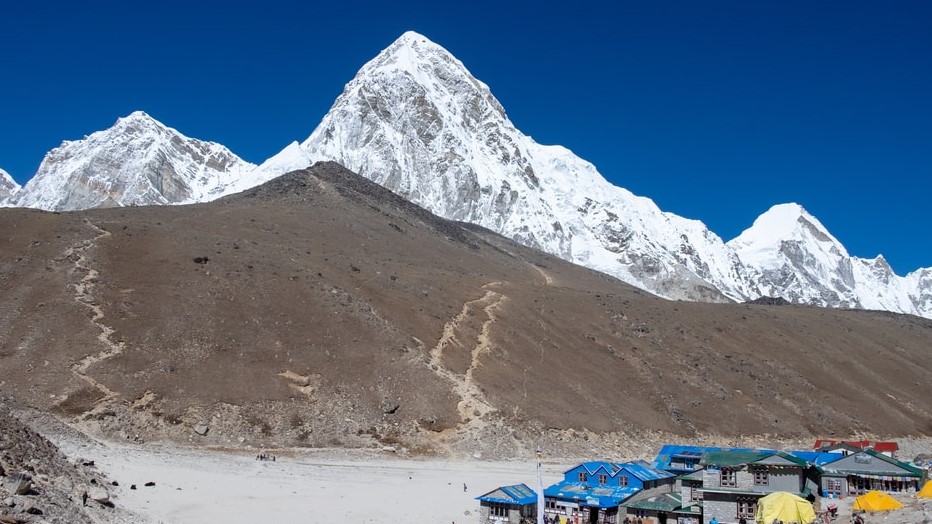
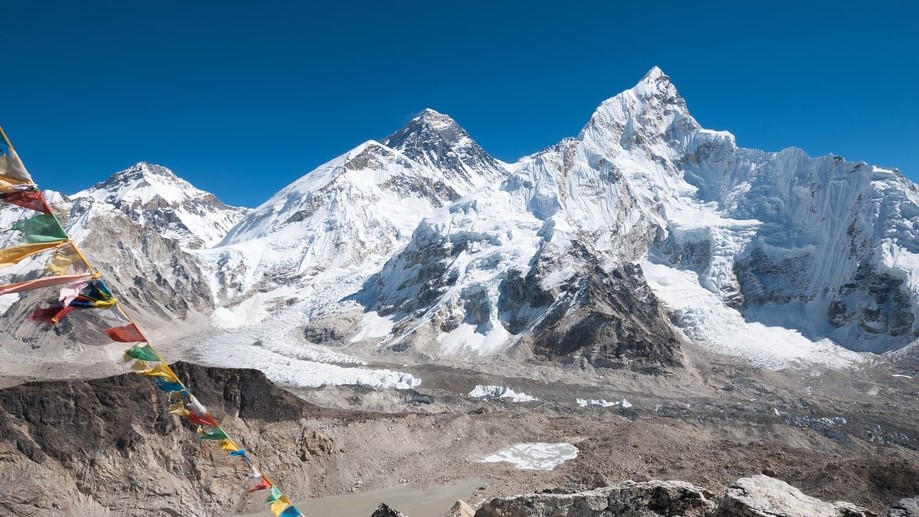
The trek diverges east-north from Namche Bazaar and trek continues through alpine topography for most of the section. Climbing Thugla ridge, the path follows actual snowline of Everest trekking region. The lively vegetation disappears and most of the time trekker walks through rocky and icy terrain surrounded by numerous peaks in the horizon. From Gorakshep, the landscape becomes more hostile and rockier to Everest base camp. A proud and adventurous moment for trekker in of stepping to Base camp of Everest ends. Next morning climb Kalapatthar, summarize whole Everest landscape from single spot, enjoy close up view of Mount Everest and retrace same path to Lukla.

2.Gokyo Valley Trekking

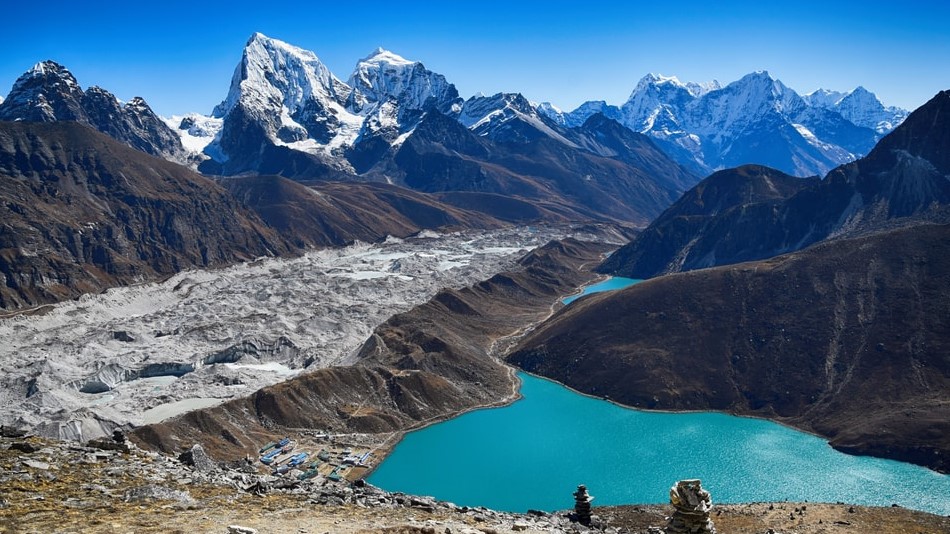
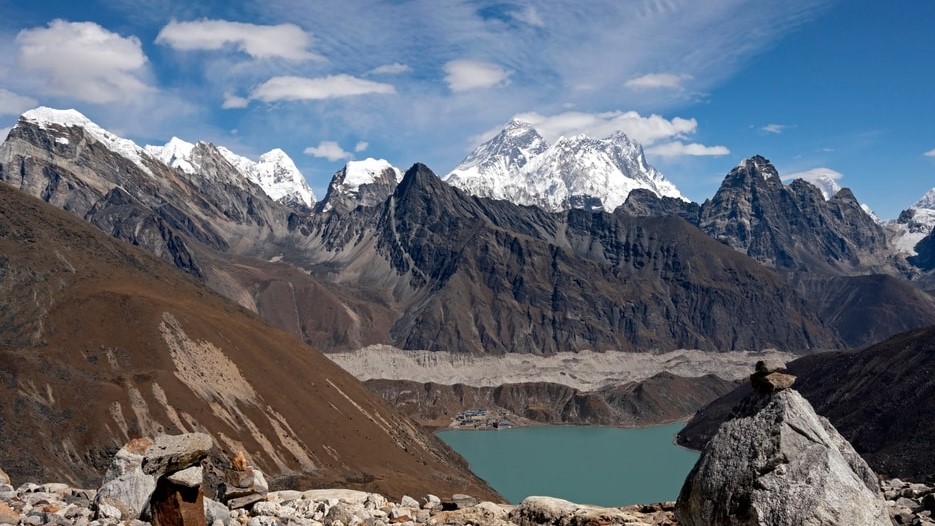
Not equal to Everest Base camp, but there is also fair number of trekkers who enjoys trekking to one of the beautiful valleys in Everest trekking region, Gokyo Valley. This section of Everest is popular to enjoy the whole Everest landscape from single point Gokyo ri. Gokyo valley trekking is much similar in terms of difficulty, price and adventure comparing to Base camp. The beautiful six lakes in the region is another major highlight of the trekking. More importantly, while trekking to sixth lake trekker can enjoy the surroundings of Mount Cho-Oyu from close range in deep northern side of Everest. So, easily, Gokyo valley trekking grabs the second spot in best treks in Everest trekking region.

From Namche Bazaar, the trekking heads further North to reach Gokyo. The landscape gradually changes from sub-alpine to alpine with open meadows that allow magnificent view of Everest landscape in total.  The other interesting part is instead of trekking through deep valley, trekker climbs and descends numerous small ridges that adds on curiosity of trekker on every climb they make. Mount Cho-Oyu, upfront makes trekking more beautiful. The landscape becomes rockier just before reaching Gokyo Lake. Next morning climb Gokyo ri one of the most beautiful moment in life any trekker can expect. Explore all lakes of Gokyo valley in Northern side and retrace down same path to Lukla.

3. Everest Base Camp and Gokyo Valley Trekking through Cho-La pass

If you do not want to miss both Everest Base camp and Gokyo valley trekking, then there is solution of combining both trekking through Cho-La pass. However, this trekking is slightly demanding especially to amateur trekkers. But for general trekker it is one of the best kinds of itinerary anybody can expect. First enjoy the Everest landscape from Gokyo ri, second achieve the moment of conquering Everest Base camp and capture Mount Everest from the nearest range in single itinerary. One of the best treks in Everest trekking region. This itinerary covers the significant area of Everest trekking region.

Trekker can start trekking clockwise or anti-clockwise. We recommend to start clockwise from Gokyo. Because there is high chance a trekker may skip Cho-La pass and abandon trek to Gokyo when they conquer Base camp and see Mount Everest in first instant. Again, crossing Cho-La pass is the most difficult part of this trekking which needs some mental preparation, desire and courage to attempt this pass. For sure, all the hard work during trekking become insignificant once trekker completes the trek. Such a beautiful itinerary.

4. Everest Three High passes Trekking

Wanting more adventure in Everest region of Nepal, this is the absolute itinerary you are searching for. Beside adventure, this is the longest trekking itinerary in Everest trekking region that covers around 75% of whole Everest trekking region. Three high passes Renjo-La, Cho-La, Kongma-La, Bhot valley, Gokyo valley, Everest Base camp in a single trekking itinerary. Amazing. This itinerary would have been easily number one in the list of best treks in Everest trekking region, but this trekking is not suitable for many trekkers because of lengthy trekking itinerary. Plus, Everest three high passes trekking needs some real trekking experiences in Himalayas and can be difficult for general trekkers.

Again, trekker can start clockwise or anti-clockwise. Only, the important part is we don’t want trekker to abandon Cho-La pass and Renjo-La pass after conquering Everest Base camp. The three high passes trekking also takes trekker to some really isolated and remote area of Everest trekking region around Bhot valley. Where, in actual sense trekker can experience and see real Sherpa culture and tradition. Trekking most of the days in snowline and high altitude really tests the physical and mental strength of any trekker.

5. Mera Peak Climbing / Trekking in Hinku Valley

More than trekking, it is a climbing itinerary to Mera peak. But for sure, this peculiar and isolated region in Everest deserves a 5th spot in list of best treks in Everest trekking region. Instead of following regular trekking itinerary, the trekking branches to west side from Lukla and heads further north to Hinku valley. The region is less crowded and only few trekker shows real interest in region. But this trekking is not less beautiful from any point. Even though, the target is climbing Mera peak, trekker can simply enjoy the trekking part as well. Importantly, Mera peak is not a difficult and technical peak and a few general skills should be enough to conquer this peak.

There is also few debate, should a trekker start trekking / climbing crossing Zatrwa-La pass or take another route. We recommend another itinerary through Paiyon, Chalem Kharka for proper acclimatization. As well, there are no itinerary that joins or branches off in this region. Skip a busy route of Everest and take full advantage of trekking in quiet and remote section of Everest. Few contact with outside world means, this can be great experience to see and enjoy the actual Sherpa culture of the Everest trekking. This easily becomes another best treks in Everest trekking region.

Concluding, there are many other possible itineraries in the Everest trekking region. Adding, reducing few days in regular itinerary is always possible. However, compromising the delicacy of trekking region by making itinerary unnaturally short is not great idea. Peak climbing, adding extra 2-3 days in regular trekking itinerary can be other option. More important, trekker needs to pay extra attention while selecting the itinerary. Especially, number of days play vital role to acclimatize properly, which can make a trek successful or unsuccessful despite you are experienced trekker or amateur trekker. 

Best Treks in Annapurna Trekking Region

Best Treks in Annapurna trekking region, provides short yet valuable information on popular and trending trekking itinerary of Annapurna Conservation Area of Nepal. Comparatively, these sections (trekking itinerary) of Annapurna Conservation Area is popular among the trekkers. These trekking sections of Annapurna remains highly busy and crowded during peak season of trekking in Nepal. Especially, from March-May (Spring) and September-November (Autumn).

Annapurna Conservation protected area covers massive area of 7629 sq.km in west of Kathmandu. Trekker can select any of trekking itinerary depending on trekking days, budget and price, adventure level they want. Including specific landscape and mountain they want to capture along with tradition, religion and culture of people they want to know and see.

Interestingly, the landscape, topography and climatic zone on one section of Annapurna trekking region is completely different to other section. For example, during Upper Mustang trek, trekker can experience Trans-Himalayan climatic zone while during Annapurna Round trekking, trekker can enjoy mixed climatic zone of tropical, temperate, sub-alpine, alpine and snowline. Same with the culture, religion, and tradition of people residing in the Annapurna region. Plus, amateur trekker not interested in trekking deep alpine and snowline of Annapurna can trek to Mardi Himal, Ghorepani Ghandruk Circuit, Khopra Danda and Khayer lake. Point to be noted, these trekking receives positive feedback from experienced trekkers as well.

Another great advantage in the Annapurna trekking region is extra-ordinary options to select the trekking itineraries depending upon trekking days trekkers have. Trekker can trek for few days to months in Annapurna region. Annapurna Round trekking can be completed in between 13 days to 21 days. So is the case of Annapurna Base Camp trekking. Moreover, trekker can join and combine other numerous trekking itinerary for extra-adventure. Annapurna Round joins and branches off to other less popular section like Tilicho and Nar Phu. Peak climbing, for sure add extra thrills in Annapurna trekking region.

Here we list out the best treks in Annapurna trekking region for trekkers. Again, the number of trekkers in the region would be the first criteria of scoring. The landscape and natural attractiveness would be the second. Flexibility of itinerary, cultural and religious diversity are also some other considerations. Luxury during the trek, difficult level are some other criteria, we consider making the list of best treks in Annapurna trekking region. In general, there is no debate regarding luxury for trekker around Annapurna. However, the list is compiled for general trekkers, without acknowledging whether the trekker is experienced or amateur

1.Annapurna Round Trekking

Annapurna Round trekking holds the first position in the list of best treks in Annapurna trekking region. The oldest and classic trekking itinerary of many other, it was and still is number one priority of trekker in Annapurna region. The trekking itinerary covers huge area of Annapurna section. An opportunity to experience wonderful landscape and topography of Marshyangdi valley and Kaligandaki valley.  Mount Annapurna ranges, Dhaulagiri ranges and other numerous mountains and peaks attract decent number of trekkers in the region. As well, trekker adores different ethnic community of the Himalayas along with rich culture, religion and tradition.

Even after construction of jeep road in the region, there is still high curiosity and interest, especially among new trekker who haven’t done Annapurna Round. Interestingly, once remote and lengthy itinerary, now it has become easily accessible, short, cheap and highly flexible. There is always possibility for side-trips who wants to add extra-adventure in Annapurna Round trekking. Adding Nar Phu trekking, Tilicho lake trekking absolutely multiplies grade of adventure. Needless to say, peak climbing can be other high-grade adventure, simply adding extra 2-3 days in regular trekking itinerary of Annapurna round.

2.Annapurna Base Camp Trekking

Annapurna Base camp trekking marginally holds the second spot for the list of best treks in Annapurna trekking region. Base camp treks in Nepal is always popular and first choice of trekker. The shortest trekking days to base camp of Annapurna (8091m) is the most iconic and peculiar characteristic of Annapurna Base camp. Short trekking days also implies for less trekking cost. 7 days of absolute trekking and trekker can capture, experience and enjoy one of the base camp treks of Nepal. Amazing.

Beside, direct route to Base camp of Annapurna, trekker can explore some amazing countryside trekking villages of Nepal. Adding, few trekking days to relatively less commercial Ghorepani, Ghandruk trekker can explore Gurung culture and tradition. As well, amateur trekker can properly acclimatize if they add extra few days around Ghorepani Ghandruk circuit, which itself is one of the best treks in lower trekking region of Annapurna.

3.Upper Mustang Trekking

Not only confined to Annapurna trekking region, Upper Mustang is one of the most distinctive trekking itinerary Nepal can provide to any trekker. One of the few places in Nepal, where trekker can experience Trans-Himalayan landscape. Rich in Budhhism, mysterious culture and tradition, historical significance of the region, architectural buildings, old chortens, monasteries, paintings on life of Buddha are some real quality of Upper Mustang. For sure, few sentences cannot summarize whole Upper Mustang trekking.

Even though, there is road access to Upper Mustang, trekker needs to pay minimum USD 500.00 to obtain the special permit for 10 days of trekking. And, we want trekker to take full advantage of 10 days without compromising trekking itinerary. In short, Upper Mustang is not a really flexible trekking in terms of number of days. Not only one of the best treks in Annapurna trekking, it certainly holds top spot in one of the best trekking in Nepal.

4. Ghorepani Ghandruk Circuit Trekking

One of the easiest and most flexible trekking itineraries in Annapurna trekking region. Many other popular trekking of Annapurna region can include this beautiful countryside villages dominated by Gurung culture in respective itinerary. Somehow, this section is hub for whole Annapurna trekking region. Itinerary of Annapurna base camp, Annapurna round, Kaligandaki valley, newly popular Khopra Danda and Khayer Lake trekking, Mardi Himal trekking can join to and depart from this beautiful lower trekking region of Annapurna.

Also hiking to Poon hill, trekker can summarize notable mountains of Annapurna trekking region including Dhaulagiri, Annapurna and Fishtail from single spot. The trekking in the region can be a first step for amateur trekker, to experience adventurous and difficult trekking in Nepal in future. Easy, cheap, beautiful countryside villages, amazing landscape, tradition and culture of Gurung people should be enough to rank in 4th spot of best treks in Annapurna trekking region.

5. Mardi Himal Base Camp Trekking / Khopra Danda and Khayer Lake Trekking

The Mardi Himal Base camp trekking along with Khopra Danda and Khayer Lake trekking holds the mutual spot on the list of best treks in Annapurna trekking region. Both the trekking were recognized few years back, but the pace of popularity these trekking gaining is extremely high. There is subtle threat of displacing Ghorepani Ghandruk circuit trekking by these trekking itineraries.

These both trekking are similar in terms of general landscape and altitude. Importantly, instead of spending nights at high altitude trekker can spend night at sub-alpine region and still can explore alpine and snowline landscape. A rear yet important co-incidence, experienced trekker like this trekking region for being quiet and less crowded, while amateur trekker appreciates this trekking well-balanced and practical in terms of altitude and difficulty. Exploring these trekking region before they become highly commercialized like other regions of Annapurna is a great idea.

6. Nar Phu Valley Trekking

Not popular like Upper Mustang, but Nar Phu valley trekking is another great itinerary to explore the Trans-Himalayan landscape of Nepal. Near, yet only few trekkers notice and trek around this region. The trekking is highly popular to understand and learn the religion, culture and tradition of highly marginalised community of Nar and Phu village. Plus, the region used to be temporary settlement of Khampa refugees where trekker can still see some remnants. Again Nar Phu valley itself is utterly beautiful in terms of landscape.

There is also a misconception of Nar Phu valley trekking assuming to be highly difficult, remote and demanding. True, adding Kang-La pass the trekking itinerary becomes a bit difficult. But trekker can skip Kang-La pass, explore culturally rich Nar and Phu valley and descend down retracing the same path took earlier. Also, it is true, the trekking is not comparatively as much luxurious as other trekking region of Nepal. But still Nar Phu trek holds a credible spot in list of of best treks in Annapurna trekking region.