Difficulty Level-Trekking in Nepal

Difficulty level of trekking in Nepal is generally divided to Easy, Moderate and Difficult (hard). Mostly considering an altitude, a trekker gains during the trekking. In addition, number of days, remoteness, terrain (uphill/downhill) are other factors to determine the difficulty level of trekking in Nepal. But let’s take different approach to categorize the difficulty level of trekking in Nepal. There are other factors (including our experiences), to conclude a trekking easy, moderate or hard beside only altitude.

Of course, previous experiences of trekker in Nepal can make the trekking easy moderate or difficult. Trekking to Everest base camp is easy/moderate to those trekkers who visit Nepal more frequently. While the same trekking can be difficult and hard for the first-time trekker. But not always is the case.It is hard to point out single factor on determining the difficulty level of trekking in Nepal.

Climbing or Descending which one is easier???

First, walking uphill or downhill does not determine the difficulty level of trekking in Nepal of any trekking itinerary. Some trekker finds easy walking uphill rather than walking downhill and vice versa. So, what is going on? A trekker is trying to defeat the gravity while walking uphill which of course needs more energy. In reverse, he/she is trying to resist/ absorb the gravity while going downhill, passing the energy to knee joint or other muscular parts of body which is painful. No solid conclusion, whether it is difficult to walk uphill or downhill. From our experience, in general, younger trekker finds easy to trek downhill while older trekker finds easy to walk uphill. The only way to get through it, is adjusting your style of trekking, in either terrain (uphill/ downhill).

Most of the trekker often need to trek steep downhill or uphill, especially in lower trekking region. Climbing to/descending from Namche Bazaar (Everest trekking), Climbing to/descending from Ulleri (Annapurna trekking), Climbing to/descending from Gatlang (Langtang trekking) are some example of steep climbing and descending. Though there are too many to name steep ascend and descend, most of the trekking itinerary are well-balanced for general trekkers. Trekker must be mentally prepared to such climbs and descends while trekking in Nepal.

Does remoteness make trekking harder???

Remote trekking in Nepal are all those trekking itineraries where there is lack of infrastructures. No feasible transportation, electricity, communication, luxury tea houses. A trekker must have sufficient information regarding such kind of remote trekking. Even popular trekking region has some isolated places. These places do not see more trekkers even during peak trekking season.

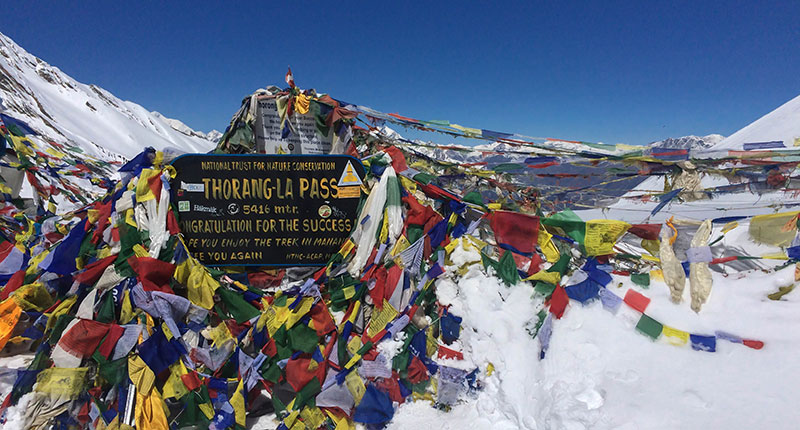
Consider, Kang-La pass (5320m) of Nar Phu valley trekking, and Thorong- La pass (5416m) both belongs to Annapurna trekking region. While Throng-La pass is moderate pass, Kang-La pass is difficult/ hard / strenuous. Crossing Mesokanto-La pass(5340m) after trekking to Tilicho lake has different story in same Annapurna trekking region. (More than hard/difficult for general trekkers ???). Comparatively, crossing Thorong-La pass(5416m) of Round Annapurna trekking after spending night at Thorong Phedi is easier than crossing Larkey-La from Dharmashala.

Altitude-Gain and Difficulty level

Altitude is the number one thing, most of the trekking agency consider before classifying the difficulty level of any trekking (Easy/Moderate/Difficult). This is true, especially considering the level of oxygen that changes with altitude. Roughly, sea level air has 20.9% of oxygen(1014mbar), while top of Everest has only 6.89%. of oxygen (337mbar). It means you need to breathe thrice in top of Everest to get same amount of oxygen you gain at sea level. Doubtless, level of oxygen in atmosphere can greatly affect human capacity and behaviour. And thus, has coined the well-known but unpopular word Acute Mountain Sickness (AMS) among the trekkers.

Again, most of the trekking itinerary are well balanced considering the general trekkers. There is nothing hard and fast rule to avoid Acute Mountain Sickness (AMS). Even experienced trekker/ climber gets Acute mountain Sickness. So is one of the reasons many climbers might not summit Everest(8848m) on first attempt, beside weather. Inexperienced trekker can do Everest Base Camp trekking but might need to add few extra days (more than regular trekking itinerary days) to cope with the environment as acclimatization day. A trekker needs to pay extra attention in general trekking itinerary and needs to evaluate with own situation. Even Everest base camp and Annapurna base camp are not a match considering the difficulty level of trekking in Nepal.

Burning Calorie and Energy requirement.

According to World Health Organization (WHO), intensity of any physical activity depends upon Metabolic Equivalent of Tasks (METs). It is a ratio, which measures the amount of energy spent doing any physical activity. Sitting calm and doing nothing has the METs value of 1. In ideal situation, any physical activity in between Metabolic Equivalent Task of 3-6 are moderate physical activity. Dancing, house works, gardening, walking at speed of 3.5 mph are some moderate physical activities. METs value higher than 6 are vigorous physical activity. Running, fast swimming, jogging, carrying weight< 20 kgs, climbing uphill quickly are some high intensity physical activity.

However, the above METs value might be greatly different while trekking in Nepal. Altitude, temperature, environment, oxygen level can greatly affect those values. Health of particular trekker, body weight and trekking hour also can highly affect those findings. It is nearly impossible to provide exact METs value to each itinerary, since it requires extensive scientific study.

Roughly considering METs 7.0 for Everest Base camp trekking,
Trekker’s Body weight X METs value X Average walking hour in a day = Total energy required for a day during EBC Trekking
65kg X 7.0 X 6 hr = 2730 calories per day

Consider METs 6.0 for Annapurna Base Camp trekking,
65kg X 6.0 X 6 hr = 2340 calories per day

Consider METs 6.5 for Manaslu Round trekking,
65kg X 6.5 X 7hr = 2957 calories per day

Best Treks for first time Trekker in Nepal

Are you first time trekker in Nepal? These listed trekking can be the best treks for first time trekker in Nepal. Easy & short treks in Nepal are targeted for amateur/beginner trekkers. They are in fact; not as much easy it sounds. The only condition to put these trekking under easy treks, is based upon less altitude a trekker gains during trekking. Trekker often has to make numerous ups and downs in these trekking as well. The only better part is they don’t need to go high altitude landscape to enjoy the trekking in Nepal. These itineraries mostly cover the tropical, temperate and sub-alpine trekking region of Nepal. More to that, comparatively a short trekking is also cheap due to less number of trekking days.

Ghorepani Ghandruk circuit trekking, Langtang Valley trekking, Short Everest Tengboche trekking are some itinerary for first time trekker in Nepal to start trekking. As already said, a trekker still needs to make numerous ups and downs in these trekking as well. A trekker can enjoy the beautiful cultural, natural aspects of trekking without reaching alpine and snowline of the region. For example, Ghorepani Ghandruk circuit trekking in Annapurna trekking region, a maximum height a trekker gain is 3210m (Poonhill). But still, needs to climb ups and descend downs which can be difficult for amateur trekkers. In other hand, every first-time trekker in Nepal rank this trekking one of the most beautiful in lower trekking region of Nepal. As well, these listed trekking can be boon to experienced trekkers as well. Specially for those who have limited time to trek in Nepal. So, lets find out why these trekking are the best treks for first time trekker in Nepal.

1.Ghorepani Ghandruk Circuit Trekking

There is no need of always trekking in deep snowline of Himalayas to enjoy the trekking. Trekking to Poonhill(3210m), actually summarizes the whole Annapurna trekking. Mark our words, there is no other possible way to capture Mount Annapurna, Mount Dhaulagiri, Fishtail, Himchuli from a single spot. Gurung culture during the trekking, especially around the beautiful countryside villages of Ghorepani, Ghandruk makes the trekking more versatile. Deep dense forest, small waterfalls and streams, terraced crop lands, during the trekking add more fun. Moreover, being the trekking itinerary short, still it is very flexible.This is one of the best treks for first time trekker in Nepal.

2.Langtang Valley Trekking

Even though, Langtang valley trekking seems to be high-altitude trekking considering the height of Tserko-ri(5030m), it is not. More to that, Tserko-ri is only a day hike to enjoy the beautiful Langtang valley trekking. Otherwise, a trekker would spend nights in Kyanjing village at the height of 3870m. Which we believe is not high-altitude trekking for amateur and beginner trekkers. Again, deep dense forest around Bamboo, Lama Hotel, Ghodetabela is home to beautiful animal like Red Panda. Tamang culture around the village of Langtang and Kyanjing are something special a trekker can enjoy. Another best treks for first time trekker in Nepal.

3.Short Everest Tengboche Trekking

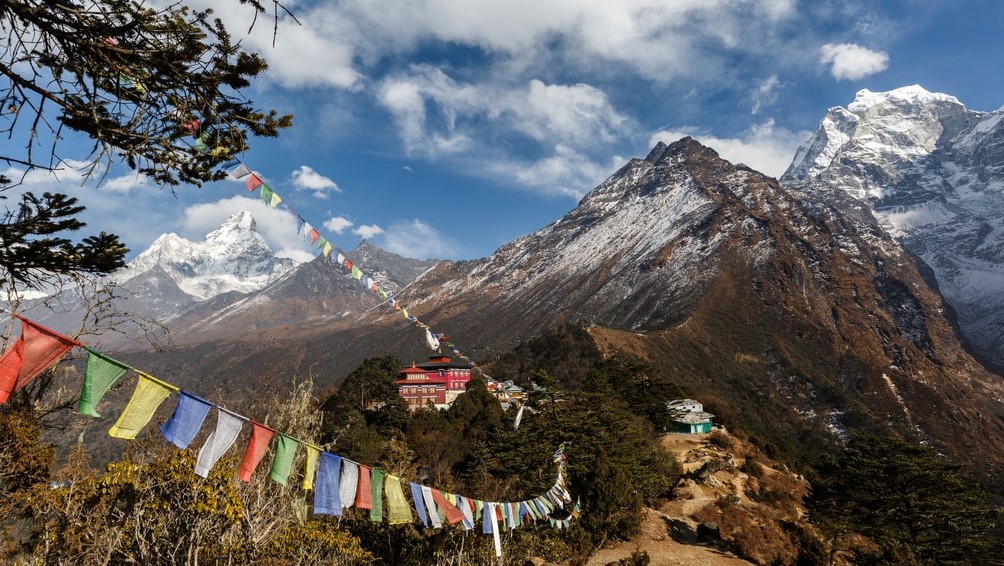
A bit unusual considering the expensive price for flights of Kathmandu-Lukla-Kathmandu. But this is the best short and easy trekking an amateur as well experienced trekker can expect. With in few days, a trekker is in beautiful sub-alpine villages of Namche, Khumjung, Khunde and Tengboche dominated by Sherpa culture and traditions. Monasteries at Tengboche and Khumjung are bonus. Plus, unrestricted view of Mount Everest, Mount Lhotse, Mount Nuptse, Ama Dablam, Thamserku, Kongde peak from a single spot of height 3880m is priceless. Moreover, a trekker can continue to Everest Base Camp or Gokyo trekking once they feel comfortable. Flexible right?

4.Short Trekking around Kathmandu valley

Nearby places around Kathmandu valley like Sundarijal, Nagrakot, Changunarayan makes a short round trekking itinerary in northern part of Kathmandu. The Shivapuri National park is very popular to enjoy the Langtang and Ganesh Himal ranges. Chitlang, Kulekhani is popular in southern part of the valley. These places are awesome for homestays and as a cultural trekking itinerary. One can combine this short trekking with any other activity like sightseeing, cycling, birdwatching. Easy, cheap, beautiful, fun and what else?

5.Langtang Tamang Heritage trekking

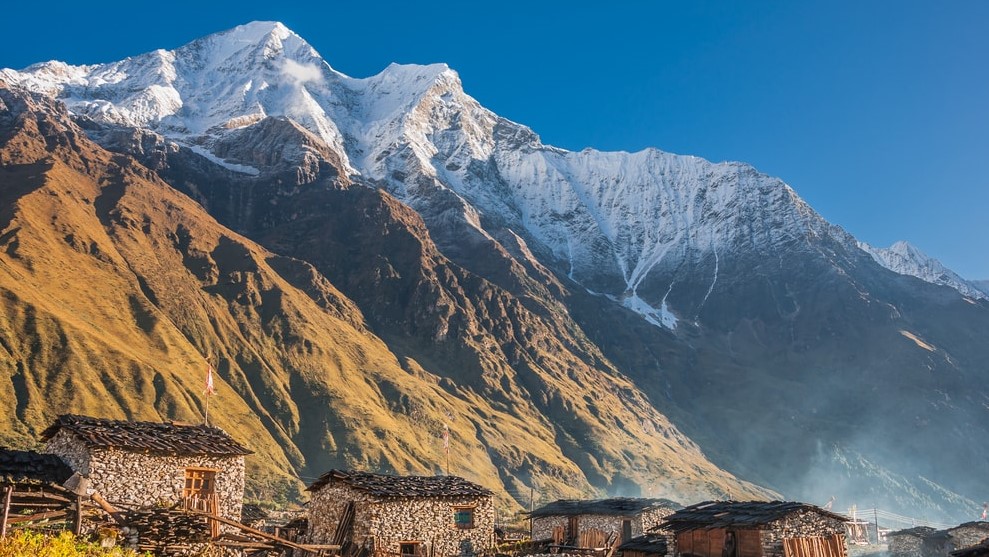
Langtang Tamang Heritage trekking itinerary brings culture and nature together. Tamang villages like Gatlang, Thuman, Briddim have raw culture of Tamang people to see day to day activity. Places like Nagthali is ideal spot to enjoy the deep green valley on southern part, while Northern part is to capture the Himalayan ranges of Langtang trekking region. Even more, you can see the nearby Tibetan land from Nagthali. Tatopani (hot spring) used to have high significance until April earthquake made the hot water source disappear. Near yet far, far yet near.

Note: Even though these trekking are short, there is small possibility of changing the itinerary on the desired requirement. Not only first time trekker (amateurs), these trekking are well-appreciated by experienced trekkers as well.

Why Trekker needs to consider Trekking in Langtang

Why Trekker needs to consider trekking in Langtang? There are numerous reasons. In paper, Langtang trekking region stands at third position after Annapurna and Everest trekking region considering the popularity rate. However, the Langtang trekking region is still struggling to attract decent number of trekkers. No 8000m mountains (Probably??). Might be the reason Langtang is underrated trekking of Nepal. But there are numerous other reasons why trekker needs to consider trekking in Langtang region.

Nearby Kathmandu, the underrated trekking region has the easiest transportation availability. Not as much cheap it should have been, but still the trekking is slightly cheaper than Everest and Annapurna. As well this underrated trekking region has numerous exit and entry point joint by the road access, that makes the itinerary really flexible. Confined to Langtang trekking region, Tamang people and their culture plus tradition are something a trekker cannot miss. Beautiful Tamang villages Gatlang, Langtang, Kyanjing are must see places to understand Tamang people and their culture. Langtang trekking region is also rich in wild flora and fauna comparing other trekking regions. It is mysterious why Langtang is underrated trekking of Nepal beside such massive potential. Definitely we provide enough reasons why trekker needs to consider trekking in Langtang.

Though trekking has no 8000m mountains the landscape is still amazing that stretches from tropical region to snowline. Even though, trekking is categorized as easy/moderate, still you need to make fair amount of ascends and descends. As well trekking around 5030m (Tserko ri) and Gosaikunda (4460m) is not an easy thing to do. Let’s list out why trekker needs to consider trekking in Langtang region of Nepal and deserves more trekkers.

1.Easy transportation availability that makes the trekking flexible.

Drive to Dhunche/ Syabrubeshi/ Gatlang/ Sundarijal to start the trek. Moreover, you can also end the trekking at those places accordingly. 9 days trekking including international arrival and departure, you can trek 20+ days in the region. Particularly, there are three popular itineraries for general trekkers. Langtang valley trekking, Langtang Tamang Heritage trekking and Langtang Gosaikunda Helambu trekking. The best part is, trekkers can combine either of those itineraries as per budget, number of days and personal preferences.

2. Beautiful Landscape including Gosaikunda Lake and Tserko-ri.

Divided to tropical, temperate, sub-alpine, alpine and snowline climatic region, the trekking holds true legacy for diversified landscapes. Trekking starts with terraced farm lands, dense forest, beautiful villages at lower trekking region. Nagthali, Langtang, Kyanjing, Lauribinayak are popular sub-alpine and alpine stop-overs. From these places you can enjoy the true landscapes of Langtang trekking. Moreover, Tserko ri is a great spot to enjoy the deep Himalayan section of Langtang trekking region. Gosaikunda rich for numerous lakes in high altitude, surely amazes every trekker. Definitely makes trekker astonished, why Langtang is underrated trekking of Nepal, besides such beautiful and unique landscape.

3. Rich in Culture and Tradition of Tamang people.

Though lower trekking region has mixed community of different ethnics group, the upper region trekking is over-powered by the culture and tradition of Tamang people. Moreover, the Langtang National Park is the only place in Nepal where Tamang people lives so uniformly and densely. It is amazing to see day to day life of Tamang people engaging in farming, animal husbandry plus few in tourism industry. Gatlang, Thuman, Langtang, Kyanjing and Thulo Syabrubeshi are hotspot to know and see Tamang people. Though, they are influenced by Tibetan culture and follows Buddhism they are quite different and unique.Though Langtang is underrated trekking of Nepal, it is very rich in culture and tradition of indigenous Tamang people.

4. Rich Natural flora and fauna

The Langtang trekking is very rich in wild vegetations and flora. Most of the tropical and temperate region has the forest rhododendron, pine, oak, bamboo, spruce and juniper. Specially around places like Thuman, Kahanjim, Lama hotel, Ghodetabela, Thulo Syabrubeshi, Simgompa, Ghopte, Tarkeghyang. These places with dense forest is also home to beautiful wild animals like Red panda, Himalayan black bear, musk deer. Similarly, Lophophorous, Himalayan snow cock, Himalayan vultures are some interesting birds seen around the region. The upper trekking region has open dry pasturelands with small juniper bushes, providing the unrestricted view of beautiful mountainous landscape at horizon.

5. Other Reasons why trekker needs to consider trekking in Langtang

Comparatively cheap comparing Everest trekking and Annapurna trekking. The best trekking region to start trekking in Nepal for any amateur and beginner trekkers. Peak climbing option is also popular adventurous activity in the region. The trekking is also nearby the Tibet boarder. There is possibility to trek in the region, combining three different popular itineraries at single time. Geographic/ Cultural/ Natural researches and study purposes are other few topics to list out. One of the best yak cheese is available in the Langtang trekking region. Also, Gosaikunda lake carries high significant for Buddhists as well as Hindus reflecting cultural harmony. It is not allowed to make any kind of animal sacrifices in the Langtang village and carries important history behind it.

Everest Base camp Trekking- A beautiful madness

Everest Base camp trekking is beautiful madness? May sound off, but yes it is true. The trekking is comparatively hard, yet every trekker wants to trek to Everest base camp. Everest base camp trekking is a holy grail for every trekker. Every professional and amateur trekker from the world dream about conquering Everest base camp at least one time in their life. Moreover, some trekker who have already done this trekking love to trek often. Adventure, passion, natural beauty, numerous mountains and peaks, physical and mental refreshment, are some achievements trekker can have after all hardship a trekker suffers during the trekking. Say mix of emotions, hard-work and achievements comes together while trekking to Everest. Everest Base camp trekking is beautiful madness without a doubt.

Even though there are numerous possible trekking itineraries in Everest trekking region, easily Everest Base Camp trekking is the first choice for numerous experienced and inexperienced trekkers. In addition, Mount Everest along with numerous mountains and peaks, moderate(??)/ challenging(??) itinerary, distinctive beautiful forested temperate climatic zone to snowline landscape, Sherpa culture with numerous monasteries and chortens, beautiful alpine villages are some notable characteristics of Everest Base Camp trekking. Needless to say, peak climbing and expeditions make this trekking highly busy during the peak season. Though every individual trekker has individual reason to trek on Everest Base Camp, here is why the trekking is popular for general (experienced and inexperienced) trekkers. Here are the reasons why Everest base camp trekking is beautiful madness.

1. Mount Everest with numerous other Mountains and peaks.

Certainly, we can name some popular mountains and peak in Everest Trekking region, but it is impossible to name all the flanks and peaks of Everest in this short article. Lhotse, Cho-Oyu, Nuptse, Ama-Dablam, Pumori are some beautiful and highest mountains you can admire during Everest base camp trekking beside Mount Everest. There are exceptional moments during trekking when you are surrounded by the peaks and mountains from every possible direction.

2. A proud adventurous experience to share with friends and family.

Definitely, trekking to Everest Base Camp is not easy. Age, physical fitness, experience in trekking, are the factors that can make Everest base camp trekking either moderate or challenging. But no one can ignore your adventurous story of trekking to Everest base camp. Everybody cannot conquer Everest Base camp even though they wish for it. Distinctively, a proud achievement you earned in your life that deserves sharing in between your friends and family, quite often.

3. Beautiful landscape from Forested temperate climatic zone to Snowline.

Trekking becomes boring when you trek on same kind of landscape (climatic zone) for number of days. However, in Everest Base Camp trekking, the trekking starts in forested temperate region and gradually ends at the snowline of Everest Base Camp. The landscape keeps changing during the trekking. Together you can enjoy the interesting and beautiful alpine flora and fauna at lower trekking region plus snowline at higher trekking altitude

4. Sherpa community, their cultures and traditions.

Sherpa people of Nepal live in various regions throughout the country. But Sherpa from Khumbu/ Everest trekking region are distinctive. One cannot ignore the culture and traditions of Sherpa people living in sub-alpine villages like Namche, Khumjung, Tengboche. Interesting Monasteries, chortens, manis during the trekking to Everest base camp have distinctive features. Story of their settlement, occupation, day to day life are exciting to know and see.

5. Other

Physical and mental refreshment upon climbing the ridge of Namche Bazaar is definitely hard to explain with words. Monasteries at Khumjung and Tengboche carries high significance. Wild animals and birds often cross your trekking path specially around Tengboche. Rocky and icy path from Gorakshep to Everest base camp with loud noises of avalanches can scare you sometime. Finally, summarizing the Everest base camp trekking and enjoying the sunrise at Mount Everest upon climbing the Kalaptthar is ultimate adventure plus beauty of Everest base camp trekking.

Everybody knows Everest Base camp trekking is one of the most beautiful trekking. As well, every trekker knows that is not easy to trek to Base camp. And need to put hard effort to achieve. It can backfire to some trekker when only having desire to conquer the base camp without gathering general info on the trekking. Yet, it is beautiful without a doubt. Everest Base camp trekking is beautiful madness, beautiful trekking that needs a certain degree of madness to conquer.

General information on Manaslu Round Trekking

Here, we provide the general information on Manaslu Round Trekking for the trekkers. Manaslu Round Trekking encircles the Mount Manaslu 8156m. Recognized few years back and recently popular, the trekking attracts numerous trekkers from Annapurna Round trekking. More to that, regular and frequent trekkers in Nepal often complaining about road construction in Annapurna trekking region sees future on Manaslu Round Trekking for upcoming few years. Here is everything you need to know as a trekker about Manaslu Round trekking, believing enthusiastic trekkers deserve all the information they want.

The trekking starts by the bank of Budhi Gandaki river at the Budhi Gandaki valley. The Manaslu Round trekking region branches off at place call Gampul for Tsum Valley trekking. Tsum valley trekking is one of the most popular regions to understand the Buddhism culture, religion and tradition of community Tsum. Trekkers can see and enjoy culture and tradition of Nubri people in Manaslu Round trekking. Trekkers can join to Round Manaslu trekking from less popular Ruby valley trekking as well. Larkey Peak climbing can be the perfect choice for adventure seekers in the region. The trekking joins at Dharapani of Round Annapurna trekking region and descends to Besisahar, gateway to Round Annapurna Trekking.

Not popular, but some trekkers continue to Annapurna Round trekking from Dharapani upon completion of Manaslu trekking. Some trekkers prefer to combine Manaslu Round trekking with Tsum valley as well. Also, some trekkers like to end trekking at Dharapani and drive to Besisahar to make the itinerary short. In contrast, some like to trek from Dharapani to Syange instead of driving. This is the author’s favorite trekking since it is a complete package that a trekker can expect. Steady altitude-gain itinerary, fascinating culture, and people, beautiful landscape, moderate in terms of physicality are some plus points of Manaslu Round Trekking.

The general information on Manaslu round trekking provides short yet valuable information about the altitude, popularity, transportation modes, permit requirement to trek on Manaslu region.

1.Trekking Name             
Manaslu Round Trekking/ Round Manaslu Trekking/ Manaslu Circuit Trek

2.Popularity                       
Popular

3.Transportation to start the Manaslu Round Trek
Drive to Arughat from Kathmandu and start the trek. Moreover, driving to Sotikhola makes trekking short by 1 day.

4.Maximum Altitude      
Larkey-La Pass (5106m)

5.Landscape                       
Starts at Tropical and gradually ends at alpine and snowline following lower temperate and upper temperate landscape. Once again drops to tropical climatic zone trekking through temperate landscape after crossing Larkey-La pass.

6.Best Season                    
March-May & September-November

7.Meals                                
Breakfast in Kathmandu. Breakfast, Lunch and Dinner during trekking

8.Accommodation          
Hotels in Kathmandu/ Tea houses in trekking.

9.Protected Area             
Manaslu Conservation Area plus section of Annapurna Conservation Area.

10.Trekking hours           
6-7 hr a day

11.Major Himalayas       
Mount Manaslu(8163m) Himalchuli peak (7893m), Ngadi Chuli(7871m), Shringi (7187m), with numerous other snow capped peaks.

12.Culture                           
Mixed community of Brahamin, Chhetri, Magar, Gurung at lower trekking region following Hinduism. Nubri and Tsum People, Long back migrated Tibetan, Sherpas, at upper trekking region following Buddhism.

13.Place of Interests     
Arughat, Jagat, Bhi, Lho, Samagaon, Samdo, Dharmashala, Larkey-La, Bhimthang, Dharapani

14.Permits                          
Restricted Area Permit (Special Permit) issued from Department of Immigration, Manaslu Conservation Area Permit (MCAP), Annapurna Conservation Area Permit (ACAP) and TIMS card.

15.Transportation to end the trek
Some trekkers like to end trek at Dharapani and drive to Besisahar. From Besisahar drive to Kathmandu Next day. However, some trekkers like to end the trek at Syange/ Besisahar and drive to Kathmandu

Note: Not general information on Manaslu round trekking, but very important, restricted area permit (special permit) is obtainable through trekking agency only. Plus there should be at least two trekkers to obtain the special permit of Manaslu. As well, hiring a trekking guide for Manaslu trekking area is compulsory.

Round Annapurna Trekking at glance


Round Annapurna trekking at glance, the article provides the short yet valuable description on Round Annapurna trekking. Round Annapurna trekking is one of the most popular and busy trekking in Nepal. The trekking encircles the mount Annapurna ranges along with numerous peaks and mountains starting from Besisahar. Before the construction of road in Annapurna region, the trekking used to be long and remote. The trekking days have become significantly short after the construction of the road in the region of Manang of Marshyangdi valley and Muktinath in Kaligandaki valley.

Moreover, a trekker can have sufficient time to trek some remote and isolated places of Annapurna Round Trekking. Needless to say, the natural and cultural beauty of the trekking is still intact.

The informative article Round Annapurna trekking at glance also provides the information on numerous other trekking itineraries that branches off as well joins to Round Annapurna Trekking. The round trekking covers massive area and trekking path of Annapurna trekking region.

Famous Round Manaslu trekking joins at Dharapani. Remote Narphu valley trekking branches off from Dharapani. Remote yet beautiful Tilicho Lake trekking separates from Manang. As well for Chulu peak climbing Manang is a hub. The trekking continues to Upper Mustang from Muktinath upon crossing Thorong-La pass. Annapurna Kaligandaki Valley trekking that includes famous places like Muktinath, Jomsom, Marpha, Tatopani, Ghorepani is a section of huge and lengthy Round Annapurna trekking. For adventure seekers, Nar Phu valley trekking with Kang-La and Thorong-La pass, Tilicho with Mesokanto-La pass, Chulu Peak climbing can be a perfect choice.

For trekkers the long traditional classic Annapurna Round Trekking itinerary is still on effect after construction of road. For those trekkers who have limited time to trek in Nepal, we provide the shorter version of the itinerary. Here in article Round Annapurna Trekking at glance we provide all valuable information needed for trekker to trek in this region.

1.Trekking Name            
Annapurna Round Trekking/ Round Annapurna Trekking/ Annapurna Circuit Trek

2.Popularity                      
Extremely Popular

3.Transportation to start the Round Annapurna Trek

a.For Classic Annapurna Round Trekking (Long)
Drive to Besisahar from Kathmandu and start the trek.

b.For Annapurna Round Trekking (Flexible itinerary)
Drive to anywhere in between Besisahar to Chame from Kathmandu and start the trek. Acute mountain sickness (AMS) should be in mind while choosing the place to start the trek.

4.Maximum Altitude     
Thorong-La pass (5416m)

5.Landscape                      
Starts at Tropical and gradually ends at alpine and snowline following lower temperate and upper temperate landscape. Once again drops to tropical climatic zone trekking through temperate landscape.

6.Best Season                   
March-May & September-November

7.Meals                               
Breakfast in Kathmandu & Pokhara/ Breakfast Lunch and Dinner in trekking.

8.Accommodation          
Hotels in Kathmandu and Pokhara/ Tea houses in trekking.

9.Protected Area            
Annapurna Conservation Area. West-North from Kathmandu.

10.Trekking hours          
6-7 hr a day

11.Major Himalayas      
Annapurna I(8091m) Annapurna II (7937m) Annapurna III (7555m) Machhapuchre/Fishtail (6993m) Manaslu(8156m) Dhaulagiri(8167m) Nilgiri(7061m) Lamjung(6983m)     .

12.Culture                          
Mixed community of Brahamin, Chhetri, Magar at lower trekking region. Gurung, long back migrated Tibetan, Sherpas, Manangis, Thakali at upper trekking region.

13.Place of Interests     
Dharapani,Mananag, Pisang, Braga, Yak Kharka, Muktinath, Jomsom, Marpha,Tatopani. Plus, Ghorepani & Poonhill as well for Classic Annapurna Round Trekking

14.Permits                         
Annapurna Conservation Area Permit (ACAP) & TIMS Card

15.Transportation to end the trek

a.For Classic Annapurna Round Trekking (Long)
The trek ends at Birethanti and drive to Pokhara. From Pokhara take a flight/tourist bus to Kathmandu.

b.For Round Annapurna Trekking (Flexible itinerary)
The trek can end anywhere after reaching Muktinath. Drive all the way to Pokhara in jeep from Muktinath. Or, drive from Muktinath to Jomsom and fly from Jomsom to Pokhara. From Pokhara take a flight/tourist bus to Kathmandu.

Selecting right Trekking in Nepal

Selecting right trekking in Nepal can be tricky specially for the new trekkers. Even though number of days play vital role in any trekking itinerary but this not the only thing to consider as a trekker. More or less, every trekking agency in Nepal has similar itineraries published in internet, which they modify in some extent if a trekker makes request. For an example, if a trekker say I have 15 days in Nepal most of the trekking agency would propose the itinerary of Everest/ Annapurna Base Camp Trekking. The suggested itinerary can be ideal for some trekkers and might not be for some trekkers. Moreover, if you consider other factors like price, protected area you want to trek, mountain you want to see, transportation feasibility, culture and tradition you want to see, your physical fitness; Annapurna Base Camp trekking and Everest Base Camp trekking are not a match from any point except the word “Base Camp trekking”.

The purpose of this article is to provide a trekker more basic information that helps them in choosing / selecting right trekking in Nepal by themselves. Here we believe trekking should not be driven by only business resolution. A blend of fun, adventure, informative vacation, know-how culture, some extent of physical and mental challenge makes a perfect trekking. We hope and believe every trekker would consider and think on more associated issues before asking I want 15 days Everest base camp trekking. However, there is always room to address your concerns once you have made-up your mind. But considering individual trekker expectation, there is no linear sequence to explain which comes first. Price or number of days or adventure level or transportation feasibility and so on. As a trekker, consider mentioned points for selecting right trekking in Nepal.

Number of days and selecting right trekking in Nepal.
We understand how precious number of days can be for any working-class people to plan a holiday and vacation.We suggest you not to make your trekking itinerary congested. Since, a slight unexpected change (eg cancel of flight to Lukla) in congested itinerary can affect your whole trekking itinerary which nobody wants. A long itinerary and you may end up paying unnecessary money. Work, plan and carefully select the itinerary so that you can enjoy optimal days being a carefree trekker. There is nothing wrong telling trek organizer about your tight schedule if you have any and ask for suggestions. Furthermore, errors and omission excepted (E & OE) financial agreement can be done with your organizer if you are not really sure about it. 

7 days trekking can be possible in Langtang and Annapurna trekking region but not really in Everest trekking region. So number of days you have and the trekking region you choose play vital role for selecting trekking itinerary in Nepal. Sometime congested itinerary may be possible in the trekking region which have road access and flight as well.

Price and selecting right trekking in Nepal.
This is where many trekkers get confused and need to be attentive. Firstly, the price of any trekking depends upon the trekking region you choose. For example, Everest is expensive comparing to Annapurna and Annapurna becomes slightly expensive comparing to Langtang trekking region. Most of the trekking organizer put nominal cost on transportation, permit and accommodation cost without any profit. However, cost might be significantly high if you choose five-star accommodation over regular accommodation. Same rule applies if you choose flight over tourist bus. These kinds of price depend upon the luxury a trekker want. Ask optional accommodation, transportation with your trek organizer if available, to make the trekking cheap. Organizer will change the things happily once you let them know.

Trekkers have option to choose tourist bus/ local transportation for Annapurna and Langtang trekking to make the trekking price cheap. No option for Everest trekking until you decide to start trekking from Jiri instead of Lukla. But the biggest trick lies on the comparing per day cost of any trekking you choose. Which greatly depends upon the policy a trekking agency has and grade of service they promise to provide for clients. Longer trekking days, cheap price. More people in trekking group, cheap price.

Mountain/Landscape and selecting right trekking in Nepal.
Nepal has very unique landscape for trekking. Most of the trekking starts in tropical region of the country except Everest which starts in Forested temperate climatic zone at Lukla. Whichever trekking region you choose Everest, Annapurna, Langtang, Manaslu all of them have unique landscape and vegetation. Most of the 8000 peaks are in Everest trekking region, then few in Annapurna trekking region. Sad but true Langtang trekking has no 8000m mountain. But the Langtang trekking region still grabs the third position.

So, if you want to see high mountains in Nepal and if you are ok with physical fitness, budget, number of days, Everest is ideal choice. But if you are not mad after 8000m mountains or squeezed by budget Langtang and Annapurna can be ideal trekking from many ways. Even though Upper Mustang Trekking has few mountains, it is as much busy as Everest because of unique geography and landscape. Manaslu, Kanchenjunga, Makalu has one 8000m mountain each, but still trekkers appreciate the landscape and rich vegetation of these trekking region. Looking a map of Nepal and protected area can be very easy way to decide the trekking region you want to trek on.

Religion/Ethnic group/Tradition
Though Sherpa community is very popular among the trekkers it is not always the case. Depending upon the trekking region you see different people, religion and culture during the trekking. Everest trekking region is very popular for Sherpa community and tradition. While Annapurna trekking region is very popular for Gurung and Thakali people. Langtang trekking region is dominated by Tamang people. Narphu valley trekking has very small, isolated, closed small community of Sino Tibetan. In Manaslu trekking you find the Nubri and Tsum people rich with undisturbed culture, old monasteries and Chortens. Upper Mustang trekking is popular to see old cultural heritage and natural Trans Himalaya landscape rather than high mountains. It is fascinating that trekkers are not always in Nepal to see high mountains but also to know and study the marginalized community and their culture in Himalaya.

Transportation and selecting right trekking in Nepal.
The reason to provide the information about transportation is to let know the trekkers which trekking region are flexible to change the itinerary in any case if required. Easier the transportation feasibility, the more flexible itinerary becomes. Even though helicopter can reach any destination in case of emergency, it can be expensive for most of the trekkers to use in general situation. Road transportation during monsoon in hilly part of trekking can be a risky drive. But is well maintained during autumn and spring.

Everest trekking still relies on Flights and helicopter for transportation. No flight a day can create a chaos in Lukla and Kathmandu Airport. While Annapurna trekking is very rich in context of availability of transportation options. In emergency situation you may use road transportation (Car/Bus/Jeep) rather than waiting flights in Pokhara and Jomsom. There are no flights in Manaslu and Langtang trekking region but road transportation is easily available. While far eastern trekking region like Kanchenjunga, Makalu has option for both flight and road, but they are expensive comparing to other trekking region. For example, there is scheduled weekly flight to Suketar for Kanchenjunga trekking but it may not available in crucial moment. Choose your trekking region and stay informed about transportation availability and option.

Tea Houses
Most of the popular trekking region like Everest, Annapurna and Langtang have well maintained luxury tea-houses. Places like Gokyo, Dragnag, Gorakshep of Everest trekking region and Base camp, Thorong phedi of Annapurna trekking region have countable tea-houses. Therefore, it is not unusual for trekkers to spend night on dining or dormitory during peak season in these places. In contrast, Langtang trekking has abundance tea-houses to accommodate trekkers. Highly emerging trekking region like in Manaslu, numerous tea-houses are under construction and are increasing rapidly. While in Kanchenjunga there are basic tea-houses with limited choices. Furthermore, there are no significant rise in new tea-houses for trekkers in Kanchenjunga trekking. Trekking organizer provides extra equipment to tackle with such problems.

Maximum Altitude and selecting right trekking in Nepal.
The maximum altitude trekker wants to conquer in trekking depends upon the determination, expectation and experience they have. Though it is not compulsory to reach your desired maximum altitude during trekking, but organizer and your guide wants it you to accomplish once it has been started and determined. Even though, hitting maximum altitude depends upon the choice of trekker, once you have made-up your mind it comes down to the responsibility of your organizer and guides.

Talking only about the extremely popular high-altitudes, some trekker like to go Gokyo ri (5375m) to enjoy the Everest region landscape while some like to go to Everest Base Camp (5364m) to share the proud moments with their family colleagues and friends. Daring trekkers continue to Everest Base camp from Gokyo through Cho-La pass(5370m). Poonhill (3210m) in Annapurna trekking can be end of the story for some trekkers while some continue to Annapurna Base Camp(4130m). Numerous popular high passes like Thorong-La (5416m) Kang-La(5320m) in Annapurna trekking region, Renjo-la(5345m), Cho-La(5370m),Kongma-la(5535m)in Everest trekking region, Larkey-La(5106m) in Manaslu trekking region see numerous of trekkers each year. Pay extra-attention in authenticity of these itineraries for successful completion and to avoid Acute Mountain Sicknes (AMS).

Age and selecting right trekking in Nepal.
There is no age bar for trekking in Nepal. At least, age is never a determining factor for successful and unsuccessful of trekking in Nepal. It is not unusual to see young, healthy, fit trekker struggling to complete the trekking, while 70 years old complete the same trekking with ease. This is not about merely encouraging old trekkers but this actually happens in Nepal. A young Nepali trekking guide can get Altitude sickness. Weird but true.

The regular and popular trekking itineraries in Annapurna Langtang, and Manaslu trekking region can be lengthy trekking hours with lots of ups and downs for some trekkers. Ask your organizer to make the trekking day short in advance stating your age if you need and you are unsure. While in Everest Trekking region, the trekking hour is short but you gain rapid altitude. Again, the organizer will rescue you by providing more acclimatization days to make the trekking successful. As simple as that. Moreover, you will get extra attention and encouragement from your trekking guide during trekking.

Physical Fitness and selecting right trekking in Nepal
We all know the story of tortoise and hare, right? Under the thumb rule, there is no hard evidences that only fit trekker completes every trekking he/she wishes. Extra body weight will never be a major hurdle to trek in Nepal. Determination might be the major factor. Trekking is not about rushing and completing the challenge you set for yourself. More rush, higher trekking pace there is bigger chances to get attacked by Acute Mountain Sickness (AMS). Slow the pace it is better. Comparatively, a lean trekker can be fast with pace but trekking is not again a marathon competition. Moreover, how fast and how slow you are, all of the trekkers are spending night in same tea house in pre-planned camp set by the trekking agency and guides.

The same rule we applied to those trekkers concerning about their age applies to trekker who has concern on their physical fitness. For Annapurna, Langtang  and  Manaslu trekking region you can ask shorter trekking hour with your organizer. Only then if you are not sure exactly what it would be like. Otherwise, there is no real thing to worry about physical fitness until you have serious health problems.

Trekking Experience and selecting right trekking in Nepal.
Yes and No. Trekking in Nepal is not as tough as that people think. Most of the trekking itineraries are well balanced keeping in mind for general trekkers. It is true small climb in Nepal is not a really small specially in lower trekking region. While in upper trekking region an altitude can be the biggest obstacles to climb even few meters. Following the strict itinerary prepared by trekking agency plus instructions from trekking guide can help a lot.

As an example, trekking in Everest region especially around Everest Base camp and Gokyo for inexperienced trekkers is not impossible but definitely is hard. While, it is also true many trekking organizer genuinely does not recommend three passes trekking for amateur trekkers. Combination of properly balanced itinerary, discipline from trekkers, sincerity from trekking guide plays vital role for success of these trekking. There is thin line in between success and unsuccess of trekking. Especially while recommending a moderately difficult and difficult itinerary to inexperienced trekkers, the responsibility comes massively under the shoulder of trekking agency and guide. Comparatively, it is easy to recommend numerous itineraries of Annapurna and Langtang trekking regions from the perspective of trek organizer without any confusion.

NOTE: The general information is shared taking in account three popular trekking regions of Nepal Everest, Annapurna and Langtang. Partially covers Manaslu trekking region. And does not represent other trekking regions like Kanchenjunga, Makalu, Dolpo, Dhaulagiri.

Story behind base camp trekking in Nepal


The story behind base camp trekking in Nepal provides trekker a valuable information what base camp exactly is, how many there are and what to expect during trekking. Nepal is landmark for the highest mountains in the world. Mount Everest, Kanchenjunga, Lhotse, Makalu, Cho-oyu, Dhaulagiri, Manaslu, Annapurna I, are the 8 highest mountain among top 10. Most of the protected areas in Nepal are named after these highest mountains. Even though, some of these mountains share boarder with China, climbers choose Nepal as main destination to climb these peaks except for Cho-oyu.

The main reason of choosing Nepal for expeditions of these highest mountains is flawless trekking itinerary to reach base camp through Nepal. Plus Nepal has 40 peaks in between height of 7500m-8000m, 1253 peaks in between 6000-7500m, 603 peaks in between 5500m-6000m, 1913 peaks above 5500m. Mountaineers have numerous options to choose any peaks in between for amplifying their skills before hitting the highest peaks. Though the story behind base camp trekking in Nepal has long history. Here we provide short description of each base camp trekking in Nepal.

The story behind Base Camp trekking in Nepal for trekker

Every mountains and peaks have base camp to carry out expedition. Generally base camp is the place from where a climber gets a support for successful climbing of the peaks or mountains. Base camp is a place where climbers set up a camp for months to amplify their climbing skills and adopt with the environment. Base camp trekking in Nepal are popular of the mountains and peaks in between 7500m and above. Base camps of Everest & Lhotse (Same base camp), Manaslu , Annapurna, Kanchenjunga are the busiest for both trekkers and climbers.

Reason to provide article the story behind base camp trekking in Nepal for trekkers.What is there for trekkers at Base camp trekking in Nepal?

Even though, climbers and trekkers have different ambition and purpose to reach Base camp, the itinerary would be same for trekking and expedition. For trekkers reaching base camp would be the end of the journey. A proud moment for trekkers to share and cherish. But not the end of the story. To reach snowline of base camp the trek starts in tropical climatic zone. That gradually follows lower temperate, upper temperate, sub-alpine and alpine landscape. Trekking in between these landscapes and experiencing different natural and cultural diversity is the secret and fun part of trekking to base camp.

The story behind Base Camp trekking in Nepal for trekkers with short description each.

As earlier said, Base camp has different purpose and meaning for climbers and trekkers. For climbers, base camp can be very popular or highly remote place depending upon the mountain they choose to summit. However, trekkers often choose busy, crowded and popular base camps. For example, trekkers don’t find Dhaulagiri Base Camp and Makalu Base Camp attractive, while comparing to Annapurna Base Camp and Everest Base Camp. In other word, trekkers normally won’t trek to remote base camps if they don’t have intention to climb mountains and peaks. Focusing solely for trekkers we have sorted out popular base camps of Nepal. We concluded this short assessment after valuable feedback from trekkers, accessibility, diversified natural and cultural aspects.

1. Everest Base Camp Trekking
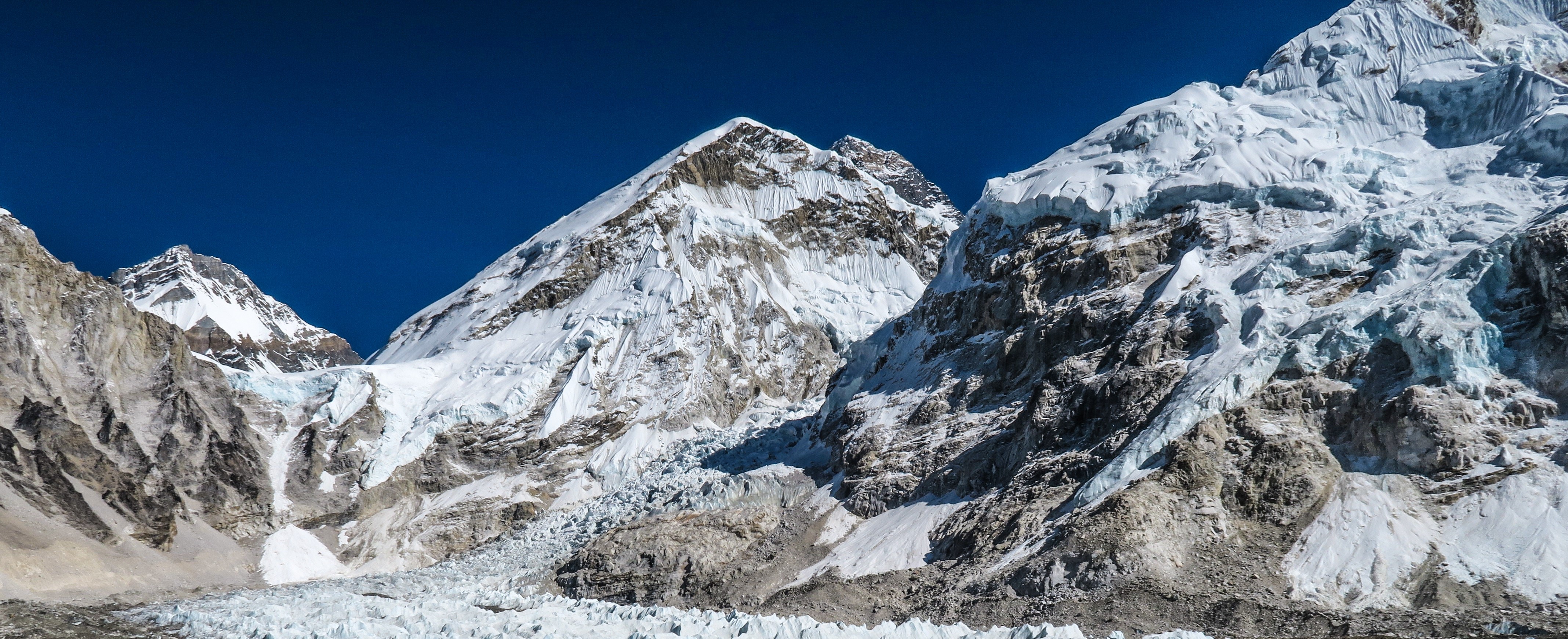
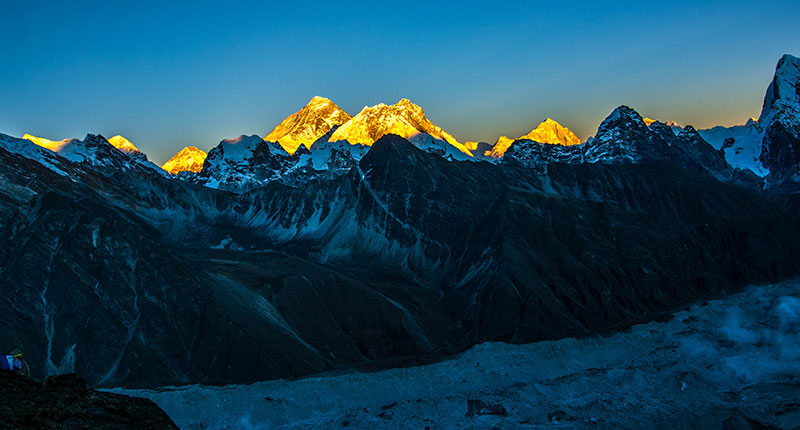
Mount Everest itself and numerous other peaks and mountains make the Everest Base Camp one of the busiest trekking region in Nepal. At the height of 5364m it is always number one choice of trekkers. Furthermore, mount Cho-oyu, mount Lhotse, mount Makalu adds valuable natural heritage to the trekking. One cannot forget the beauty of Ama Dablam, Pumori,Thamserku and Nuptse. Interesting Sherpa community with distinctive culture and tradition is another valuable aspect of Everest Base Camp trekking. Climbing Kalapatthar(5600m) the highest point would summarize the beauty of Everest trekking region.

Trekking starts from Forested temperate climatic zone and needless to say ends at the snowline of Base camp. Biggest sub-alpine villages at Namche, Khumjung and Khunde would be an ideal spot to see day to day activity of Sherpa people. Tengboche monastery, numerous chortens, manis wall throughout the trekking path highlights Buddhism. Temperate, sub-alpine forest is home to numerous birds and animal species. Everest Base Camp trekking is a complete package one can ask for base camp trekking in Nepal.

2. Annapurna Base Camp Trekking
Marginally, Annapurna Base Camp Trekking grabs second spot to Everest Base Camp trekking. The shortest itinerary to reach the base camp of mountain above 8000m. The shorter trekking day means the trekking is cheap as well. Equally important, Dhaulagiri, Annapurna south are bonus mountains that trekkers admire. Fishtail, Gangapurna, Himchuli are other popular peaks you can see throughout the trekking.

Annapurna Base camp trekking starts at tropical region and follows the bank of Modi Khola. Beautiful settlements at Ghandruk and Chhomrong dominated by the Gurung community is an exceptional way to see the diversified cultures and traditions of Nepal. Trekking through out the dense temperate forest, the landscape sharply changes at Machhapuchre Base Camp. Finally taking you the snowline of Annapurna Base Camp at the height of 4130m. Physically and financially moderate plus the flexible trekking itinerary is the biggest gift a trekker can ask for a base camp trekking in Nepal.

3. Manaslu Base Camp Trekking
Manaslu base Camp trekking is actually a small section of Round Manaslu Trekking. Unlike Everest Base Camp and Annapurna Base camp, the trekking does not end at the base camp. After hiking to Base camp of Manaslu from Samagaon, the trekking path continues to encircle the mount Manaslu through Larkey-La pass at the altitude of 5106m.Himalchuli, Ngadi chuli, Samdo ri peak, Shiringi are some other peaks that improvise the beauty of Manaslu trekking.

Manaslu trekking starts at tropical region. The landscapes and vegetation changes  with the every altitude we gain. Trekkers always admire beautiful village of Lho, Samagaon , Samdo and Bhimthang at sub-alpine and alpine regions. Moreover, highly distinctive Tsum and Nubri people and their cultures are found only in Manaslu trekking region. Needless to say, Chortens, manis wall, monastery always gives you surprises. Little amount of courage to cross Larkey-La can bring the Manaslu trekking down to your foot. Steady altitude-gain, distinctive Nubri and Tsum people, amazing alpine villages makes a trekking a complete package to anybody. Author’s favourite trekking itinerary.

4. Kanchenjunga Base Camp Trekking
Kanchenjunga Base Camp trekking grabs 4th spot among the base camp trekking of Nepal. The flawless trekking itinerary takes you to the base camp of mount Kanchenjunga at the height of 5143m. Situated at far east of Nepal makes the transportation cost comparatively expensive. Otherwise there is nothing a trekker can complain about. Numerous peaks and flanks of massive Kanchenjunga at deep snowline worth every penny you spend.

Kanchenjunga base camp trekking starts at tropical region gradually takes you to snowline of Yalung. Interestingly the trekking drops to upper temperate climatic region of Ghunsa upon crossing Sele-La. And again, follows alpine region of Khambachen and Lhonak before reaching Base camp. Interesting and completely different than other Base camp trekking of Nepal. Rich in wild floras and faunas the trekking region is also home to numerous Himalayan wildlife. Isolation, quiet trekking path, sparse human settlements, constantly-changing landscape can be a fascinating for any real adventure seekers.

5. Makalu Base Camp Trekking
Comparatively, Makalu Base Camp trekking sees few trekkers than other base camps of Nepal. The trekking mostly follows the Makalu Barun valley (National park) adjacent to popular Sagarmatha National Park. Known to few trekkers, the trekking is the richest protected area among all other considering the vegetation and wildlife. Moreover, the trekking can be ideal choice to see the landscape of Everest trekking region and Makalu at single itinerary. However, poor marketing, few tea houses and remote landscape attract only few trekkers in this region. Beside mount Makalu other notable peaks and mountains in the region are Chamlang, Baruntse and Mera peak.

Like any other trekking of Nepal, Makalu base camp trekking starts at tropical region. Gradually, trekking heads north following the subtropical, temperate, alpine and finally snowline at Base camp at height of 5250m. Limbu ,Yakkha and Sherpa community dominates the trekking region. Makalu Base camp trekking can be first choice of any trekkers seeking actual wilderness and isolation. A complete trekking package to see undisturbed natural and cultural heritage of Nepal.

Finally, the story behind base camp trekking in Nepal provides the actual short brief of trekking in Nepal of popular base camps. Besides well known highest mountains each small climbing peaks have base camp as well. Mera Peak base camp, Chulu peak base camp, Island peak base camp and so on. Also, we believe, the story behind base camp trekking in Nepal provides general yet valuable information to trekkers for the next trekking to base camps of Nepal.

10 Best Trekking Itineraries in Nepal

10 best trekking itineraries in Nepal, is compiled taking numerous aspects like number of visitors, difficulty level, price, flexibility, cultural and natural aspects.These trekking destinations generally receive more trekkers than other trekking regions of Nepal. Moreover, the trekking path remains highly busy during peak season of March-May and September-November.  Importantly, feedback received from the trekkers after completion of trek, is one of the major criteria to list out these 10 best trekking itineraries in Nepal. We have provided short description of each trekking to trekkers.

Everest Base camp trek, three passes trekking, Everest Gokyo trek from Everest region and Annapurna Base camp trek,Annapurna Round trek,Ghorepani Ghandruk trek, Upper Mustang trek from Annapurna are the most popular trekking itineraries. Similarly, Manaslu Round trek, Langtang Tamang Heritage, Langtang valley trekking and Gosaikunda trekking are the 10 best trekking itineraries in Nepal, according to trekkers.

However, the list of the 10 best best trekking itinieraries in Nepal might not be in chronological order. Depending upon the preferences of trekker, the list might change the spot. For example, for some trekker Annapurna base camp trek can be first choice, rather than Everest Base camp trek on given circumstances of budget and trekking days.
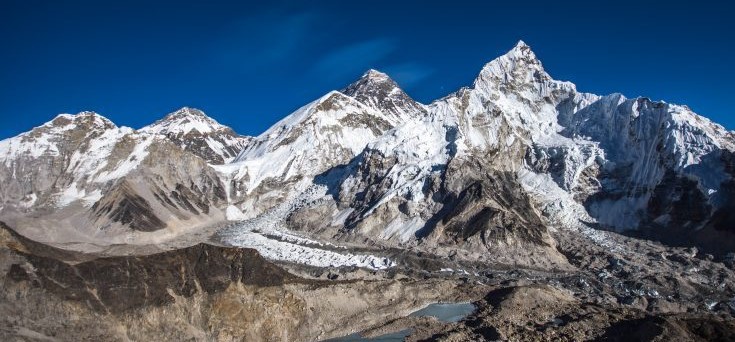
01. Everest Base Camp Trek-15 days

Everest Base Camp trekking has always been the matter of challenge and pride among the trekkers. The numerous mountains and peaks with interesting landscape keep Everest Base Camp extremely busy during peak season.

Most of the landscape is rocky and steep. The Forested temperate climatic zone appears as soon as you land at Lukla. The lower trekking region has the forest of birch, juniper, blue pines, bamboo, and rhododendron mainly around Namche and Tengboche. The sub-alpine climatic zone has small juniper bushes and open meadows, particularly around Dingboche, Pheriche, and Lobuche. Apart from this Gorakshep, Kalapatthar, and Basecamp are alpine and snowline region, mostly have rocky landscape of lichens and mosses. The animal species found around the region are musk deer, snow leopard, Himalayan black bear, red panda, and Himalayan Thar. Some famous bird species are Monal, blood pheasant, red-billed chough and yellow-billed chough.

Sherpa is the ethnic group around the Everest trekking region that follows Buddhism. They were previously nomadic then first settled around this region and gradually move towards the western region along with the salt trade route. The alpine region of EBC trekking has few seasonal tea houses with no permanent settlement.

You can trek to Everest Base Camp from Gokyo valley crossing Cho-La pass for extra thrill. However, the trekking itinerary is long and demands good physical condition. Top of the list among, 10 best trekking itineraries in Nepal.
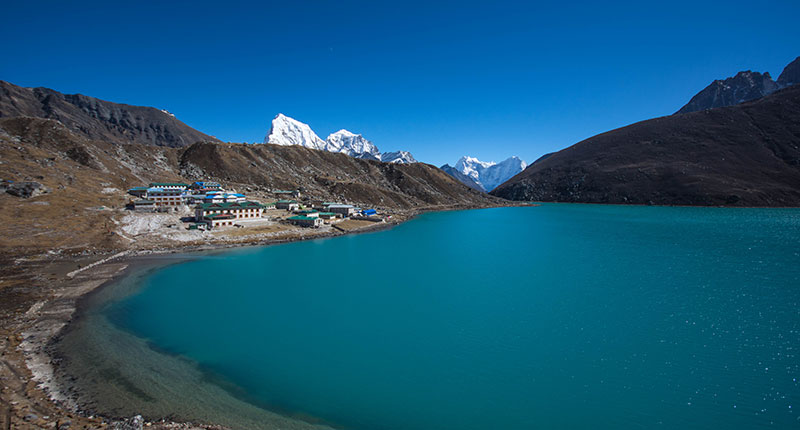
02. Everest Gokyo Trekking-14 days

Everest Gokyo Trekking

The Everest Gokyo trekking itinerary receives the name from the famous valley of the Everest region, Gokyo.  Not to mention, this trekking itinerary is highly popular to catch a clear portrait of the whole Everest trekking region including Mount Everest. Gokyo Ri top offers the magnificent view of numerous mountains and peaks of Everest region. In addition to that trekkers highly enjoy exploring five natural ice lakes deep on the Gokyo valley.

Most of the landscape is rocky and steep. The Forested temperate climatic zone appears as soon as you land at Lukla. The lower trekking region has the forest of birch, juniper, blue pines, bamboo, and rhododendron mainly around Namche and Sanasha. The subalpine climatic zone has small juniper bushes and open meadows, particularly around Dole and Machhermo. Again, Gokyo ri and landscapes around five lakes have alpine and snowline climatic zone. The animal species found around the region are musk deer, snow leopard, Himalayan black bear, red panda, and Himalayan Thar. Some famous bird species are Monal, blood pheasant, red-billed chough and yellow-billed chough.

Sherpa is the ethnic group around the Everest trekking region that follows Buddhism. In the first place, Sherpa were nomadic first settled around this region. Afterward, they move gradually towards the western region along with the salt trade route. The alpine and snowline region of trekking have few seasonal tea houses with no permanent settlement.

We can increase trekking days in Everest Gokyo Trekking itinerary by adding Cho-La pass. Needless to say, the itinerary will be demanding physically and mentally for amateur trekkers. Some trekkers claim Everest Gokyo Trekking to be the most beautiful destination. Especially to capture  Mount Everest and its surroundings entirely. Ceratinly, holds the second spot in list of 10 best trekking itineraries in Nepal.
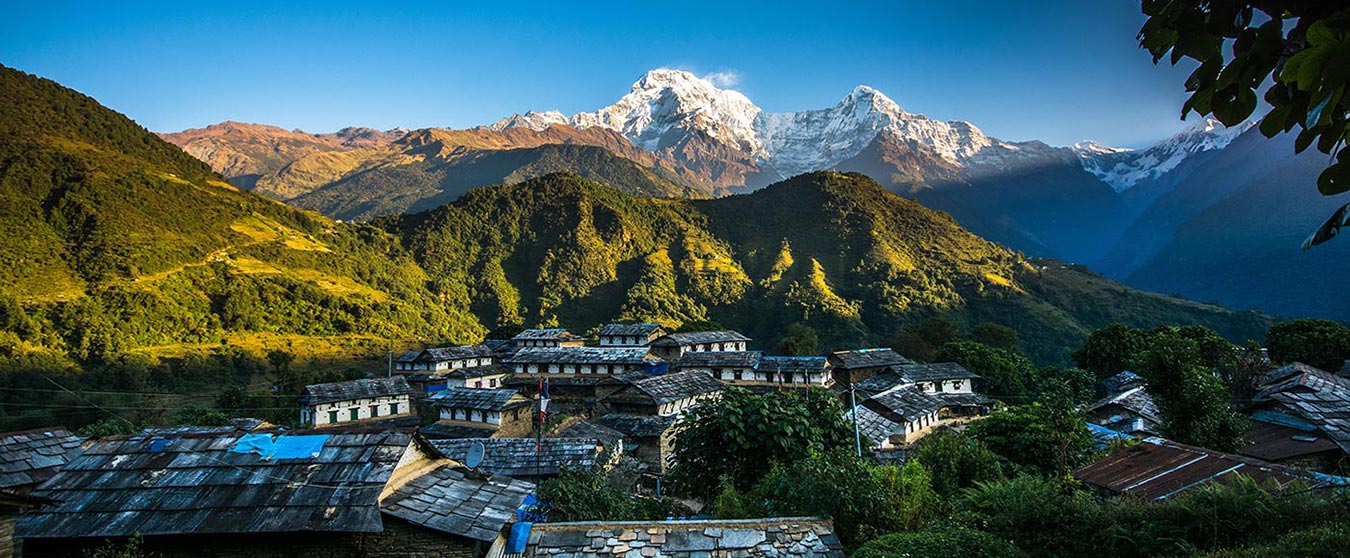
03. Annapurna Base Camp Trekking-10 days

Annapurna Base Camp Trek

Annapurna Base Camp Trekking is very popular as ABC trekking among the trekkers. Comparatively, it is the only cheapest  and shortest trekking to Base Camp of any mountain that is above 8000m. Moreover, this trekking is suitable and highly cost-effective to trek in high altitude and lower trekking region of Nepal at once. You can see mount Annapurna 1(8091m) from the nearest possible point.

The trekking is not only about enjoying the magnificent mountains and landscape of deep Himalaya region of Nepal. Furthermore, it also has the interesting and diversified cultures dominated by ethnic group Gurung. Meanwhile, The landscape starts with terraced farming land and dense forest in the tropical and lower temperate region. Especially around Ghandruk and Jhinu Danda. You may enjoy upper temperate climatic zone around Ghorepani and Chhomrong. The trekking continues by the bank of the river and follows the sub-alpine and alpine settlements around Dovan and MBC. Meanwhile, Annapurna Base camp is icy and isolated snowline with beautiful high altitude landscape.  The lower region of trekking has the tropical forest of  birch, juniper, bamboo, oak, and rhododendron. The icy and isolated alpine and snowline region has open meadows and small juniper bushes.

Beside Mount Annapurna (8091m) the other notable peaks in the region are Annapurna South (7219m) Gangapurna (7455m) Annapurna III (7555) Fishtail/ Machhapuchre (6993m).

Indeed the long Classic  Annapurna Base Camp trekking itinerary has been significantly shortened and designed for those who have a limited time and budget. However, there is a slight risk of Acute Mountain Sickness (AMS) for amateur trekkers for this particular Annapurna Base Camp trekking. The second popular base camp trek,and for sure hold the genuine spot among the 10 best trekking itineraries in Nepal.
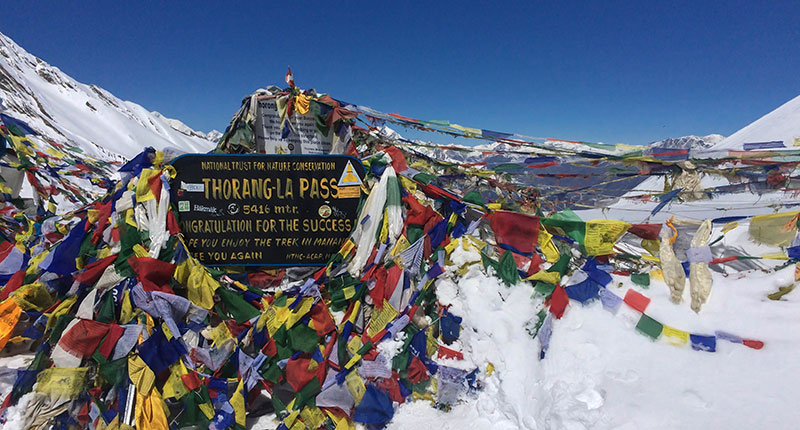
04. Annapurna Round Trekking-13 days

Annapurna Round Trekking

Annapurna Round Trekking has coined its name from the massif Annapurna mountain ranges at north-west of Nepal. The trekking path encircles entire Annapurna trekking region. For the reason, Annapurna Round Trekking is also popular as  Annapurna Circuit trek. Moreover, two famous valleys Marshyangdi valley and Kaligandaki valley are joint by the famous thrilling Thorong-La(5416m) pass at the heart of the Himalayas.

This trekking has been popular among the trekker due to the diversified landscapes and vegetation. The trekking starts by the bank of Marshyangdi river with the lower temperate forest of chestnut, walnut, maple around Syange and Chame. The casual and easy trekking gradually enters to Pisang and Manang the popular sub-alpine villages on the region. Furthermore, the trekking stretches to the alpine and snowline landscape of Yak Kharka, Thorong Phedi and finally to Thorong-La pass. The trekking descends to deep and wide  Kaligandaki valley dominated by Mount Dhaulagiri(8167m) and Mount Annapurna(8091m) along with other numerous peaks. Trekking on two different valleys gives an opportunity to experience an entirely different class of landscape, flora, fauna and human habitat along with their cultures, traditions, and lifestyles on Himalaya.

People on lower trekking region follows Hinduism. Brahamin, Chhetri, Gurung are the major cultural community living with great harmony. People of Upper trekking region, especially around Pisang, Ngawal, Braga, and Manang, follows Buddhism similar to Tibetan culture.

This itinerary is the shortest model of Classic Annapurna Base Camp Trekking. We drive on the jeep for most of the dusty and gravel road up to Chame and start the trekking. Though there is a slight risk of Acute Mountain Sickness (AMS) for amateur trekkers but is an advantage for general trekkers. The significant number of trekkers in the region, is proof  how much popular this trekking is. One of the best trekking itineraries in Nepal.
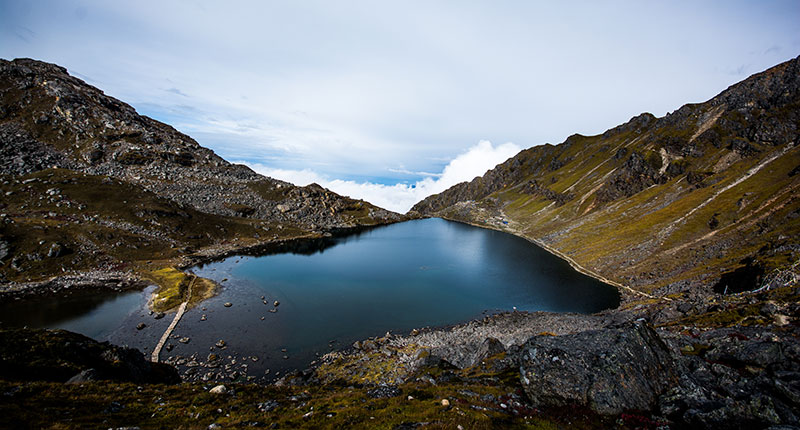
05. Langtang Gosaikunda Helambu Trekking-17 days

Langtang Gosaikunda Helambu Trekking

Langtang Gosaikunda Helambu Trekking is the nearest trekking region from Kathmandu. Furthermore, easy transportation access and favorable landscape have made this trekking easy  and cheap compare to Everest and Annapurna. The Langtang trekking region has no popular mountain ranges but it is equally versatile and adorable like other trekking regions. Trekking offers a lot to enjoy from the different landscapes, vegetations, wildlife, along with the cultures of the Tamang people.

Although the lower region of Langtang Gosaikunda Helambu trekking has a uniform landscape and the dense vegetation, the upper region remains cold icy and isolated. Places like Lama Hotel, Thulo Syabru, Tarkeghyang has the forest of rhododendron, pine, oak, bamboo, and juniper that provides shelter to numerous wildlife. Himalayan Black bear, red pandas, and musk deer are some wild animals found in these regions. The subalpine and alpine settlements like Langtang village, Kyanjing has open meadows for unrestricted views of mountains and peaks. In addition trekking around Gosaikunda lake is an exceptional way to explore the high altitude natural ice lakes.

Tamang is the dominant cultural community in Langtang trekking region. The trekking is an opportunity to see the date to day life of the Tamang People highly influenced by Tibetan. Moreover, the Helambu region gives the perfect way to enjoy the traditions and cultures of Hyalmo (Sherpa) community. Most of the people engage in agriculture and animal husbandry along with few on tourism.

Altogether, we have combined Langtang valley, Gosaikunda, and Helambu  three different trekking regions together. So that trekker can experience both the cultural and natural aspects of the Langtang and Helambu trekking region. Trekkers can choose either any of the three regions if they don’t have enough time to trek to all the regions. One of the best trekking itineraries according to trekkers in Langtang region.
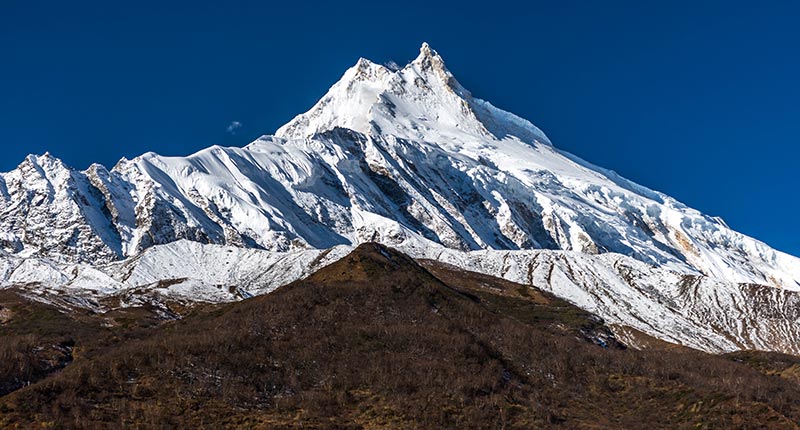
06. Round Manaslu Trekking-17 days

Manaslu Round trekking is inspiring for many trekkers due to the amazing landscape, and culture of native people.A decade back Manaslu Trekking was not popular trekking in Nepal due to poor recognition. But, in recent years this trekking is attracting the trekkers of Annapurna Round trekking

The trekking trail follows ancient salt trading route alongside the Budhi Gandaki river in the tropical climatic zone. You can enjoy the subtropical evergreen-deciduous forest around Jagat and Deng. Pine, spruce, oak, and rhododendron forest are the main vegetation on upper and lower temperate region, especially around Gap, Namrung, and Lho. The trekking continues to the alpine habitat of Samagaon and Samdo and finally snowline once you are at Dharmashala and Larkey La pass(5106m). The alpine region mostly has open meadows with small juniper bushes while snowline is icy and rocky. The trekking route and landscape becomes more easy and friendly once you cross Larkey pass(5106m) and descend Bhimthang. Himalayan black bear, Musk deer, Himalayan Thar, Snow leopard and Blue sheep are some wild animals in Manaslu. In similar way Snowcock, Himalayan griffin, various Himalayan pheasants are some type of birds species.

Nubri and Tsum are the main ethnic groups in the upper region of Manaslu trekking. The Nubri community is highly influenced by Tibetan culture follows Buddhism and open to the outside world. Similarly, Tsum people still follow ancient tradition and culture and needs some study and exploration. Furthermore, a mixed community settles in great harmony in the lower trekking region mainly  Brahmin, Chhetri, Gurung, Magar, and Ghale.

Furthermore, it is a popular tradition among trekkers to combine Manaslu Trekking with Tsum valley trekking. In addition, trekkers also enjoy combining this trekking with Annapurna Round or Upper Mustang Trekking depending on the number of days  they have. Round Manaslu deserves the 6th spot in list of 10  best trekking itineraries in Nepal.
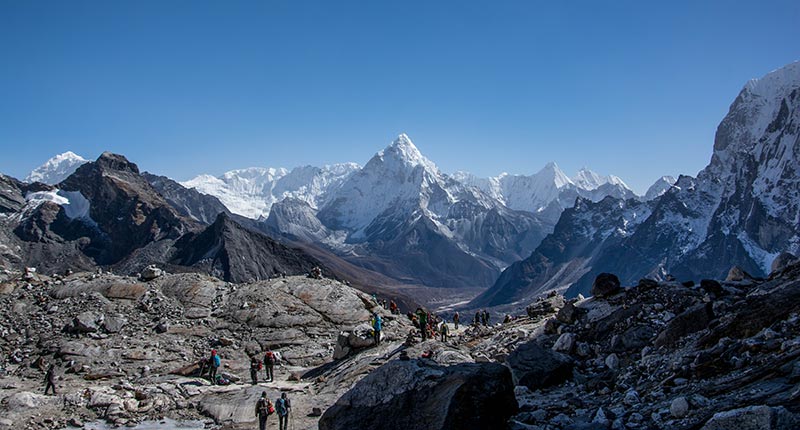
07. Everest Three passes Trekking-20 days

Everest Three Passes

Everest Three Passes Trekking itinerary offers you a high grade of adventure in the Everest trekking region of Nepal. Everest Three Pass trekking receives its name after the three major passes of Everest region namely Renjo-La (5345m)Cho-La (5370m) and Kongma-La (5535m). This trekking is like Everest Round trekking that gives the opportunity to explore more than 75% of the Everest trekking region.

Most of the landscape is rocky and steep. The Forested temperate climatic zone appears as soon as you land at Lukla. The lower trekking region has the forest of birch, juniper, blue pines, bamboo, and rhododendron mainly around Namche and Tengboche. The subalpine climatic zone has small juniper bushes and open meadows, particularly around Thame, Lungden, Lobuche, and Dingboche. Meanwhile, Gorakshep, Kalapatthar, Gokyo, three passes, Basecamp,Chhukung are alpine and snowline region have only lichens and mosses. The animal species found around the region are musk deer, snow leopard, Himalayan black bear, red panda, and Himalayan Thar. Some famous bird species are Monal, blood pheasant, red-billed chough and yellow-billed chough.

Sherpa is the ethnic group around the Everest trekking region that follows Buddhism. They were previously nomadic then first settled around this region and gradually move towards the western region along with the salt trade route. The alpine and snowline region of trekking have few seasonal tea houses with no permanent settlement.

Altogether,  in Everest Three passes trekking we have combined all trekking passes with Everest Base Camp and Gokyo. The Everest Three passes trekking itinerary provides the ultimate thrill in Everest trekking region without any doubt. Trekkers also can choose either of Everest base camp or Gokyo valley or any one of the three passes. Particularly, depending upon their choice, budget, adventure level and number of days they have. No wonder, it is one of the best trekking itineraries in Nepal according to trekkers.
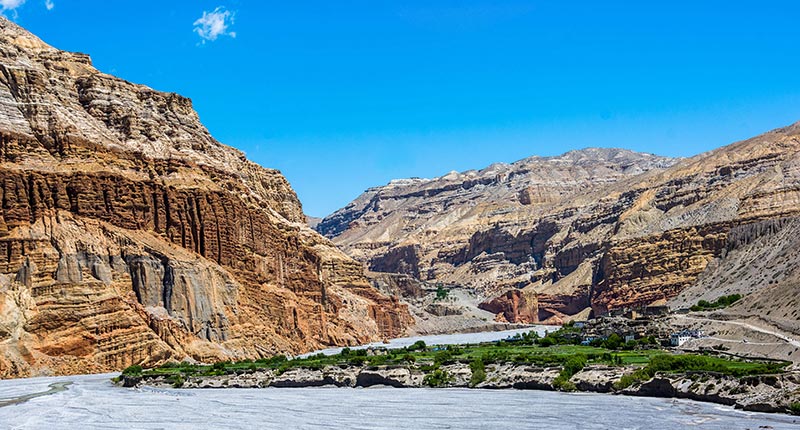
08. Upper Mustang Trekking-18 days

Upper Mustang Trekking

Upper Mustang Trekking has been always a part of the mystery and fun for the visitors and trekkers. The place came in the light only after 1992 government allowed the foreigner to visit issuing the special permit. Popularly known as the hidden kingdom of Nepal, it was an independent kingdom from the 15th century until it was annexed by Nepal at the end of 18th century granting independent monarch to this state. Although monarchy ended in Nepal on 7th October 2008 and became the Republic of Nepal officially, but sill the resident of Lo-Manthang recognizes monarchy on this region.

Upper Mustang has Trans Himalayan climate with minimal or no rain due to the ranges of Annapurna and Dhaulagiri mountain. The interesting climatic zone starts as soon as you land at the Jomsom. The natural wind erosion makes the landscape more hostile, rocky, windy and barren. Trekking to upper Mustang is a great alternative opportunity to explore the landscape that is similar to Tibet.

Due to isolation from the outside world, most of the people practice Tibetan language and culture. The culture and traditions of people provide an alternate way to experience Tibet. Most of the people practice Buddhism. Moreover, in 2007 a shepherd discovered 55 cave painting explaining the life of Buddha. This explains that Mustang is rich in ancient monasteries and stupa which needs more recovery and restoration. Tourism has been one of the good sources of income for the people beside negligible crop and animal farming.

These days the  Upper Mustang trekking is much easier and flexible due to the road access all along the trekking route. Some people visit Mustang & Lomanthang (capital of Mustang) in Tiji Festival which generally falls in the month of May. The unique landscape, culture, history is main reason to list Upper Mustang in the list of 10 best trekking itineraries in Nepal.
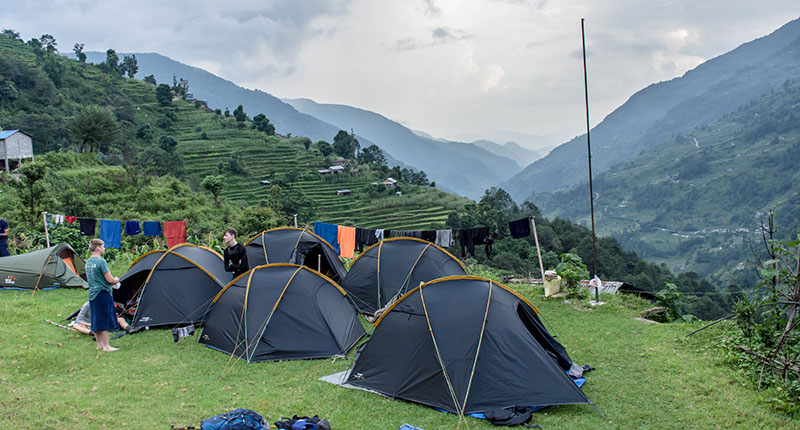
09. Ghorepani Ghandruk Circuit Trekking-12 days

Ghorepani Ghandruk Circuit Trekking

Ghorepani Ghandruk Circuit trekking is one of the most popular lower trekking region of Nepal for both amateur and experienced trekkers. The trekking can be ideal choice for experienced trekkers as well who have limited time and budget for trekking in Nepal. It is one of the busiest lower region trekking routes. Especially it is the first choice of  beginners who want to see a fraction of diversified Nepali culture and landscape. Ghorepani and Ghandruk are two famous countryside villages of Nepal dominated by the Gurung community.

Mount  Annapurna & Mount Dhaulagiri, both of them above 8000m are the highlights of this trekking with numerous snow-capped peaks. The trekking starts in the tropical region with the terraced farming land at Birethanti. However, most of the trekking day ends in between lower temperate and upper temperate climatic region. Mostly, we trek in damp and dense forest of rhododendron, juniper, maple, and bamboo. Natural waterfalls and numerous streams in the trekking path makes the trekking fun. Poon hill at Ghorepani is the best spot to see Annapurna, Dhaulagiri, Nilgiri, and Fishtail ranges. In addition to that, trekking around villages like Tadapani, Chhomrong, Ghandruk is the best possible way to see Gurung cultures and traditions.

After all, we designed this particular itinerary covering the most of the countryside landscape around lower trekking region of Annapurna. Ghorepani Ghandruk circuit trekking itinerary is highly flexible and has a lot of itineraries options. The itinerary is great example that Nepal has numerous trekking options beside well known deep Himalaya ranges. Being, short, easy, and cheap, it holds one 9th spot while compiling the list of 10 best trekking itineraries in Nepal. Especially, for amateurs.
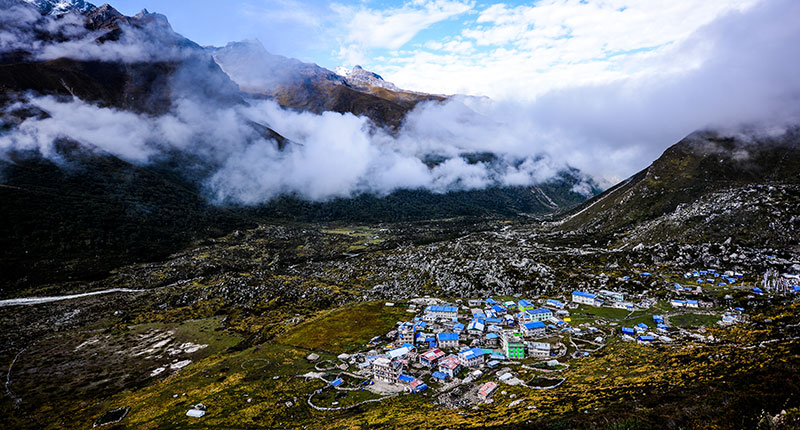
10. Langtang Tamanag Heritage with Langtang valley Trekking-17 days

Langtang Tamang Heritage Trekking

Langtang Tamang Heritage trekking with Langtang valley trekking is the nearest trekking region from Kathmandu. Furthermore, easy transportation access and favorable landscape have made this trekking easy compare to Everest and Annapurna. The Langtang trekking region has no popular high mountain ranges but it is equally versatile and adorable like other trekking regions. Trekking offers a lot to enjoy from the different landscapes, vegetation, wildlife, along with the cultures of the Tamang people.

Although the lower trekking region has a uniform landscape and the dense vegetation, the upper region remains cold icy and isolated. Tatopani, Thuman, Khanjim, Lama Hotel has the forest of rhododendron, pine, oak, bamboo, and juniper that provides shelter to numerous wildlife. Himalayan Black bear, red pandas, and musk deer are some wild animals found in these regions. The subalpine and alpine settlements like Nagthali, Langtang village, Kyanjing has open meadows for unrestricted views of mountains and peaks.

Tamang is the dominant cultural community in this trekking region. Langtang Tamanag Heritage trekking is an opportunity to see the date to day life of the Tamang People. Indigenous Tamang People follow Tibetan culture and traditions. Most of the people engage in agriculture and animal husbandry along with few on tourism.

Altogether, Langtang Tamang Heritage trekking  is mixture of  Tamang Heritage and Langtang valley  trekking. Two different trekking. Trekkers can experience both the cultural and natural aspects of the Langtang valley trekking region in single itinerary. Trekkers can choose either only Tamang Heritage or only Langtang valley trekking if they don’t have enough time to trek both regions. Cultural and natural richness is the reason, at the bottom of 10 best trekking itineraries in Nepal.

Again, it is compiled from the valuable experience of trekkers after completion of these trekking. As well, the list is not an ultimate milestone for the best trekking itineraries in Nepal.
Facts and Myths of trekking in Nepal

Facts and myths of trekking in Nepal, provide true picture of trekking in Nepal. Nepal has high potential to lead the trekking market in the world. However, misconception and lack of proper information among the promising trekkers is killing the number of arrivals. Here we try to summarize all common facts and myths of trekking in Nepal. Especially, these facts are targeted to new trekkers and travelers willing to travel Nepal in future.We hope trekker finds this article helpful to know and understand facts and myths of trekking in Nepal.

When some potential trekker learns about Mount Everest and Nepal, they intantly assume of climbing and expedition of Everest. They really don’t bother of thinking about trekking to base camp. The article on facts and myths of trekking in Nepal, also addresses safety concerns, price, weather, infrastructure in mountain ,concern on age and physical fitness of trekkers.

Myths 1# Trekking and climbing are same in Nepal.
Fact: Trekking in Nepal generally means day to day hiking in familiar trekking path following tea houses and human settlements. Base camp and trekking passes in between 5000m-5500m will be the maximum altitude for trekking. In contrast, Climbing is more related with mountaineering and peak climbing. Especially, above the base camp. Hope, this article facts and myths of trekking in Nepal, clarifies difference between trekking and climbing.

Myths 2# Terrible tea-houses and infrastructures in Mountain of Nepal.
Fact: There are few and countable tea-houses in upper trekking region. Notably around snowline of base camps and high-altitude passes. This is true, the luxury you get in lower trekking region does not match in upper trekking region. However, they are highly prepared during the trekking seasons. Advance food menu, chocolate bars, drinks are instantly available in every tea house, but is expensive.

Myths 3# Booking through trekking agency is always Expensive.
Fact:
There is fierce competition among the trekking agencies in Nepal. So, booking a trek through trekking agency is not always expensive. Furthermore, negotiations can make the trekking and travel cheap in Nepal. However, Comparing the price and services an agency provides can be challenging for first time travelers. Be extra attentive with agencies claiming to provide extra-ordinary services with cheap price. Nothing is free. Learn here how to make trekking cheap in Nepal.

Myths 4# It will be cheap to book/hire services upon arrival in Nepal.
Fact: It can be true during off seasons but not in peak season of trekking in Nepal. Most of the hotels and flights are preoccupied in advance before start of the season. There are few scheduled domestic flights which makes almost impossible to book flight instantly. Even hiring a trekking guide can be troublesome since most of the guides are loyal to trekking agency for regular works. Mark our words, it is not cheap to book/hire trekking services upon arrival.

Myths 5# Age is ultimately, decisive factor for trekking in Himalaya of Nepal.
Fact:
Age is not a decisive factor that can stop you from trekking in Nepal. Trekking is not only about pushing you in deep mountain or in high altitude. Blend of fun, hobby, passion, physical and mental challenge makes a perfect trekking in Nepal. Set your challenge and here we are to improvise and execute it. Trekking agencies in Nepal always fulfil your special requirements and criteria once you let them know beforehand.

Myths 6# Security and safety of trekkers is major concern in Nepal.
Fact: There are negligible unfortunate incidents regarding safety and security of trekkers and travelers in Nepal. There is no any room for physical emotional and economic harassment of travelers in Nepal. However, solo and individual trekkers are always advised to be more careful. Your safety and security are guaranteed by every trekking organizer and agency in Nepal. Not only by law, sentiments, cultural and religious aspects of Nepalese people guarantee your safety and security once you are in Nepal.

Myths 7# Nepal is popular only for trekking and climbing. No luxury trekking packages in Nepal.
Fact: Nepal is well renowned for trekking and climbing in deep Himalayan and snowline region. Trekking agency sale the best regular trekking packages. However, few trekkers know there are luxury trekking packages in Nepal that involves flying in helicopter. Most of the trekking destinations are easily reachable in helicopter. Furthermore, you may trek to the certain point you desire and fly back in helicopter to Kathmandu after completion of trek. But flying in helicopter is pretty expensive in Nepal.

Myths 8# Huge cultural and religious differences in between Nepalese people and western trekkers
Fact: Most of the people involved in tourism respects your religious and cultural identity. Eating together, talking, handshaking, entering home is not taboo anymore in town and city. However, countryside elderly people still might watch you with some curiosity but again not of offensive nature. Christians are not allowed to visit main deity of Hindu temple but can visit the surrounding and enjoy ancient structures and archaeology.

Myths 9# Nepal has vulnerable weather and prone to Natural calamities.
Fact: Rainy season often in June July, brings landslides in hilly regions and flood in southern lowlands. But not again during trekking seasons of  March-May & mid-August to mid-December. Most of the trekking routes are safe to natural calamities. Avalanches are rear and you never encounter in trekking paths unless you dare to climb the peaks and mountains. However, only serious concern among the trek organizers is delay and cancel of the flights in case of bad weather.

Myths 10# Nepal has no stable political situation.
Fact: Probably, this is the biggest and the oldest myth hurting tourism of Nepal even now. Though number of travelers in Nepal are increasing significantly, still it is not satisfactory.  After peace accord of 2006 and constitutional election, Nepal is enjoying the stable government. Strikes are almost null. Moreover, it has been very very long time that USA and European countries has not issued any travel regulations for its citizen to travel Nepal.